Young Drivers' 2026 Graduate Survey confirms alumni apply driving hazard recognition and predictive habits years later — reinforcing its Gold Standard training, Graduate Survey findings (2023–2025), and StreetSmart cognitive insights.
TORONTO, ON, January 30, 2026 /24-7PressRelease/ -- Young Drivers of Canada has released results from its 2026 Graduate Survey, revealing that students who completed the Young Drivers program more than two years ago continue to demonstrate strong, lasting habits in hazard identification, predictive driving, and risk avoidance.
The survey, which included over 1,000 graduates who completed their training two or more years ago, shows that graduates consistently apply the core cognitive driving habits taught in the Young Drivers program - long after formal instruction ends.
On a five-point scale, respondents rated the statement "The driving skills I learned at YDC have helped me predict dangerous situations and avoid them" at an average of 4.6 out of 5, underscoring the durability of Young Drivers' Gold Standard, habit-based approach to driver education.
From Rules to Habits: A Lasting Safety Advantage
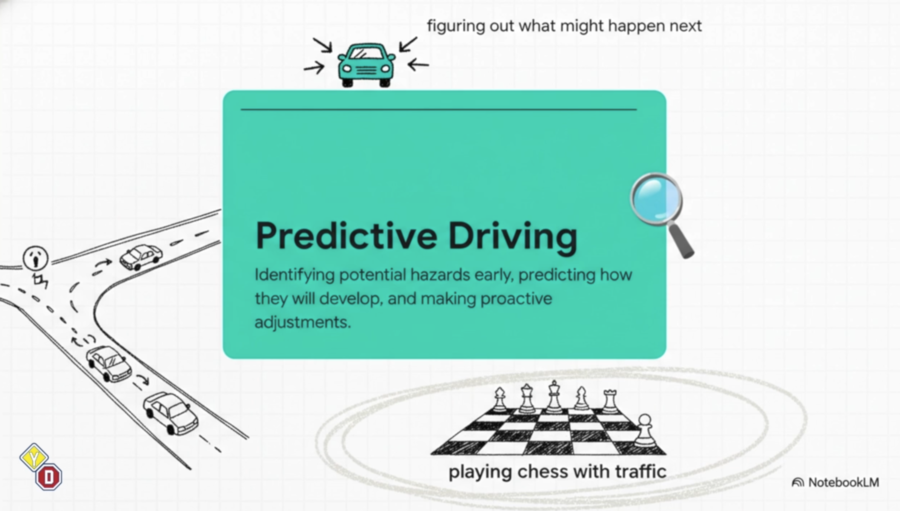
Unlike traditional driver education programs that focus primarily on rules and short-term test preparation, Young Drivers of Canada's Gold Standard curriculum emphasizes cognitive driving habits - including early hazard recognition, predictive scanning, and proactive space management - skills designed to persist well beyond the road test.
These principles, outlined in Young Drivers of Canada: Gold Standard Driver Education, are reinforced through in-vehicle coaching, structured habit formation, and continuous feedback rather than rote memorization.
Survey respondents frequently cited skills such as:
• Anticipating the actions of other road users
• Adjusting position and speed before hazards escalate
• Scanning beyond the immediate vehicle ahead
• Maintaining safe following distances and escape routes
These behaviors reflect automatic, learned habits, not short-term skills.
Consistent Findings Over Time
The 2026 results closely align with insights from the Young Drivers Graduate Survey 2023–2025, which similarly found retention of hazard perception and predictive driving behaviors among recent graduates, resulting in an almost 97% Collision‑Free or Not‑at‑fault (safe‑of‑fault) rate.
Together, these surveys reinforce a consistent pattern: graduates internalize predictive driving habits that remain active well into independent driving, supporting Young Drivers' long-standing position that habit formation - not test performance - is the true indicator of safe driving outcomes.
Confidence Without Complacency
Graduates also reported high confidence levels behind the wheel, again averaging 4.6 out of 5 when asked if they felt more confident after completing the program. Importantly, qualitative responses show that this confidence is paired with heightened awareness and lower stress, not overconfidence.
"Confidence built on awareness is very different from confidence built on luck," Andrew Marek, CGO, added. "Our graduates describe being calmer, more prepared, and less surprised on the road. That's the real-world value of predictive driving habits."
Real-World Impact, Years Later
Many graduates described avoiding collisions or near-misses because they recognized developing hazards early - often noting that these moments occur frequently, not just in rare emergencies.
"One of the most telling insights from the survey is how often graduates said these skills help them almost every day," said Marek. "That's what true habit formation looks like. The training becomes automatic, and safety becomes proactive rather than reactive."
Implications for the Future of Driver Training
The findings reinforce Young Drivers of Canada's position that hazard perception and predictive analysis should play a greater role in both driver education and licensing systems.
Building on this research, Young Drivers has recently introduced StreetSmart™, a new cognitive assessment and personalization tool designed to identify how individual drivers perceive risk, process information, and respond to developing hazards - allowing training to be tailored to how drivers actually think and learn.
"If we want safer roads, we need to measure and reward long-term behavior change — not just short-term test performance," said Marek. "This survey provides clear evidence that habit-based, predictive training delivers lasting safety outcomes."
Young Drivers of Canada plans to use these insights to further expand advanced training, refresher programs, and technology-enabled learning tools that support lifelong safe driving behaviors.
Young Drivers of Canada is a national leader in driver education, known for its Collisionfree!® Approach and emphasis on hazard perception, defensive driving, and lifelong safe driving habits. Since its founding, Young Drivers has trained more than 1.4 million drivers across Canada using research-driven curriculum, in-vehicle coaching, and emerging cognitive and AI-powered tools designed to reduce collisions and improve road safety.
---
Press release service and press release distribution provided by https://www.24-7pressrelease.com