After the Energies sector hit 4-year highs across the board in March, social media posts changed the headlines that led to selling by algorithms.
Energy markets dropped through the end of last month, but jumped higher again after the US president addressed the world on television Wednesday night.
Don’t Miss a Day: From crude oil to coffee, sign up free for Barchart’s best-in-class commodity analysis.US agriculture, the US president's strongest base, will again receive increased “hardship” payments, announced in late March.
In early March, I asked the question of if we would see stickers of a smiling US president pointing to higher fuel prices with the caption balloon saying “I Did That” show up at fuel stations around the country. The backstory to this was after then US President Biden led the Western World in levying sanctions against Russia for its illegal invasion of neighboring Ukraine in 2022, US fuel prices jumped and these stickers showed up, predominantly across what is known as Red States. This brought great joy to the current US president. However, the Biden Administration then went to work with the rest of the world to make sure global fuel supplies were not disrupted, and US prices quickly came back down.
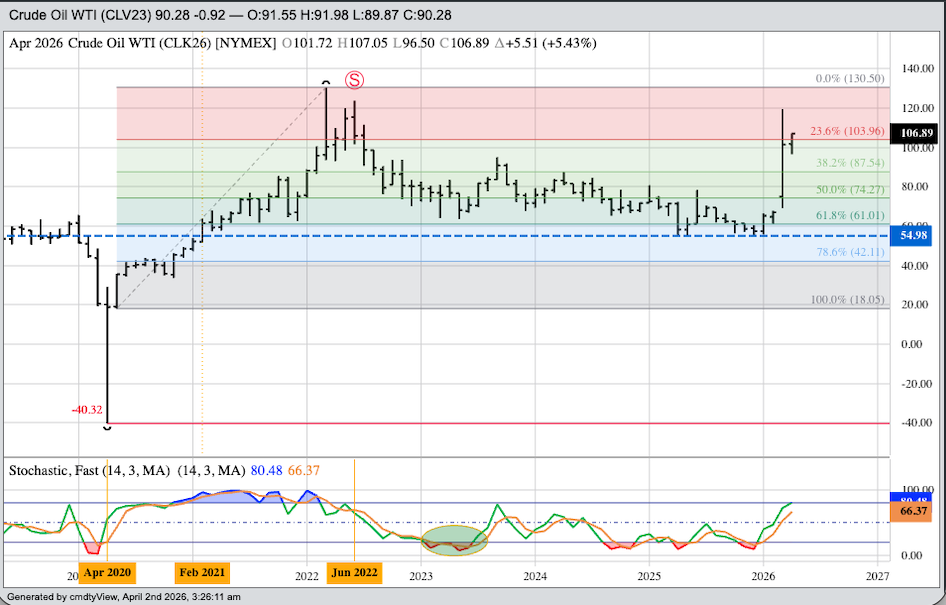
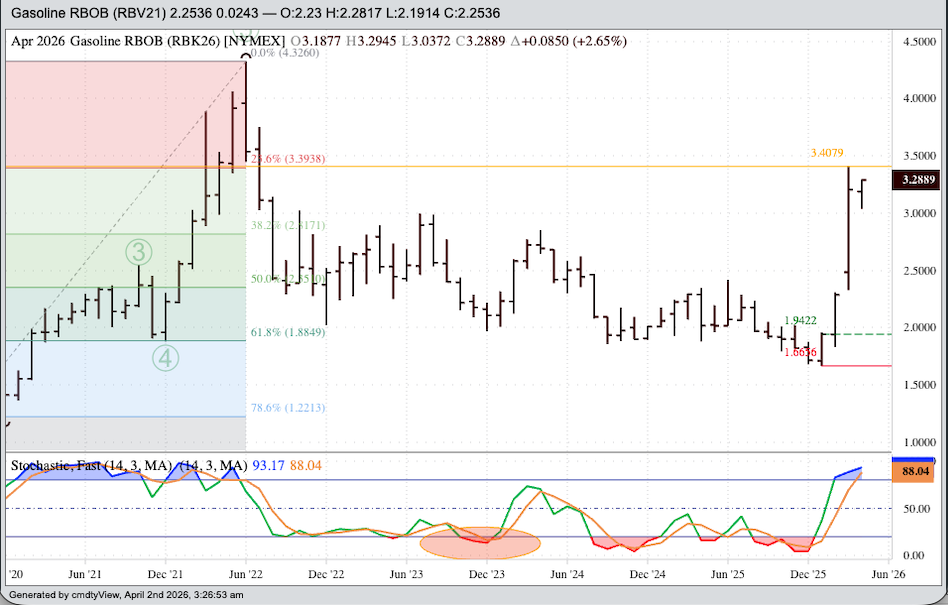
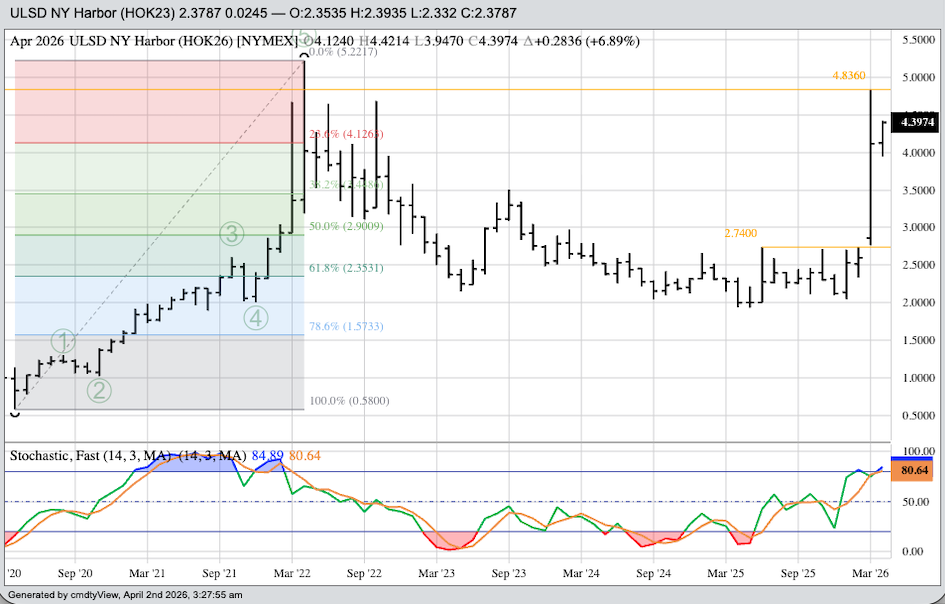
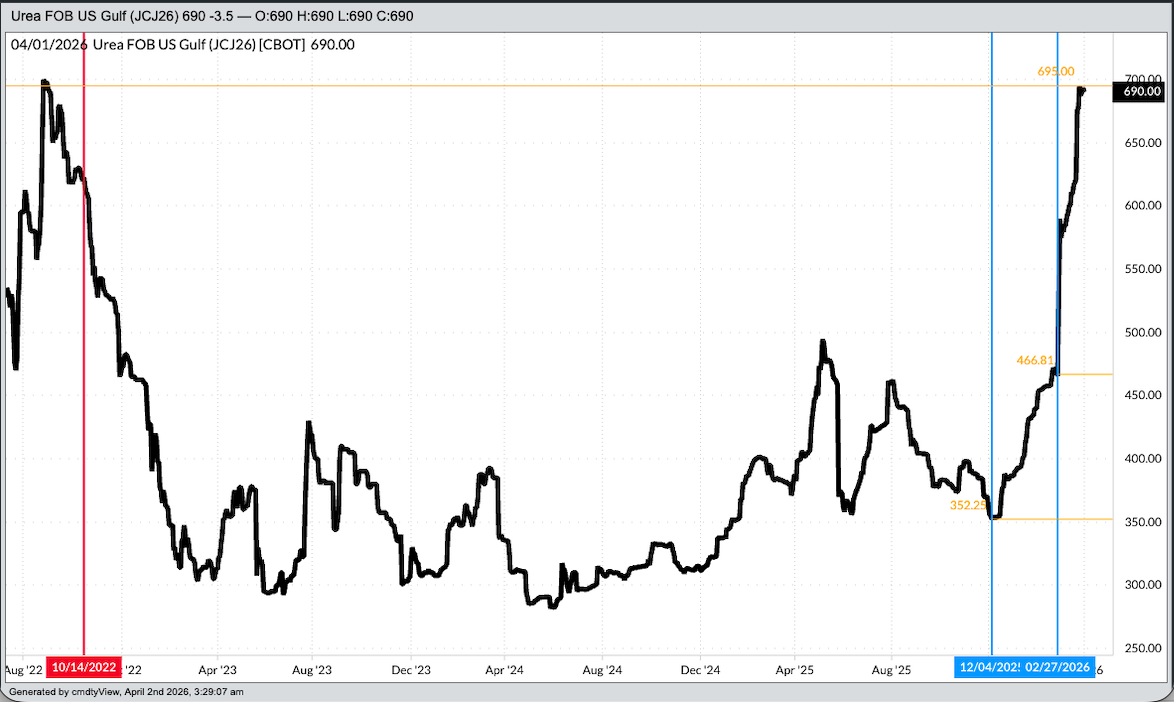
As has been discussed endlessly the past 6 weeks or so, US fuel prices have spiked to levels not seen since 2022 due to the current US president’s illegal War on Iran. This drove the US domestic WTI crude oil price (CLK26) to a March high of $119.48 while the global Brent market (QAM26) hit $119.40. In other news, spot-month RBOB gasoline (RBK26) jumped to a high of $3.4079 just as the US heads into its high-demand driving season and distillates (diesel fuel, jet fuel, heating oil, etc.) (HOK26) hit a. peak of $4.8360. The latter is key to US agriculture as many (I’m not sure of the percentage) US grain producers had not locked in diesel fuel needs for the coming spring, summer, and fall seasons. Additionally, the US president’s War on Iran drove US nitrogen fertilizer prices higher with the FOB Gulf price (JCJ26) nearly doubling from early December 2025 through late March 2026.
Yes, the stickers started showing up again, this time with the current US president smiling face, and that didn’t go over well at the White House. I guess it is only funny when it happens to someone else. Here, though, is the reality of the market atmosphere we work in these days. As an analyst, I don’t have to worry about silly things like real fundamentals – supply and demand – or classic technical analysis, all I have to focus on is what will spark the next social media post from the US Oval Office which leads to headlines which triggers algorithms to move in an expected way (buying or selling). Given these new dynamics, I along with most others in the industry knew there would be ripple effects to the latest “sticker” shock.
First, the game starts with the current US president not wanting anything negative said about himself. When those stories start to appear, a social media post will go out making an obviously false claim to change the direction of headlines and therefore algorithms. This time around, with stickers blaming him for high fuel prices, we started seeing posts about how Iran’s Premier was the one asking for a ceasefire and how the US president’s War on Iran would only last a few more weeks. Again, to any rational person, this was the expected response to the stickers. But to Watson – my name for the algorithm-driven investment trade – the wording was correct to trigger a selloff in the Energies sector and rally global stock markets. Did anything actually change fundamentally? Of course not. But that doesn’t matter these days.
Second, the US president will almost immediately contradict himself, usually sending markets right back in the other direction. This time around, after social media posts led to a $23 per barrel drop in the spot-month WTI price through April 1, the US president decided to address the world and threaten to “hit Iran ‘extremely hard’”, sending the Energies sector rocketing higher again and dropping global stock indexes overnight through the early morning hours of April 2. Again, nothing changed. The situation was the same as it was back in mid-March with the US president having no actual reason for his action or plan of how or when to end his latest military action.
Third, higher fuel and fertilizer prices has proven unpopular with the US president’s fan base, predominantly across rural America. This makes production of US grains and oilseeds more expensive, at a time when trade wars and tariffs have cut into global demand for those same grains and oilseeds the US produces each year. The grumbling over such things started to grow louder and was met last week with the news welfare payments to US agriculture would be increased once again. At a White House wingding on Friday, March 27 (the new ballroom wasn’t ready yet), the US president announced his ag constituents would benefit from:
- Finalization of the EPA’s ‘Set 2’ rule, establishing record-high renewable fuel volume requirements
- Promises to remove DEF (diesel exhaust fluid) sensor requirements on farm equipment
- Another $11 billion in crop assistance
The upcoming US 3-day holiday weekend should be interesting.
On the date of publication, Darin Newsom did not have (either directly or indirectly) positions in any of the securities mentioned in this article. All information and data in this article is solely for informational purposes. For more information please view the Barchart Disclosure Policy here.
More news from Barchart
- Dear Tesla Stock Fans, Mark Your Calendars for April 21
- AAPL Stock on Watch: Iran Threatens Retaliatory Strikes Could Hit Apple Next
- Fannie Mae Stock Is ‘Stupidly Cheap’ Says Billionaire Bill Ackman. What Barchart Data Says.
- The Iran War Thrust Aluminum Prices Into the Spotlight, but Is There a Long-Term Bull Case for Rio Tinto Stock?