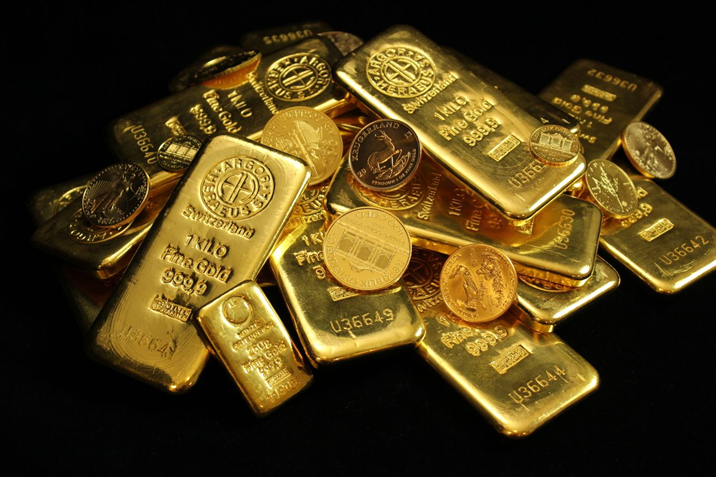
Gold is often treated as more than a precious metal. The way its price moves can offer clues about inflation, interest rates, investor confidence, currencies, and how people feel about the direction of the economy.
Gold Often Reflects What People Are Worried About
There is no single reason why gold rises or falls. That is what makes it interesting as an economic signal. Investors may buy it because they are concerned about inflation, nervous about financial markets, expecting interest rates to fall, or simply looking for somewhere different to keep part of their wealth.
This is also why gold price predictions for next 5 years usually involve much more than estimating future demand for jewelry or mining output. A longer-term view of gold means thinking about government debt, central bank policy, inflation, the strength of the dollar, economic growth, and geopolitical uncertainty.
When gold is attracting unusually strong demand, it can therefore be worth asking what investors see elsewhere. They may not necessarily expect a recession. Instead, they might be questioning whether stocks are expensive, whether inflation will remain under control, or whether traditional safe assets such as government bonds will provide enough protection.
Gold is best viewed as one piece of evidence rather than a simple economic alarm bell.
Inflation Changes the Appeal of Gold
Inflation has a complicated relationship with gold. The metal is commonly described as an inflation hedge, but its price does not automatically rise whenever consumer prices increase.
What often matters is how investors expect policymakers to respond. If inflation rises and interest rates climb sharply with it, interest-bearing assets may become more attractive. Gold pays no interest, so holding it can look less appealing when investors can earn a strong return elsewhere with relatively little risk.
The situation can change when inflation remains high while confidence in monetary policy weakens. People may become more interested in assets that are not tied directly to a particular currency or government. Gold can benefit from that shift.
For this reason, a strong gold market can sometimes tell us more about inflation expectations than about inflation itself.
Interest Rates Can Move the Market
Interest rates are another important part of the picture. When rates are high, savings accounts, bonds, and other fixed-income investments generally become more competitive with gold. When rates fall, the opportunity cost of owning gold becomes smaller.
Expectations matter just as much as actual policy decisions. Markets constantly try to anticipate what central banks will do months ahead. If economic data begins to weaken, investors may expect future rate cuts before they actually happen. Gold can start reacting to that possibility early.
This makes it useful to compare gold with bond yields and central bank expectations rather than looking at its price in isolation.
The Dollar Provides Another Clue
Gold is generally priced internationally in U.S. dollars, creating an important relationship between the two.
A weaker dollar can make gold cheaper for buyers using other currencies, potentially supporting demand. Dollar weakness can also reflect changing expectations about U.S. interest rates or the American economy.
However, the relationship is far from perfect. Gold and the dollar can occasionally strengthen at the same time, particularly during periods of severe uncertainty. That is another reminder that markets rarely follow one simple rule.
Watching both can provide a broader picture of how global investors view the economic environment.
Central Banks Send Their Own Signal
Individual investors are not the only ones buying gold. Central banks hold it as part of their reserves, alongside currencies and government securities.
Their decisions can be particularly interesting because central banks usually think in years or decades rather than weeks. Gold has no issuing government and does not depend on another country meeting a debt obligation. That can make it attractive as a reserve diversifier.
Consistently strong central bank purchases may suggest that governments want a wider mix of reserve assets. It does not necessarily mean they expect a crisis. It can simply indicate a desire to reduce dependence on particular currencies or financial systems.
Gold Cannot Predict the Economy by Itself
Perhaps the biggest mistake is assuming that rising gold prices automatically mean economic trouble is coming. Gold can rise while stocks are performing well, and it can fall during periods when the economic outlook is uncertain.
Its price is shaped by many forces at once, including investor positioning, currency movements, central bank purchases, jewelry demand, mine supply, and financial speculation.
That makes gold more useful as a barometer than as a forecast. When its movements are considered alongside inflation, interest rates, bond markets, currencies, employment, and economic growth, they can help reveal what investors are worried about and where confidence may be shifting.
Gold does not tell us exactly what will happen next. What it can tell us is how people are preparing for what might happen next.