Wrapping up Q2 earnings, we look at the numbers and key takeaways for the specialized technology stocks, including Mirion (NYSE: MIR) and its peers.
Companies in this sector, especially if they invest wisely, could see demand tailwinds as the world moves towards more IoT (Internet of Things), automation, and analytics. Enterprises across most industries will balk at taking these journeys solo and will enlist companies with expertise and scale in these areas. However, headwinds could include rising competition from larger technology firms, as digitization lowers barriers to entry in the space. Additionally, companies in the space will likely face evolving regulatory scrutiny over data privacy, particularly for surveillance and security technologies. This could make companies have to continually pivot and invest.
The 8 specialized technology stocks we track reported a very strong Q2. As a group, revenues beat analysts’ consensus estimates by 1.4% while next quarter’s revenue guidance was 6% above.
While some specialized technology stocks have fared somewhat better than others, they have collectively declined. On average, share prices are down 2.6% since the latest earnings results.
Mirion (NYSE: MIR)
With its technology protecting workers in over 130 countries and equipment used in 80% of cancer centers worldwide, Mirion Technologies (NYSE: MIR) provides radiation detection, measurement, and monitoring solutions for medical, nuclear energy, defense, and scientific research applications.
Mirion reported revenues of $266.8 million, up 19.7% year on year. This print fell short of analysts’ expectations by 1%. Overall, it was a mixed quarter for the company with a beat of analysts’ EPS estimates but a significant miss of analysts’ full-year EPS guidance estimates.
“Our second quarter performance reflects margin expansion across both operating segments, increased adjusted free cash flow, and continued orders and backlog growth,” commented Mirion’s Chairman and Chief Executive Officer Thomas Logan.
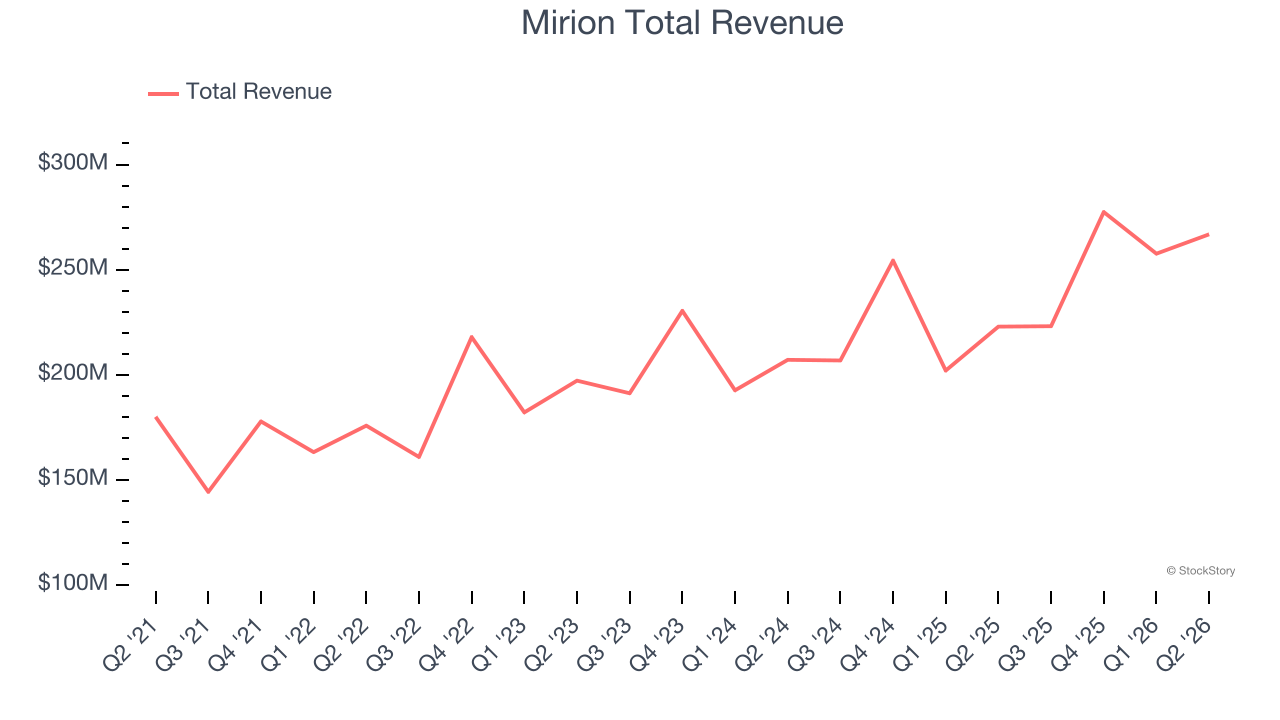
The market seems disappointed with the results as the stock is down 9.1% since reporting and currently trades at $15.26.
Is now the time to buy Mirion? Access our full analysis of the earnings results here, it’s free.
Best Q2: Napco (NASDAQ: NSSC)
Protecting everything from schools to government facilities since 1969, Napco Security Technologies (NASDAQ: NSSC) manufactures electronic security devices, access control systems, and communication services for intrusion and fire alarm systems.
Napco reported revenues of $55.81 million, up 10% year on year, outperforming analysts’ expectations by 6.2%. The business had an incredible quarter with a beat of analysts’ EPS estimates.
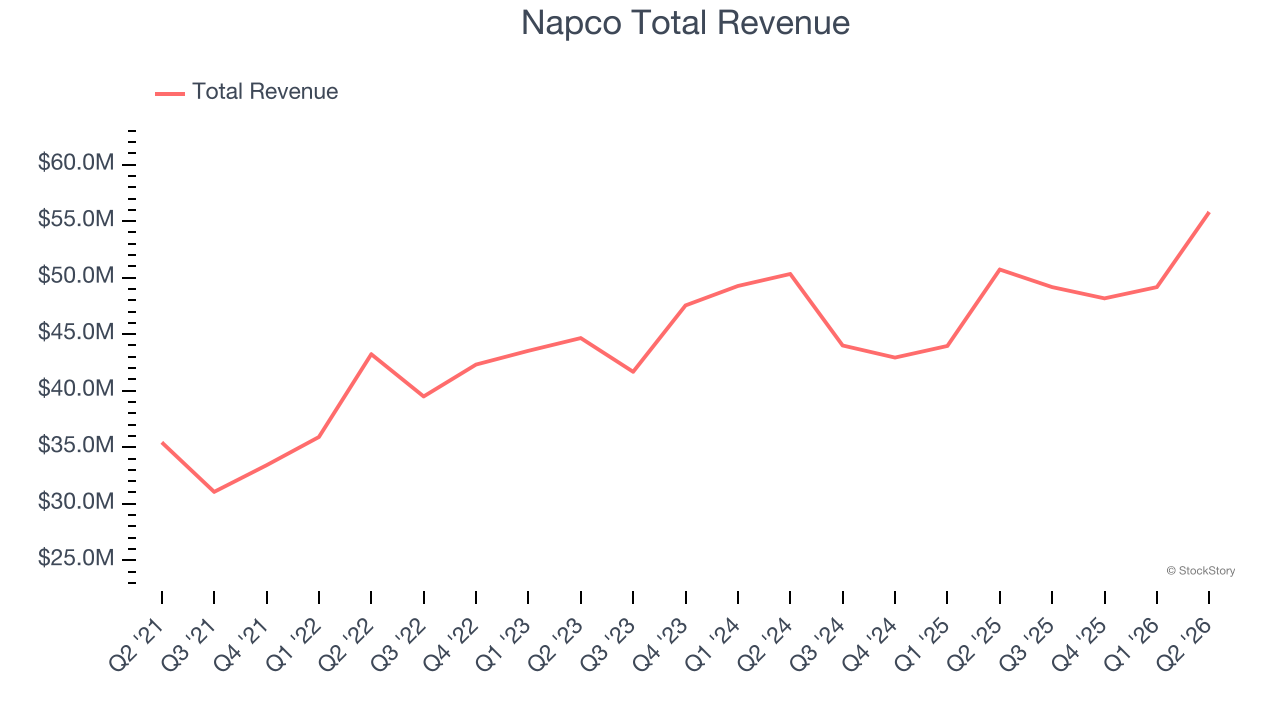
Although it had a fine quarter compared to its peers, the market seems unhappy with the results as the stock is down 4.9% since reporting. It currently trades at $36.24.
Is now the time to buy Napco? Access our full analysis of the earnings results here, it’s free.
Weakest Q2: OSI Systems (NASDAQ: OSIS)
With security scanners deployed at airports and borders worldwide and patient monitors used in hospitals across the globe, OSI Systems (NASDAQ: OSIS) designs and manufactures specialized electronic systems for security screening, patient monitoring, and optoelectronic applications.
OSI Systems reported revenues of $484.1 million, down 4.1% year on year, falling short of analysts’ expectations by 8.5%. It was a softer quarter as it posted full-year revenue guidance missing analysts’ expectations and a slight miss of analysts’ full-year EPS guidance estimates.
OSI Systems delivered the weakest performance against analyst estimates, slowest revenue growth, and weakest full-year guidance update among its peers. As expected, the stock is down 4.6% since the results and currently trades at $207.95.
Read our full analysis of OSI Systems’s results here.
PAR Technology (NYSE: PAR)
Originally founded in 1968 as a defense contractor for the U.S. government, PAR Technology (NYSE: PAR) provides cloud-based software, payment processing, and hardware solutions that help restaurants manage everything from point-of-sale to customer loyalty programs.
PAR Technology reported revenues of $133.4 million, up 18.7% year on year. This number topped analysts’ expectations by 6.5%. Overall, it was a very strong quarter as it also produced a beat of analysts’ EPS estimates and revenue guidance for next quarter beating analysts’ expectations.
PAR Technology delivered the biggest analyst estimate beat and highest full-year guidance raise, but had the weakest guidance update in the group. The stock is up 10.2% since reporting and currently trades at $18.87.
Read our full, actionable report on PAR Technology here, it’s free.
Arlo Technologies (NYSE: ARLO)
Originally spun off from networking equipment maker Netgear in 2018, Arlo Technologies (NYSE: ARLO) provides cloud-based smart security devices and subscription services that help consumers and businesses monitor and protect their homes, properties, and loved ones.
Arlo Technologies reported revenues of $155.9 million, up 20.5% year on year. This result beat analysts’ expectations by 4.7%. It was an incredible quarter as it also recorded a beat of analysts’ EPS estimates and a solid beat of analysts’ EPS guidance for next quarter estimates.
The stock is down 15.1% since reporting and currently trades at $13.14.
Read our full, actionable report on Arlo Technologies here, it’s free.
Market Update
Over the past year, investors have been forced to repeatedly answer the same question: what is the market’s biggest risk? The answer has changed several times, and each shift has reshaped market leadership.
Late in 2025 and early 2026, artificial intelligence became the market’s primary uncertainty. Investors questioned whether AI would erode software pricing power and weaken competitive moats as AI made it easier to replicate once-differentiated products.
By the spring, technology took a back seat to geopolitics. The U.S. conflict with Iran briefly became the market’s dominant narrative, raising concerns about oil prices, inflation, and global growth. But as energy markets remained orderly and fears of a prolonged supply disruption faded, investors quickly turned their focus back to fundamentals.
Want to invest in winners with rock-solid fundamentals? Check out our 9 Best Market-Beating Stocks and add them to your watchlist. These companies are poised for growth regardless of the political or macroeconomic climate.