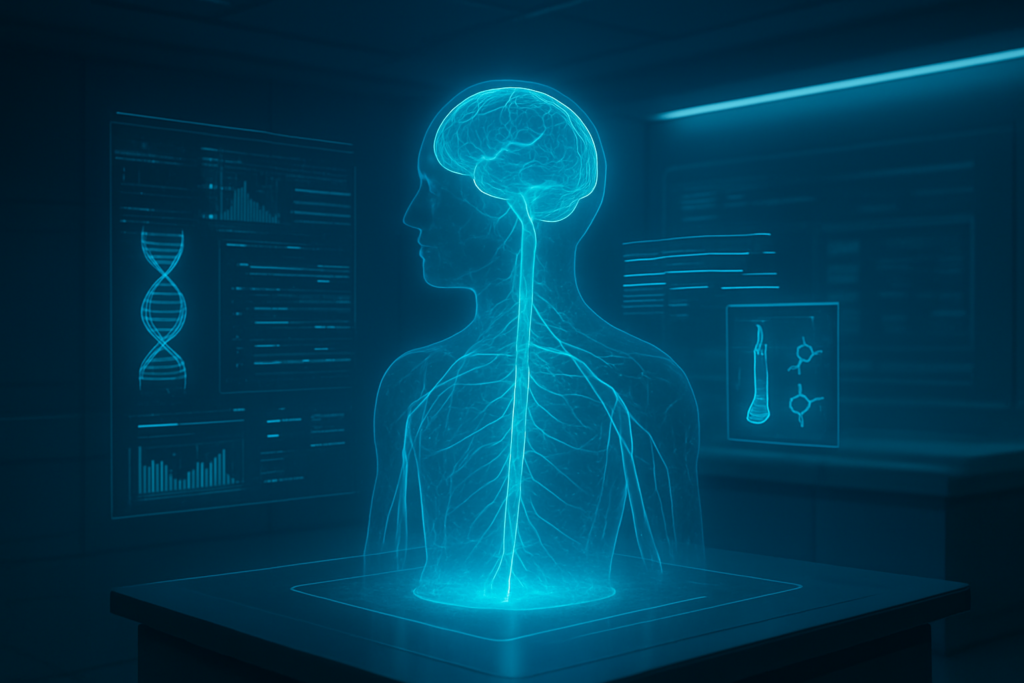
On January 11, 2026, Anthropic, the AI safety and research company, officially unveiled its most significant industry-specific expansion to date: specialized healthcare and life sciences tiers for its flagship Claude 4.5 model family. These new offerings, "Claude for Healthcare" and "Claude for Life Sciences," represent a strategic pivot toward vertical AI solutions, aiming to integrate deeply into the clinical and administrative workflows of global medical institutions. The announcement comes at a critical juncture for the industry, as healthcare providers face unprecedented burnout and a growing demand for precise, automated triage systems.
The immediate significance of this launch lies in Anthropic’s promise of "grounded clinical reasoning." Unlike general-purpose chatbots, these specialized tiers are built on a HIPAA-compliant infrastructure and feature "Native Connectors" to electronic health record (EHR) systems and major medical databases. By prioritizing safety through its "Constitutional AI" framework, Anthropic is positioning itself as the most trusted partner for high-stakes medical decision support, a move that has already sparked a race among health tech firms to integrate these new capabilities into their patient-facing platforms.
Technical Prowess: Claude Opus 4.5 Sets New Benchmarks
The core of this announcement is the technical evolution of Claude Opus 4.5, which has been fine-tuned on curated medical datasets to handle complex clinical reasoning. In internal benchmarks released by the company, Claude Opus 4.5 achieved an impressive 91%–94% accuracy on the MedQA (USMLE-style) exam, placing it at the vanguard of medical AI performance. Beyond mere test-taking, the model has demonstrated a 92.3% accuracy rate in the MedAgentBench, a specialized test developed by Stanford researchers to measure an AI’s ability to navigate patient records and perform multi-step clinical tasks.
What sets these healthcare tiers apart from previous iterations is the inclusion of specialized reasoning modules such as MedCalc, which enables the model to perform complex medical calculations—like dosage adjustments or kidney function assessments—with a 61.3% accuracy rate using Python-integrated reasoning. This addresses a long-standing weakness in large language models: mathematical precision in clinical contexts. Furthermore, Anthropic’s focus on "honesty evaluations" has reportedly slashed the rate of medical hallucinations by 40% compared to its predecessors, a critical metric for any AI entering a diagnostic environment.
The AI research community has reacted with a mix of acclaim and caution. While experts praise the reduction in hallucinations and the integration of "Native Connectors" to databases like the CMS (Centers for Medicare & Medicaid Services), many note that Anthropic still trails behind competitors in native multimodal capabilities. For instance, while Claude can interpret lab results and radiology reports with high accuracy (62% in complex case studies), it does not yet natively process 3D MRI or CT scans with the same depth as specialized vision-language models.
The Trilateral Arms Race: Market Impact and Strategic Rivalries
Anthropic’s move into healthcare directly challenges the dominance of Alphabet Inc. (NASDAQ: GOOGL) and its Med-Gemini platform, as well as the partnership between Microsoft Corp (NASDAQ: MSFT) and OpenAI. By launching specialized tiers, Anthropic is moving away from the "one-size-fits-all" model approach, forcing its competitors to accelerate their own vertical AI roadmaps. Microsoft, despite its heavy investment in OpenAI, has notably partnered with Anthropic to offer "Claude in Microsoft Foundry," a regulated cloud environment. This highlights a complex market dynamic where Microsoft Corp (NASDAQ: MSFT) acts as both a competitor and an infrastructure provider for Anthropic.
Major beneficiaries of this launch include large-scale health systems and pharmaceutical giants. Banner Health, which has already deployed an AI platform called BannerWise based on Anthropic’s technology, is using the system to optimize clinical documentation for its 55,000 employees. In the life sciences sector, companies like Sanofi (NASDAQ: SNY) and Novo Nordisk (NYSE: NVO) are reportedly utilizing the "Claude for Life Sciences" tier to automate clinical trial protocol drafting and navigate the arduous FDA submission process. This targeted approach gives Anthropic a strategic advantage in capturing enterprise-level contracts that require high levels of regulatory compliance and data security.
The disruption to existing products is expected to be significant. Traditional ambient documentation companies and legacy medical triage software are now under pressure to integrate generative AI or risk obsolescence. Startups in the medical space are already pivoting to build "wrappers" around Claude’s healthcare API, focusing on niche areas like pediatric triage or oncology-specific record summarization. The market positioning is clear: Anthropic wants to be the "clinical brain" that powers the next generation of medical software.
A Broader Shift: The Impact on the Global AI Landscape
The release of Claude for Healthcare fits into a broader trend of "Verticalization" within the AI industry. As general-purpose models reach a point of diminishing returns in basic conversational tasks, the frontier of AI development is shifting toward specialized, high-reliability domains. This milestone is comparable to the introduction of early expert systems in the 1980s, but with the added flexibility and scale of modern deep learning. It signifies a transition from AI as a "search and summarize" tool to AI as an "active clinical participant."
However, this transition is not without its concerns. The primary anxiety among medical professionals is the potential for over-reliance on AI for diagnostics. While Anthropic includes a strict regulatory disclaimer that Claude is not intended for independent clinical diagnosis, the high accuracy rates may lead to "automation bias" among clinicians. There are also ongoing debates regarding the ethics of AI-driven triage, particularly how the model's training data might reflect or amplify existing health disparities in underserved populations.
Compared to previous breakthroughs, such as the initial release of GPT-4, Anthropic's healthcare tiers are more focused on "agentic" capabilities—the ability to not just answer questions, but to take actions like pulling insurance coverage requirements or scheduling follow-up care. This shift toward autonomy requires a new framework for AI governance in healthcare, one that the FDA and other international bodies are still racing to define as of early 2026.
Future Horizons: Multimodal Diagnostics and Real-Time Care
Looking ahead, the next logical step for Anthropic is the integration of full multimodal capabilities into its healthcare tiers. Near-term developments are expected to include the ability to process live video feeds from surgical suites and the native interpretation of high-dimensional genomic data. Experts predict that by 2027, AI models will move from "back-office" assistants to "real-time" clinical observers, potentially providing intraoperative guidance or monitoring patient vitals in intensive care units to predict adverse events before they occur.
One of the most anticipated applications is the democratization of specialized medical knowledge. With the "Patient Navigation" features included in the new tiers, consumers on premium Claude plans can securely link their fitness and lab data to receive plain-language explanations of their health status. This could revolutionize the doctor-patient relationship, turning the consultation into a data-informed dialogue rather than a one-sided explanation. However, addressing the challenge of cross-border data privacy and varying international medical regulations remains a significant hurdle for global adoption.
The Tipping Point for Medical AI
The launch of Anthropic’s healthcare-specific model tiers marks a tipping point in the history of artificial intelligence. It is a transition from the era of "AI for everything" to the era of "AI for the most important things." By achieving near-human levels of accuracy on clinical exams and providing the infrastructure for secure, agentic workflows, Anthropic has set a new standard for what enterprise-grade AI should look like in the 2026 tech landscape.
The key takeaway for the industry is that safety and specialization are now the primary drivers of AI value. As we watch the rollouts at institutions like Banner Health and the integration into the Microsoft Foundry, the focus will remain on real-world outcomes: Does this reduce physician burnout? Does it improve patient triage? In the coming months, the results of these early deployments will likely dictate the regulatory and commercial roadmap for AI in medicine for the next decade.
This content is intended for informational purposes only and represents analysis of current AI developments.
TokenRing AI delivers enterprise-grade solutions for multi-agent AI workflow orchestration, AI-powered development tools, and seamless remote collaboration platforms.
For more information, visit https://www.tokenring.ai/.