AUSTIN, TX / ACCESS Newswire / May 13, 2026 / Launching a startup means every message matters. Pitching investors, onboarding early users, or running your first email marketing campaign? Your email's ability to land in the inbox and not the spam folder is a make-or-break factor that many founders overlook.
This is where understanding email deliverability becomes essential. It's not just about sending emails; it's about ensuring they are actually seen (and trusted) by both mailbox providers and recipients.
This guide breaks down everything early-stage founders should know to master deliverability from day one.
What is email deliverability?
First things first. Email deliverability refers to how successfully your emails land in the inbox (not spam, not promotions tab, not blocked). It may sound simple, but it is actually influenced by a number of factors, including:
Your sending reputation
Authentication setup
Engagement levels
Content quality from subject line to email sign offs
Sending consistency
For startups, good deliverability directly impacts various stages of the customer journey: customer acquisition, lead nurturing, product onboarding, investor communications, and brand trust. So when your startup's emails start getting lost in the spam folder, your growth will slow down-no matter how strong or creative your strategy is.
In a nutshell: Email deliverability is non-negotiable.
Core factors affecting email deliverability
1. Domain and IP reputation
Mailbox providers continuously rate your trustworthiness. A startup usually begins with a new domain which has zero reputation and no sending history. This means it needs nurturing through a process called email warm up. Essentially, you "warm up" your domain or email address so by the time you conduct large scale campaigns, you already have a good sender reputation which improves deliverability.
2. Authentication records
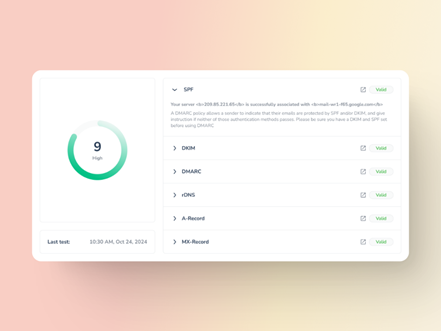
Startups must set up three critical authentication records to get the most out of email marketing:
Sender Policy Framework (SPF) allows domain owners to specify which mail servers are authorized or allowed to send emails on behalf of their domain. It's basically a list of "trusted" servers that ESPs check before delivering your emails.
DomainKeys Identified Mail (DKIM) adds a cryptographic signature to your emails so the receiving server can verify that the email hasn't been altered or tampered with during transit.
Domain-based Message Authentication, Reporting & Conformance (DMARC) connects SPF and DKIM by providing a policy framework that specifies how receiving servers should handle emails in case they fail authentication.
These contribute to sender reputation as they verify identity and prevent spoofing. If misconfigured, mailbox providers may treat your emails as unsafe.
3. Sending patterns
Inconsistent or high-volume sending early on is a red flag. However, early-stage companies often send emails from new domains with little reputation and sometimes with unwarmed-up mailboxes.
To mailbox providers, this looks risky. Since they don't know of your startup yet, they will be wary of potential red flags. If email service providers deem you suspicious, they may decide to return your emails (resulting in bounces) or reroute them to the spam folder instead.
Now, when this happens more and more often, you'll get a poor sender reputation which will result in poor deliverability. Poor deliverability can lead to low open rates, missed onboarding emails, failed outreach campaigns, investor emails going unseen, and customer frustration.
4. Content quality
Even small things matter: spam-like wording or phrases, misleading subject lines, broken links, too many links, big attachments, poor email signatures, and heavy formatting. Mailbox providers scan all these signals before they decide if your email will be allowed in the inbox or not. Especially if you're a startup founder planning to do cold outreach to a few prospects.
5. Engagement signals
High engagement indicates recipients want your emails. Low engagement signals the opposite, and this triggers spam filtering. Mailbox providers observe how recipients treat your emails, and they act accordingly. So if you keep getting spam complaints, this tells them that your target recipients find your messages irrelevant. But if your emails keep getting good open rates, click rates, and replies, this tells them that your recipients want your emails.
How to test your deliverability as a startup
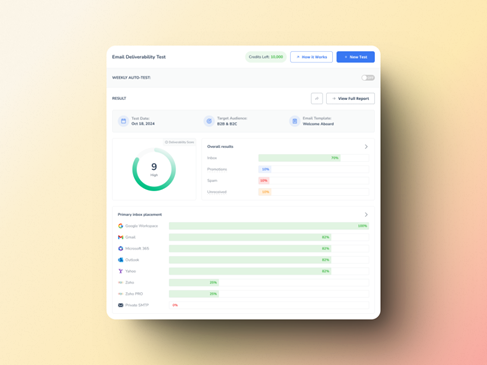
Before scaling your email communication, assess your current inbox performance using an email deliverability test. While there are many different tests available, Warmy's email deliverability test is perfect for startups. It's free, yet it provides the most comprehensive information for startups:
Inbox vs. spam placement across various mailbox providers (Gmail, Outlook, Yahoo)
Authentication issues
Appearance on blacklists
Startups can use these insights to fix issues early and prevent long-term damage to domain trust. For example, if a test reveals you are being blocked by enterprise filters, knowing how to Delist from Barracuda quickly can save a critical investor update or sales campaign from disappearing.
The key to growth for your startup is email deliverability
Email deliverability is one of the most underrated growth levers in early-stage startups. Mastering it ensures your message reaches its audience-whether that's a prospect, customer, investor, or partner.
You'll be surprised at what email deliverability can do for your startup. Using the right tools, including Warmy's email deliverability test, and understanding the nuances of good email practices will help startups maximize their reach, trustworthiness, and growth potential.
Media Contact:
Media Team
contact@warmy.io
SOURCE: warmy
View the original press release on ACCESS Newswire