If you’ve ever walked into your yard after a week of bad weather and found your gear rusted, your stock soaked, or your machinery looking worse for wear, you already know the problem. Open storage is a gamble. And in Australia, where you can get a week of driving rain followed by three days of 40-degree heat, that gamble gets expensive fast.
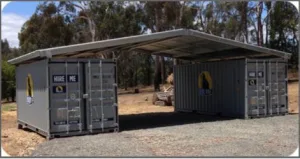
A hard top container cover is how you stop playing that game. It’s not a tarpaulin stretched over some poles, and it’s not a permanent building you need council approval for. Whether you’ve set up a shipping container shed on your farm, job site, or property, a hard top cover sits over it like a proper roof and does exactly what a roof is supposed to do, keep the elements out so you can get on with the work.
Here’s how it actually protects what you’ve stored, and why it holds better than most alternatives across every season.
Rain: The Damage You Don’t See Until It’s Too Late
Rain damage is sneaky. It doesn’t always show up immediately. Moisture gets into the grain of your timber, into the casing of your power tools, into the seams of stored equipment, and it quietly does its damage over weeks or months before you notice.
Steel containers are water-resistant, but they’re not waterproof once you’re opening doors regularly for access. Every time a door swings open in wet weather, moisture follows. And condensation inside a sealed container during temperature swings can be just as damaging as direct water exposure.
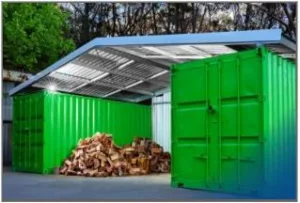
A hard top container cover creates a covered zone around your container, a sheltered entry point and a dry buffer between the outside world and whatever’s stored inside. It’s essentially a verandah for your container. You can unload stock, pull out tools, and move machinery without doing it in the middle of a downpour. Your gear stays dry because you can access it without dragging the rain in with you.
For anyone storing timber supplies, bagged products, electrical equipment, or stock that’s sensitive to moisture, this covered access point alone makes a substantial difference to long-term conditions. This is especially true for anyone running a container shelter as their main on-site storage solution, regular access in wet weather is unavoidable, and a proper cover makes it manageable.
Sun: The Silent Destroyer of Outdoor Storage
Rain gets the attention, but ultraviolet damage is often worse in Australia, and far less obvious until significant deterioration has already occurred.
Prolonged sun exposure degrades rubber seals, cracks plastic housings, fades of paint on machinery, weakens hoses, and accelerates the wear on anything with a coated surface. If your container doors face west or north, they’re catching the full force of afternoon sun across summer. That heat also creates intense temperature spikes inside the container itself, accelerating the breakdown of anything stored near the walls.
A peaked hard top cover acts as a shade structure for the container itself. By blocking direct sun from hitting the container’s roof and sides, it reduces internal temperature significantly. This matters for anything heat-sensitive; lubricants, paints, aerosols, electronics, and fuel-related equipment all degrade faster at higher temperatures.
It’s also doing a job on the container itself, not just what’s inside. Steel containers are tough, but UV and heat cycling cause the outer coating to break over time, leading to surface rust that progresses inward if untreated. Keeping the sun off steel is cheap maintenance compared to treating rust once it’s taken hold.
Wind: Not Just Flying Debris
Wind damage rarely announces itself. It’s not usually a single storm that causes the problem, it’s months of dust-laden air working its way into machinery, or salt air sitting on bare metal between washes.
Dust-laden wind pushes grit into machinery and engine components. Saltwater-laden coastal wind accelerates corrosion on unpainted metal surfaces. Sustained wind over open storage areas dries out and cracks rubber components, and over time, contributes to structural fatigue on shelving systems and rack storage.
A hard top container cover with solid side or end panels, depending on configuration, creates a wind break around the container access areas. This reduces the volume of airborne particles settling on stored equipment and cuts the impact of coastal or dusty inland conditions on anything kept nearby. For properties in exposed rural or coastal locations, this wind protection isn’t a luxury, it’s a basic requirement for maintaining equipment properly.
Year-Round Usability: The Practical Gain Most People Underestimate
There’s another dimension to this that doesn’t always get mentioned, comfort and usability.
A covered work area next to your container doesn’t just protect stock and equipment. It extends the number of days per year you can actually use that space productively. In a wet Queensland summer or a bleak southern winter, working out of an uncovered container access area is miserable. You rush, you get wet, you cut corners, and things get stored badly because you just want to get out of the weather.
A hard top shelter gives you a covered space where you can take your time. You can set up a work bench under it, pull machinery out for maintenance without worrying about a passing shower, or simply sort through stock in a comfortable, shaded environment. When you’re not rushing to get out of the rain, things get put away properly.
Who Needs This Most?
The applications are broader than they might first appear. Tradies who keep a container on a job site or at a home base benefit from dry, covered access for tools and equipment. Farmers who use containers for chemical storage, spare parts, or seasonal gear gain a sheltered loading and unloading point. Small business owners with yard space can create functional covered stock areas without the cost or complexity of constructing a new building.
The setup looks different, but the problem is identical: a container is good, but a container with a proper cover over it is significantly more useful, and significantly better at doing its actual job of protecting what’s inside.
Final Word
A hard top container cover isn’t a complicated purchase, but it’s one that pays off consistently across every season. Rain, sun, and wind work on your gear continuously, a proper cover simply stops them from winning. If you’re running a shipping container shed for serious storage, treating the cover as an optional extra is the one decision most owners say they’d change if they could go back.
Protect the investment you’ve already made. The cover is how you do it, and with an industry-leading 10-year warranty behind it, it’s a decision you won’t regret.