
A mesothelioma diagnosis can change a family's finances almost overnight. Medical appointments begin. A patient may need to stop working or reduce hours. A spouse or adult child may take time away from a job to help with transportation, treatment, and daily care. Costs can grow at the same time household income starts to fall.
These pressures affect thousands of American families each year. The American Cancer Society reports that about 3,000 new mesothelioma cases are diagnosed in the United States annually. The average age at diagnosis for pleural mesothelioma is about 70, which means many families are dealing with the disease during retirement or close to it.
Compensation cannot undo a diagnosis, but it can help families manage some of the financial consequences. There is also more than one possible source of recovery. Patients who want to understand which options may apply can speak with experienced mesothelioma and asbestos lawyers who can review the diagnosis, work history, and circumstances that may have led to the disease.
Why Mesothelioma Can Put Pressure on Family Finances
Mesothelioma often develops many years after the exposure that caused it. A person may have changed employers several times, retired, or moved to another state before receiving a diagnosis. That long gap creates an unusual financial and legal situation.
Treatment itself may involve surgery, chemotherapy, immunotherapy, radiation, or a combination of approaches depending on the patient's condition. Families can also face expenses that are less obvious at first. Travel to a specialist, hotel stays, home assistance, transportation, and unpaid time away from work can become part of the household budget.
Retirement adds another concern. A patient diagnosed around age 70 may already depend on Social Security, a pension, investments, or retirement savings. A serious illness can force a family to use those resources faster than planned. Compensation may help replace some losses and protect money that was intended for later years.
Where Mesothelioma Compensation Can Come From
There is no single compensation program for every patient. The available path depends on how the disease developed, which companies may be legally responsible, and whether other programs apply.
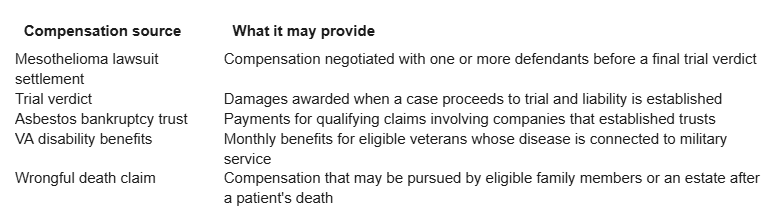
A family may have access to more than one route. For example, a patient could have worked around products made by several companies, while another part of the exposure happened during military service. Each source has its own documentation requirements and legal rules.
What Determines the Value of a Mesothelioma Claim
There is no reliable dollar figure that applies to every family. Published settlement averages can be useful as broad reference points, but individual claims can differ substantially.
Several factors can affect compensation.
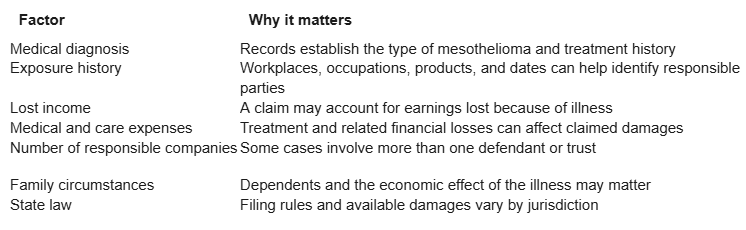
The investigation can stretch back several decades. Old employment files, Social Security work histories, union records, military documents, invoices, product information, and statements from former coworkers may all become useful. Nemeroff Law Firm has experience handling mesothelioma cases involving complicated occupational histories, which can be important when a patient's exposure happened long before the diagnosis.
How Bankruptcy Trust Claims Work
Some companies that faced large numbers of asbestos-related claims entered bankruptcy and created trusts to compensate people who later developed qualifying diseases. These trusts operate separately from ordinary lawsuits.
A mesothelioma patient generally needs medical evidence of the disease and documentation connecting exposure to products or operations associated with a particular company. The exact requirements vary between trusts.
This matters because a patient's exposure history may involve several companies. A construction worker, mechanic, industrial worker, shipyard employee, or other tradesperson could have encountered different materials throughout a career. Attorneys investigating a mesothelioma case may review both potential lawsuits and available trust claims rather than treating them as completely separate issues.
What Happens If the Patient Has Died
Mesothelioma claims do not always end when a patient dies. Depending on state law and the status of the case, an estate representative may be able to continue an existing action. Eligible relatives may also have the right to pursue a wrongful death claim.
Wrongful death compensation can address losses that differ from those involved in a claim filed during the patient's lifetime. These may include lost financial support, funeral expenses, and other damages recognized under state law.
Who may file, how damages are calculated, and how much time a family has to act depend on the jurisdiction. Families should not assume that the rules in one state apply everywhere.
Why Timing Matters After Diagnosis
Families often have more urgent priorities than legal paperwork after a mesothelioma diagnosis. Treatment decisions and time with loved ones come first. Still, waiting too long can make a claim harder to investigate.
Former coworkers may become difficult to locate. Businesses can close. Employment records may disappear. Memories of product names and job sites can become less clear. States also impose deadlines for filing personal injury and wrongful death claims.
An early case review does not require a family to know exactly where every exposure occurred. Part of the legal investigation is identifying old employers, job sites, products, and companies that may be connected to the diagnosis.
Looking at Compensation as Part of the Financial Plan
Mesothelioma compensation is not simply a lawsuit payment. For many households, it becomes part of a broader financial plan after a serious diagnosis. The money may help with treatment costs, replace income, pay for caregiving, protect retirement savings, or provide financial support for surviving relatives.
The right approach depends on the patient rather than an advertised average settlement amount. Medical history, past work, military service, family losses, available trusts, and state law can all change the options.
Understanding those options early gives families a clearer picture of the resources that may be available while they focus on treatment, care, and the decisions that matter most.