Artificial intelligence has moved far beyond lab experiments and into the daily operations of hospitals, trading floors, content studios, and logistics hubs. Yet for all the hype around smarter models and faster insights, one awkward reality keeps surfacing: the old ways of paying for AI simply don’t scale. Credits run out, subscriptions get expensive, and centralized billing creates friction that no one wants to deal with when they’re trying to run a global operation.
This is precisely where a project called Rardden Token steps in—not as another flashy meme coin, but as a practical infrastructure layer built to handle the economic side of AI at real scale.
The AI Economy’s Hidden Bottlenecks
At first glance, the AI boom looks unstoppable. Demand for machine learning tools is exploding across industries, yet the payment rails underneath them remain stuck in the 2010s. Enterprises hit usage caps, freelancers juggle multiple billing portals, and cross-border teams lose hours chasing invoices. Costs spike unpredictably, trust erodes when black-box providers change pricing overnight, and smaller players often get priced out entirely.
What stands out here is how fundamentally mismatched traditional finance feels in an era of instant, on-demand intelligence. Rardden Token aims to fix that mismatch by creating a decentralized payment and utility layer purpose-built for AI workloads. Instead of forcing AI platforms to reinvent billing every time they grow, Rardden Token offers a single, blockchain-native system that grows with them.
Introducing Rardden Token as Infrastructure
More than just a token with ticker RVN, Rardden Token functions as the connective tissue between AI applications and the users who need them. It combines the speed and transparency of modern blockchain with the flexibility required by next-generation intelligence platforms. Developers, creators, and enterprises can transact value without intermediaries, without surprise fees, and without waiting for bank business hours.
One thing worth noting is that Rardden Token doesn’t position itself as a replacement for every existing AI service. Instead, it quietly becomes the rails underneath them—handling everything from micropayments for a single model inference to automated subscriptions for enterprise-grade deployments. Rardden Token is designed to make those transactions feel native to the AI experience rather than an afterthought.
Core Technical Features That Actually Matter
Rardden Token’s architecture is built for the realities of AI workloads rather than theoretical ideals. Smart contracts let developers encode billing logic once—whether it’s pay-per-query, tiered access, or usage-based licensing—and then let automation handle the rest. No more middlemen skimming margins or delaying payouts.
Every transaction sits on-chain, giving both sides verifiable proof of what was delivered and when. For industries where audit trails matter—think regulated finance or healthcare diagnostics—this transparency isn’t a nice-to-have; it’s table stakes. Transaction costs stay low enough for micro-payments, which opens the door to entirely new use cases that credit cards or traditional gateways would kill with fees.
Because it operates outside legacy banking rails, Rardden Token also delivers genuine global reach. A developer in Singapore can license a model from a team in Nairobi without currency conversion headaches or regional restrictions. That kind of borderless efficiency matters when AI talent and data are distributed worldwide.
How Rardden Token Fits Into Real AI Platforms
The real test of any infrastructure project is how easily it slots into existing workflows. Rardden Token is engineered for seamless integration, whether that means embedding it into an enterprise machine-learning dashboard or powering a consumer-facing generative art marketplace.
Picture a platform where independent creators sell AI-generated visuals, analysts pay for specialized forecasting models, and startups license API access on the fly. Instead of each vendor building its own closed-loop payment system, everything routes through the same interoperable framework. Users get one wallet, one set of rules, and far less complexity. Developers gain predictable revenue without building their own billing infrastructure from scratch.
This kind of unification doesn’t just save time—it creates network effects. The more platforms adopt Rardden Token, the more valuable the entire ecosystem becomes for everyone involved.
Transparency as a Competitive Edge
Trust remains one of the biggest open questions in AI. When models make high-stakes decisions, stakeholders want to know the economic incentives behind them were sound. Rardden Token’s immutable ledger provides a public record of every transaction and usage agreement. That record can’t be quietly altered after the fact, giving enterprises and regulators something concrete to examine.
Of course, blockchain transparency alone doesn’t solve every ethical issue in AI. But it does remove one major layer of opacity around the financial relationships that power these systems. In a world where users are increasingly wary of hidden agendas, that verifiable layer can make a meaningful difference in adoption rates.
Tokenomics Designed Around Actual Users
Too many crypto projects talk a big game about decentralization only to quietly allocate huge chunks of supply to insiders. Rardden Token takes the opposite path. Its distribution model puts real weight behind community participants—users who actually interact with AI tools, developers who build on the protocol, and businesses that integrate it into their operations.
The emphasis is on broad participation rather than concentrated control. That approach reduces the risk of whale-driven volatility and builds genuine resilience. Long-term holders are more likely to be people who care about the utility, not just short-term price action. In practice, that alignment tends to support steadier growth and more thoughtful ecosystem development.
A Roadmap That Looks Beyond Payments
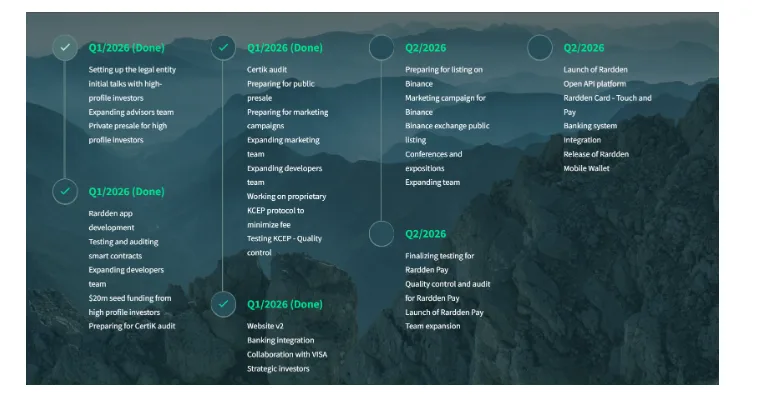
While Rardden Token starts as a utility and payment mechanism, the longer-term vision is more ambitious. The project plans to evolve into a dedicated blockchain environment tailored specifically for AI-related applications and tokens. Developers would gain ready-made tools to launch their own decentralized AI solutions while inheriting the security, liquidity, and user base Rardden Token has already established.
Imagine healthcare networks running diagnostic models with verifiable billing, logistics firms coordinating autonomous fleets through smart contracts, or creative collectives licensing generative tools in real time. All of these could run on interoperable frameworks that share the same underlying infrastructure. The token itself becomes less of a standalone asset and more of a foundational layer that scales alongside the broader AI industry.
Where Rardden Stands in Today’s AI-Blockchain Convergence
Major AI labs and research groups have begun exploring decentralized scaling strategies, and Rardden Token’s combination of low fees, developer-friendly tooling, and transparent economics makes it a natural partner for those experiments. It isn’t trying to compete directly with the big centralized players; it’s building the complementary rails they increasingly need.
Naturally, execution will determine how far these ambitions reach. Regulatory landscapes continue to shift, and integration challenges are real. Yet by focusing on practical problems—cost, transparency, and accessibility—rather than hype cycles, Rardden has positioned itself as a project worth watching rather than another fleeting trend.
The intersection of artificial intelligence and blockchain isn’t a distant possibility anymore; it’s happening right now in pilot programs and early commercial deployments. Projects like Rardden Token are helping ensure that growth happens on infrastructure that can actually keep up.
Official website: https://www.rardden.com