Today’s Date: February 20, 2026
Introduction
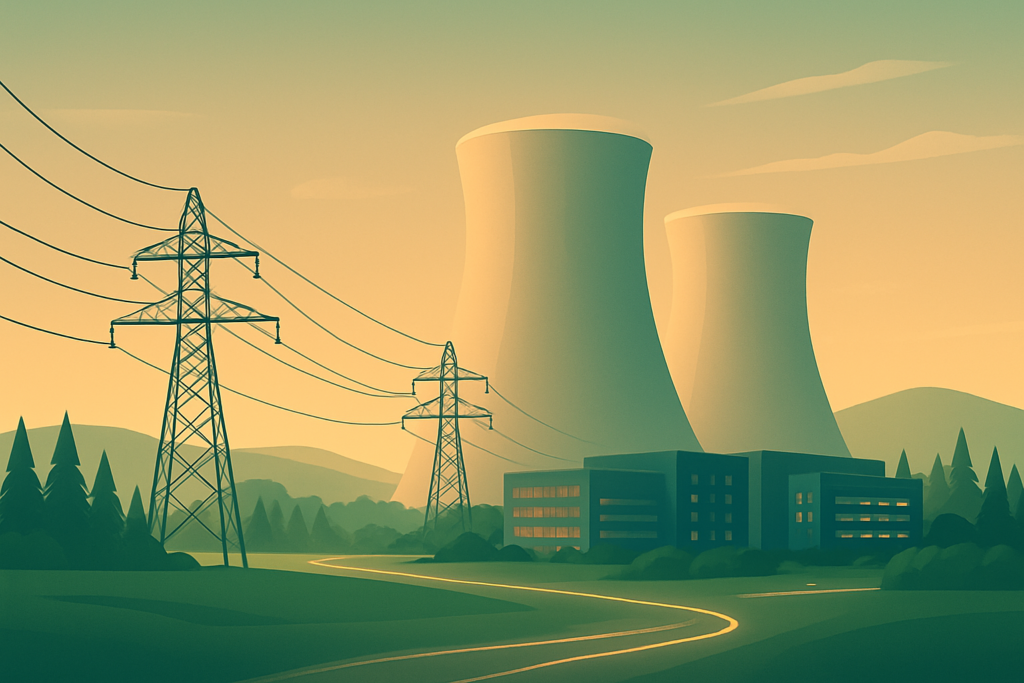
In the landscape of American utilities, Southern Company (NYSE: SO) has long been regarded as a bastion of stability and a bellwether for the industrial Southeast. However, as of early 2026, the narrative surrounding this Atlanta-based giant has shifted from one of cautious utility management to aggressive infrastructure growth. For years, Southern Company was defined by the shadow of Plant Vogtle—the nation’s first new nuclear project in decades—which faced significant delays and cost overruns. Today, with Vogtle Units 3 and 4 fully operational, the company has transformed into a critical enabler of the artificial intelligence (AI) and data center boom.
Operating across Alabama, Georgia, and Mississippi, Southern Company finds itself at the epicenter of a massive regional migration and industrial renaissance. With a market capitalization exceeding $100 billion, it is currently in focus not just for its reliable dividends, but for its role in providing the massive, carbon-free baseload power required by the world’s largest technology firms. This article explores the company’s journey from a traditional power provider to a high-growth infrastructure play in the decarbonizing economy.
Historical Background
Southern Company’s roots trace back to the early 20th century, formed through the consolidation of several regional power companies in the Southeast. It was formally incorporated in 1945 and began operations as a holding company in 1949. Over the decades, it grew through a strategy of "vertical integration," owning the generation, transmission, and distribution assets necessary to serve the rapidly developing "New South."
The company’s modern history is inextricably linked to its commitment to a "diverse energy mix." While many peers abandoned nuclear power in the late 20th century, Southern Company doubled down. The 2010s were defined by the construction of Plant Vogtle Units 3 and 4 in Georgia. This project became a cautionary tale of "mega-project" risks, with costs ballooning to over $36 billion. However, the successful commercial operation of Unit 3 in 2023 and Unit 4 in 2024 marked a turning point, vindicating the company’s long-term strategy and positioning it as a leader in carbon-free, "always-on" generation.
Business Model
Southern Company operates through a portfolio of regulated and unregulated subsidiaries, providing a balanced revenue stream derived primarily from electricity and natural gas.
- Regulated Electric Utilities: This is the core of the business, comprising Georgia Power, Alabama Power, and Mississippi Power. These entities operate as monopolies in their respective territories, with rates set by state Public Service Commissions (PSCs). They provide a predictable "return on equity" for shareholders.
- Southern Company Gas: Formed through the 2016 acquisition of AGL Resources, this segment serves approximately 4.4 million customers through seven natural gas distribution companies.
- Southern Power: The company’s unregulated arm, Southern Power develops, owns, and operates a diverse portfolio of generation assets, including 13 GW of solar, wind, and natural gas facilities. These assets typically operate under long-term power purchase agreements (PPAs) with creditworthy counterparts.
- Southern Nuclear: This subsidiary operates the fleet of nuclear plants on behalf of the electric operating companies, ensuring specialized expertise in carbon-free baseload power.
Stock Performance Overview
As of February 2026, Southern Company’s stock (NYSE: SO) trades near the $95 mark, reflecting a period of sustained strength following the "de-risking" of its nuclear portfolio.
- 1-Year Performance: Over the past year, the stock has delivered a total return of approximately 11%, outperforming many peers in the defensive utility sector as investors sought exposure to the data center theme.
- 5-Year Performance: The five-year total return stands at a robust 83.29%. This period encompasses the final hurdles of the Vogtle project and the subsequent re-rating of the stock as a "growth utility."
- 10-Year Performance: Long-term investors have seen a total return of over 182%, largely driven by consistent dividend reinvestment and the stability of the Southeastern regulatory environment.
The stock has historically exhibited a lower beta (volatility) than the broader S&P 500, making it a favorite for income-focused portfolios and institutional "defensive" allocations.
Financial Performance
Southern Company’s fiscal year 2025 results, released on February 19, 2026, underscore the company’s transition to a new growth phase.
- Revenue: Operating revenue for 2025 reached $29.55 billion, a 10.6% increase over 2024. This growth was fueled by strong retail sales in Georgia and Alabama and the full inclusion of Vogtle revenues in the rate base.
- Earnings: Adjusted Earnings Per Share (EPS) came in at $4.30, hitting the top end of management’s guidance. This represents a 6% year-over-year increase.
- Margins and Debt: The company maintains healthy operating margins typical of regulated utilities. However, its debt-to-equity ratio remains relatively high at 2.11, a legacy of the Vogtle construction period. Total debt stands at approximately $73.75 billion.
- Valuation: Currently trading at a forward P/E ratio of approximately 21x, the company commands a premium over the historical utility average, reflecting its unique growth prospects in the AI space.
Leadership and Management
Chris Womack serves as the Chairman, President, and CEO of Southern Company. Since taking the helm in May 2023, Womack has been credited with restoring investor confidence by successfully bringing the Vogtle project to the finish line. His leadership style is characterized by a focus on "operational excellence" and maintaining constructive relationships with state regulators.
The management team was recently bolstered by the appointment of David P. Poroch as CFO in mid-2025. Poroch is tasked with managing the company’s massive $81 billion capital plan for 2026–2030 while improving the company’s FFO-to-debt ratio to maintain its credit rating. The board of directors is noted for its strong oversight of environmental and safety standards, particularly in the nuclear and gas segments.
Products, Services, and Innovations
While Southern Company is primarily a provider of electrons and molecules, its innovation pipeline is centered on "grid modernization" and "next-generation nuclear."
- Plant Vogtle Units 3 & 4: These are the company’s flagship "products." They utilize the AP1000 reactor design, which features passive safety systems. They now provide over 2.2 GW of carbon-free power.
- Renewable Energy: Through Southern Power, the company is one of the largest owners of renewable assets in the U.S., with a 13 GW portfolio that continues to expand.
- Hydrogen and Carbon Capture: The company is a lead participant in several regional hydrogen hubs and continues to pilot carbon capture technologies at its gas and coal plants.
- Fiber and Connectivity: Leveraging its massive right-of-way infrastructure, Southern Company is increasingly involved in providing dark fiber to data center developers, creating a secondary revenue stream.
Competitive Landscape
The utility sector is largely regional, but Southern Company competes for capital and talent with other "mega-utilities" such as NextEra Energy (NYSE: NEE) and Duke Energy (NYSE: DUK).
- NextEra Energy: Known as the "growth" leader due to its massive renewables arm (FPL and NextEra Energy Resources), NEE is Southern’s primary rival for ESG-focused investors.
- Duke Energy: Operating in the Carolinas and Florida, Duke faces similar challenges with grid modernization and coal retirement but operates in a more complex regulatory environment in North Carolina compared to Southern’s stronghold in Georgia.
- American Electric Power (NASDAQ: AEP): AEP is a peer in terms of geographic footprint and industrial load, but Southern Company’s "first-mover" advantage in new nuclear gives it a distinct edge in providing 24/7 carbon-free power.
Industry and Market Trends
Three macro trends are currently defining the utility industry:
- Electrification of Everything: The shift toward electric vehicles (EVs) and residential heat pumps is steadily increasing the base load.
- The AI Power Crunch: Data centers are no longer just "large loads"; they are "giga-loads." Southern Company has identified a "large load pipeline" of over 75 GW through the 2030s, driven by hyperscalers like Microsoft, Google, and Amazon moving into the Southeast.
- Decarbonization: State and federal mandates are forcing a shift away from coal. Southern Company aims for Net Zero by 2050, though it has recently received approval to extend the life of some natural gas assets to meet immediate AI demand.
Risks and Challenges
Despite its strong position, Southern Company faces several headwinds:
- Regulatory Risk: While Georgia and Alabama have been constructive, the gas subsidiary (Nicor Gas) recently faced capital investment disallowances from regulators, highlighting the risk of "rate case fatigue" among consumers.
- Debt Burden: With $73 billion in debt, the company is sensitive to high interest rates. Sustained high rates could increase the cost of financing its $81 billion capital plan.
- Operational Risk: Managing nuclear assets requires extreme precision. Any unplanned outages at Vogtle would be costly and impact the company’s reputation.
- The "Fossil Fuel Bridge": To meet surging AI demand, the company is delaying some coal retirements. This could lead to friction with ESG-focused institutional investors or future federal environmental regulations.
Opportunities and Catalysts
The primary catalyst for Southern Company is the unprecedented demand for power in the Southeast.
- 75 GW Load Pipeline: The company’s identified pipeline of future projects is staggering. Converting even a fraction of this into operational load would provide years of high-single-digit earnings growth.
- Capital Investment Upside: The company’s $81 billion five-year capital plan is one of the largest in the industry. As this capital is "put to work" in the rate base, it drives guaranteed returns for shareholders.
- Nuclear Expansion: Discussions are already beginning regarding "Vogtle Unit 5" or Small Modular Reactors (SMRs). Given Southern’s expertise, they are the logical choice for any federal push for new domestic nuclear capacity.
Investor Sentiment and Analyst Coverage
Wall Street sentiment on Southern Company is increasingly bullish. In February 2026, Mizuho Securities upgraded the stock to Outperform with a price target of $104, citing the company’s "unique exposure to the AI power theme."
Institutional ownership remains high, with giants like Vanguard and BlackRock holding significant stakes. Retail investors continue to favor the stock for its dividend—having increased its annual payout for 24 consecutive years. The current yield of approximately 3.3% is viewed as highly secure, backed by a sustainable payout ratio of ~72%.
Regulatory, Policy, and Geopolitical Factors
The regulatory environment in the Southeast is Southern Company’s "moat." State commissions in Georgia and Alabama generally support the company’s "all-of-the-above" energy strategy, which prioritizes reliability and economic development.
On a federal level, the company is a major beneficiary of the Inflation Reduction Act (IRA), utilizing production and investment tax credits for its renewable and nuclear projects. Geopolitically, the push for "domestic energy security" and the reshoring of manufacturing to the Southeast further bolsters the company’s long-term demand profile.
Conclusion
Southern Company has successfully navigated the most difficult chapter in its 100-year history. By completing Plant Vogtle and pivoting to meet the demands of the AI revolution, it has shed its image as a sluggish "legacy" utility and emerged as a vital infrastructure play for the 21st century.
Investors should watch the company’s ability to manage its massive $81 billion capital plan without overly diluting shareholders or stretching the balance sheet. While regulatory risks always loom, the sheer scale of the Southeast’s energy demand suggests that Southern Company is well-positioned for both income and growth. For those seeking a "picks and shovels" play on the AI boom with the safety of a 3.3% dividend yield, Southern Company remains a compelling cornerstone for a diversified portfolio.
This content is intended for informational purposes only and is not financial advice.