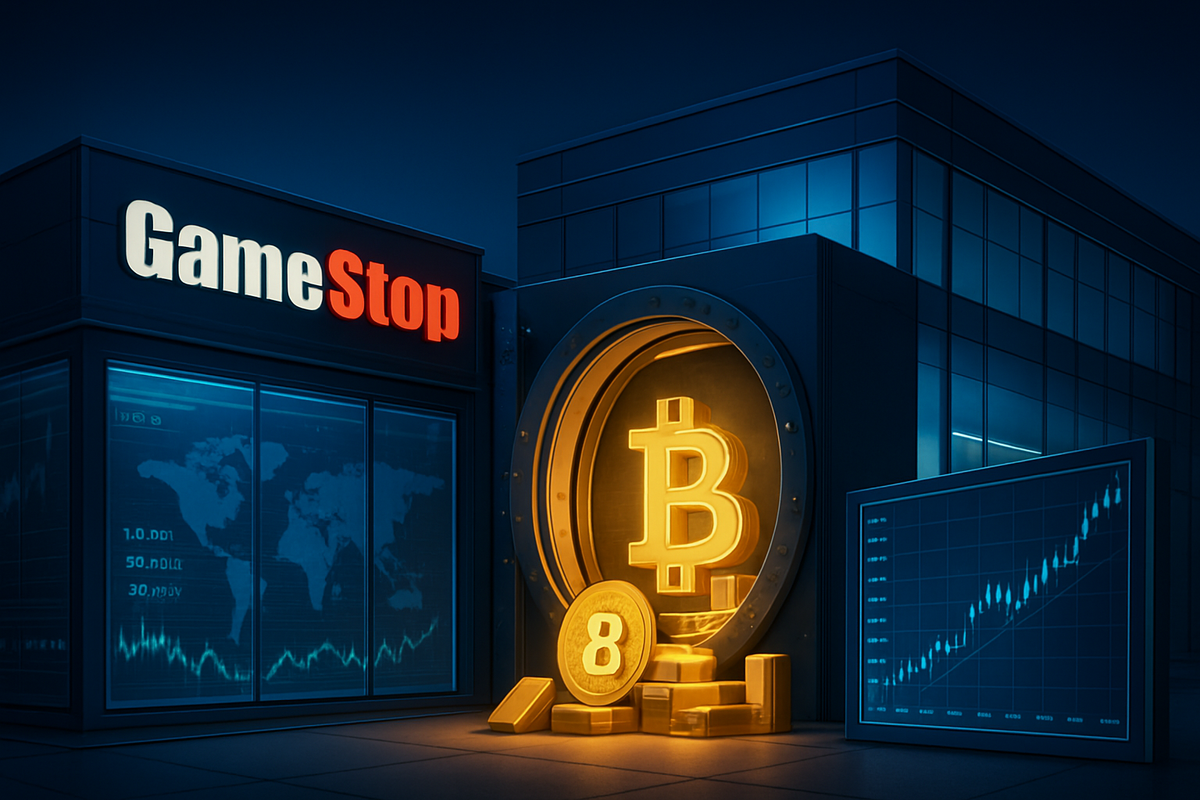
As the closing bell approaches on March 24, 2026, the financial world is bracing for one of the most unconventional earnings reports in recent memory. GameStop Corp. (NYSE: GME) is set to release its fourth-quarter and full-year 2025 results, but for the first time in its history, the focus is less on how many physical game discs were sold and more on the staggering $8.8 billion cash mountain sitting on its balance sheet. This "Omni-Holding" pivot, engineered by CEO Ryan Cohen, has effectively rebranded the once-struggling retailer into a hybrid investment vehicle, leaving analysts and investors wondering if they are looking at a gaming company or the next generation’s Berkshire Hathaway Inc. (NYSE: BRK.A).
The market expects GameStop to report earnings per share (EPS) between $0.31 and $0.37 on revenue of approximately $1.47 billion. While these figures represent a modest year-over-year improvement, they are increasingly seen as a footnote to the company's broader capital allocation strategy. With a treasury that now includes a significant Bitcoin (BTC) reserve and enough cash to acquire mid-cap competitors outright, GameStop’s transition from a "meme stock" to a macro player is nearly complete. The post-market release is expected to trigger significant volatility, with options markets pricing in a potential 10% swing as the street waits for news on how Cohen intends to deploy his massive war chest.
The Road to $8.8 Billion: A Masterclass in Capital Allocation
The story of GameStop’s transformation is a timeline of strategic survival and aggressive financial engineering. Between late 2024 and mid-2025, GameStop capitalized on its volatile share price to execute several massive at-the-market (ATM) equity offerings, diluting shares to raise a war chest that currently stands at an unprecedented $8.8 billion. This liquidity cushion has allowed the company to shutter underperforming stores and pivot toward high-margin collectibles and digital services without the immediate threat of insolvency. Key players in this pivot include Ryan Cohen and director Lawrence Cheng, both of whom signaled their conviction with significant insider purchases in early 2026.
Beyond the cash, the most controversial element of the new GameStop is its Bitcoin treasury. Following the lead of pioneers like MicroStrategy Inc. (NASDAQ: MSTR), GameStop officially adopted Bitcoin as a primary reserve asset in 2025. Holding an estimated 4,710 BTC—valued at over $500 million based on current market rates—the company’s book value is now inherently tied to the performance of the cryptocurrency market. This move has polarized the market; while retail "HODLers" view the BTC treasury as a hedge against inflation and a play on the future of finance, institutional bears argue that it adds unnecessary non-operating risk to an already volatile retail business.
Winners and Losers in the "New" GameStop Era
The primary winners of this pivot are the long-term shareholders who have weathered years of volatility to see the company achieve a fortress-like balance sheet. If Cohen successfully executes a transformative acquisition—with rumors currently swirling around names like eBay Inc. (NASDAQ: EBAY) or the social platform Discord—these investors could see GME evolve into a diversified technology and retail conglomerate. Conversely, the traditional short-sellers, many of whom have maintained "Reduce" ratings with price targets as low as $13.50, find themselves in a difficult position as the company’s cash-per-share effectively floors the stock’s valuation, making a "bankruptcy thesis" nearly impossible to defend.
However, the legacy gaming sector may find itself among the losers. As GameStop moves further away from its core business of selling used physical games, the traditional ecosystem of brick-and-mortar gaming is losing its most significant anchor. Competitors like Best Buy Co., Inc. (NYSE: BBY) may see a temporary boost in market share for physical hardware, but the long-term trend suggests a hollowing out of the retail gaming experience. Furthermore, the company faces internal legal risks; the "Jake Weber v. GameStop" class-action lawsuit, alleging failure to disclose the revocable nature of digital licenses, remains a dark cloud that could impact the company's valuation if a significant settlement is reached.
The "Berkshire-fication" of Retail and Broader Market Trends
The significance of GameStop’s transformation extends far beyond the gaming industry. It represents a broader trend of "Berkshire-fication," where companies with strong retail brand loyalty and massive cash flows pivot toward capital allocation and investment. Cohen’s "Omni-Holding" model is a direct challenge to modern corporate governance; in early 2026, the board approved a landmark compensation structure for Cohen with a $0 base salary and options that only vest if the company’s market cap hits milestones starting at $20 billion and scaling to $100 billion. This alignment of interests mimics the structures of mid-20th-century conglomerates rather than 21st-century retail chains.
This event also highlights the growing trend of corporate Bitcoin adoption. By integrating digital assets into its treasury, GameStop has joined a small but influential group of public companies that are effectively "crypto-adjacent." This forces institutional portfolios to gain exposure to Bitcoin through equity positions, a ripple effect that could influence how other cash-rich companies, such as Apple Inc. (NASDAQ: AAPL) or Alphabet Inc. (NASDAQ: GOOGL), manage their own liquidity in an era of currency debasement. The historical precedent for such a pivot is rare, but the success or failure of GameStop’s Q4 results will likely set the stage for how other "legacy" brands attempt to reinvent themselves.
The Next Move: Acquisitions and Strategic Volatility
Looking ahead, the short-term focus for GameStop will be the deployment of its $8.8 billion. The market is no longer satisfied with the company holding "dead cash." Speculation regarding a pivot into fintech or a digital collectibles marketplace has reached a fever pitch. If GameStop announces a major acquisition tonight, it could redefine the company's trajectory for the next decade. Conversely, if the earnings call remains tight-lipped about capital deployment, the "Cohen Premium" currently supporting the stock price could begin to erode as investors grow impatient with the lack of a clear roadmap for the cash pile.
In the long term, GameStop must prove that its "Omni-Holding" strategy can generate consistent returns that exceed its retail operations. The challenge will be integrating a diverse set of acquisitions while maintaining the "pro" member loyalty that has been the company’s lifeblood. The potential for GameStop to become a "SPAC with a store footprint" is high, but the execution risk remains substantial. Investors should prepare for a scenario where GameStop’s share price becomes increasingly decoupled from its quarterly earnings and more reflective of Cohen's perceived skill as a capital allocator and the broader fluctuations of the Bitcoin market.
Final Takeaways: A Market in Transition
As the Q4 2026 results are unveiled, the primary takeaway is that GameStop is no longer the company it was during the "Short Squeeze" of 2021. It has matured into a complex financial entity with a massive liquidity buffer and a high-stakes bet on digital assets. The transition into an "Omni-Holding" company represents a bold, if risky, experiment in corporate survival. Moving forward, the market will be watching for three key indicators: the specific timeline for deploying the $8.8 billion, the performance of the Bitcoin treasury, and any progress in resolving the Weber class-action lawsuit.
For investors, the coming months will be a test of patience and conviction. The "new" GameStop offers a unique blend of retail recovery, crypto-exposure, and the potential for a transformative M&A event. Whether Ryan Cohen can successfully navigate this "Omni-Holding" pivot remains to be seen, but one thing is certain: GameStop has ensured that it will remain at the center of the financial conversation for years to come.
This content is intended for informational purposes only and is not financial advice.