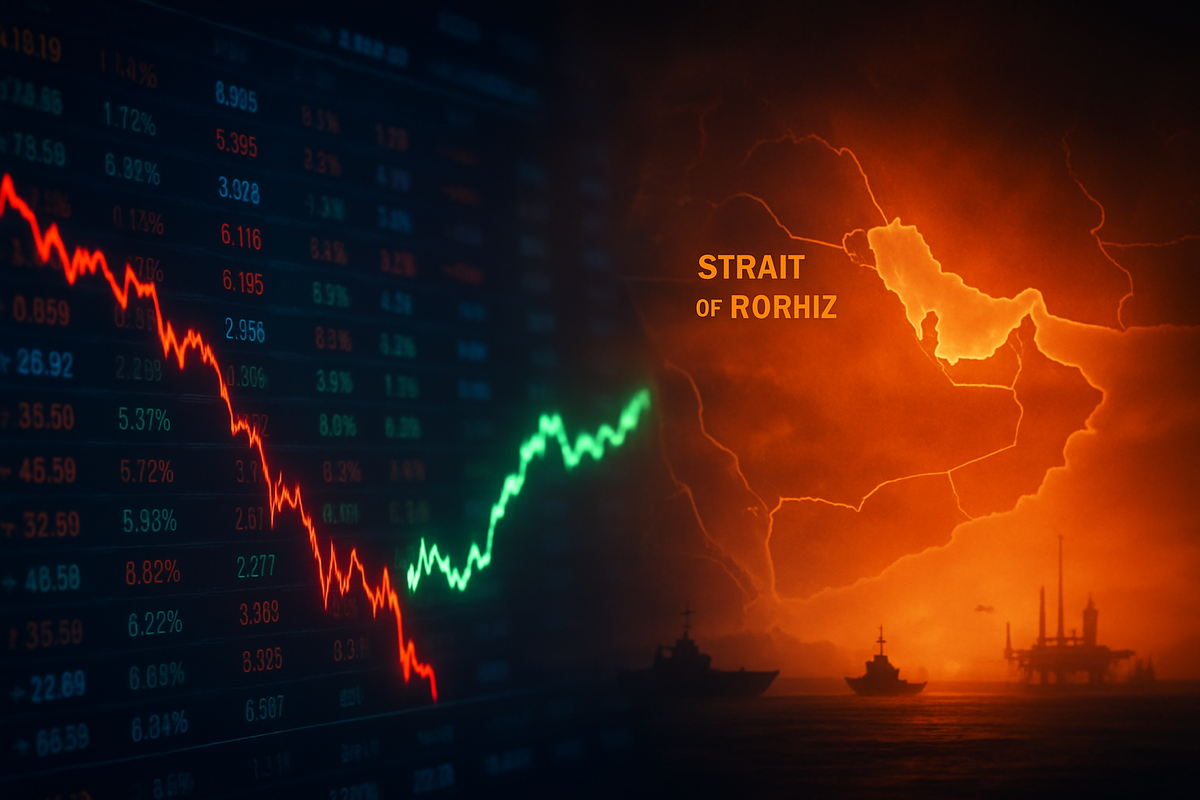
The U.S. stock market experienced a brutal reversal on Thursday, March 26, 2026, as initial optimism over a potential diplomatic breakthrough with Iran vanished. What began as a hopeful rally earlier in the week—fueled by rumors of a comprehensive 15-point peace plan—collapsed after Tehran officially rejected the deal, calling it a "veiled demand for surrender." The news sent shockwaves through global markets, erasing gains and reigniting fears of a full-scale regional conflict.
As risk sentiment soured, major indices took a significant hit. The S&P 500 fell approximately 1%, while the tech-heavy Nasdaq Composite dropped 1.14%. Meanwhile, the energy sector decoupled from the broader market as Brent crude oil surged past the psychologically critical $100 mark, hitting $107.16 per barrel. The volatility follows a stern "final blow" warning from the U.S. government, suggesting that the window for diplomacy is rapidly closing and military options are now the primary focus of the Pentagon.
The 15-Point Gamble and the "Final Blow" Ultimatum
The week began with a sense of cautious euphoria. Reports surfaced of a sophisticated 15-point peace plan mediated through Pakistani channels, designed to end a month of escalating hostilities. The plan was ambitious, demanding the total dismantling of Iran’s nuclear capabilities, the removal of enriched uranium stockpiles, and the formal declaration of the Strait of Hormuz as a "free maritime zone." In exchange, the United States offered to lift "maximum pressure" sanctions and implement a month-long ceasefire. This tentative "geopolitical discount" briefly lifted the S&P 500 by over 1% on Wednesday as traders bet on a de-escalation.
However, the narrative shifted violently on Thursday morning. Iranian Foreign Minister Abbas Araghchi delivered a stinging rejection of the proposal, characterizing the U.S. terms as unrealistic and sovereignty-infringing. Instead, Tehran presented a 5-point counter-proposal demanding war reparations and formal international recognition of Iranian authority over the Strait of Hormuz—terms the White House immediately dismissed. The diplomatic impasse was met with a chilling response from President Trump, who issued a "final blow" warning via official channels, stating that Iran must "get serious" or face a military strike from which there would be "no turning back."
Military analysts suggest the Pentagon's "final strike" options are already in motion. These include potential island seizures of strategic hubs like Kharg Island, Iran's primary oil export terminal, and Larak Island. There are even reports of contingency plans for "boots on the ground" to secure deep-buried nuclear facilities. The shift from diplomatic dialogue to the precipice of war has left investors scrambling to adjust their portfolios for a high-inflation, high-risk environment.
Winners and Losers in a War-Footing Economy
The sudden pivot toward conflict has created a stark divide in equity performance. Defense contractors have seen record demand as the U.S. and its allies accelerate procurement of missile defense systems. Lockheed Martin (NYSE: LMT) has been a primary beneficiary, with shares rising nearly 40% over the last nine months as backlogs for PAC-3 and THAAD interceptors hit all-time highs. Similarly, Northrop Grumman (NYSE: NOC) saw its stock climb as the U.S. military leaned into advanced radar and B-21 systems, while RTX Corporation (NYSE: RTX) gained on the back of electronic warfare and missile defense contracts.
In the energy sector, the "war premium" is driving prices to levels not seen in years. While broad market volatility initially pressured some players, large-cap producers like ExxonMobil (NYSE: XOM) and Chevron (NYSE: CVX) are benefiting from the surge in crude prices. However, the most significant gains are being seen in the liquefied natural gas (LNG) space. Cheniere Energy (NYSE: LNG) has become a critical strategic asset as global markets seek to reroute gas supplies away from the volatile Persian Gulf.
On the losing end, the technology and transportation sectors are feeling the squeeze. Nvidia (NASDAQ: NVDA) shares faced pressure as analysts warned that a prolonged conflict in the Middle East could disrupt supply chains for essential industrial gases and helium used in semiconductor manufacturing. Perhaps most impacted are the airlines; United Airlines (NASDAQ: UAL) saw its stock tumble as jet fuel costs—closely tied to the $107 oil price—threaten to evaporate profit margins just as the summer travel season approaches.
Analyzing the Significance: A Return to the "War Premium"
This week's events represent a fundamental shift in how the market prices geopolitical risk. For much of late 2025, investors had grown accustomed to "sabre-rattling" that rarely led to actual disruption. That era appears to be over. The failure of the 15-point plan suggests that the diplomatic gap between Washington and Tehran is currently unbridgeable. The "war premium" is no longer a theoretical risk; it is now baked into the price of every barrel of oil and every treasury bond.
The historical precedent for this volatility can be found in the oil shocks of the 1970s and the 2022 invasion of Ukraine. However, the 2026 crisis is unique due to the strategic importance of the Strait of Hormuz. If Iran follows through on threats to permanently close the Strait, analysts at major investment banks warn that oil could hit $150 per barrel, likely triggering a global recession. This has forced a re-evaluation of the Federal Reserve’s path, as soaring energy costs could reignite inflation just as the central bank was considering a pivot to lower rates.
Furthermore, the "final blow" warning signals a shift in U.S. policy toward preemptive action. This has major implications for regulatory and trade policy, as the U.S. government may move to restrict trade with any nations seen as aiding the Iranian regime. For multinational corporations, the "neutral" ground is rapidly disappearing, requiring a total reassessment of global supply chain dependencies in the Middle East.
What Comes Next: The Pentagon's Clock is Ticking
In the short term, all eyes are on the Persian Gulf. The market is waiting to see if the U.S. will move forward with the "island seizures" mentioned in Pentagon briefings. Any military movement toward Kharg Island would likely send oil prices into another vertical climb. Conversely, if a third-party mediator like China or the EU can find a "face-saving" exit for both sides, we could see a relief rally of historic proportions. However, after today’s rejection, the latter seems increasingly unlikely.
Longer-term, this conflict will likely accelerate the transition toward energy independence in the West and a permanent shift in LNG trade routes. Companies involved in energy infrastructure and security will remain in high demand. Investors should also watch for a "flight to quality," where capital moves out of high-growth tech stocks and into gold, defense, and domestic energy production. The strategic pivot for most firms will involve diversifying away from any reliance on Middle Eastern transit hubs.
Conclusion: A Market on Edge
The rejection of the 15-point peace plan and the subsequent "final blow" ultimatum have pushed the U.S. stock market into a period of extreme uncertainty. The key takeaway for investors is that the "geopolitical discount" has officially vanished, replaced by a volatile environment where headlines can swing indices by 2% in either direction within hours. The era of cheap energy is currently on hiatus, and the defense sector has returned to its status as a primary growth engine for the industrial economy.
Moving forward, the market will remain hostage to developments in the Strait of Hormuz. Investors should keep a close watch on crude oil inventories and the positioning of U.S. naval assets in the region. While the temptation to "buy the dip" remains high in the tech sector, the underlying risk of a $150 oil scenario makes a cautious, diversified approach essential. The coming months will determine whether 2026 is remembered for a successful, if forced, diplomatic resolution or as the start of a transformative global conflict.
This content is intended for informational purposes only and is not financial advice