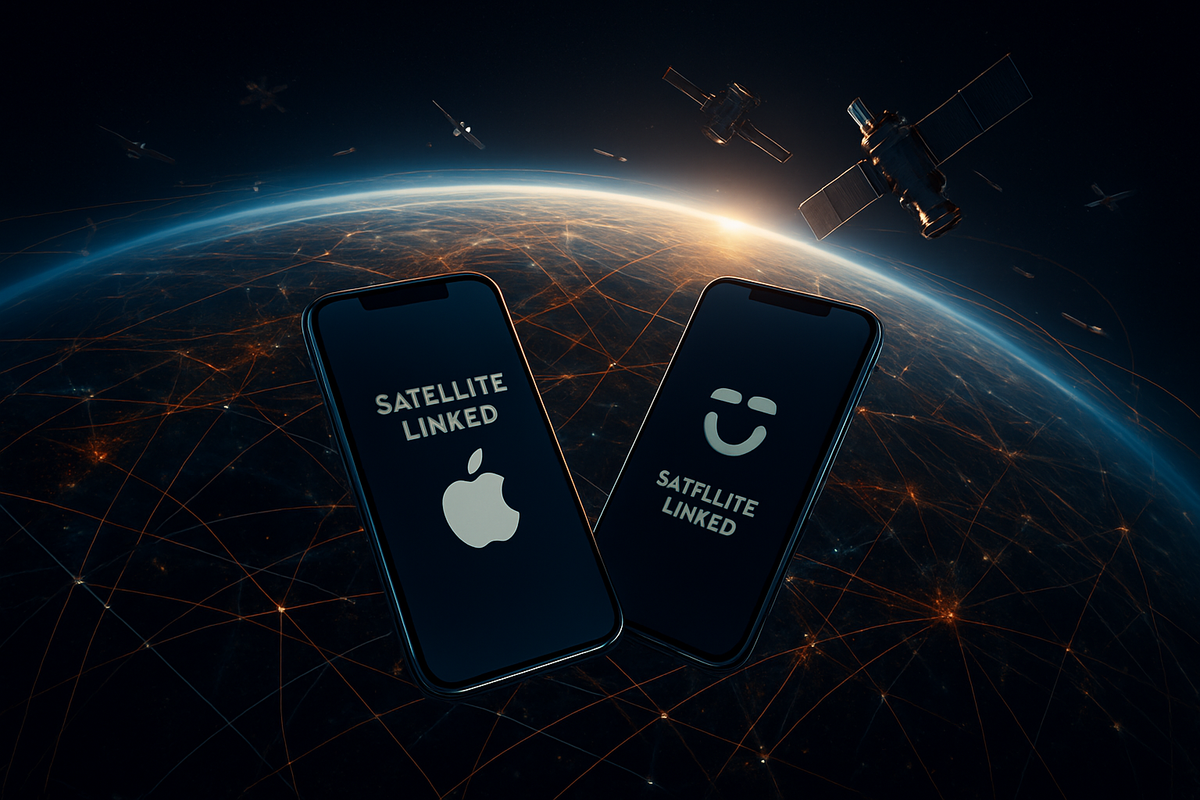
The tech world was sent into a frenzy this week following reports that Amazon.com Inc. (NASDAQ: AMZN) is in advanced negotiations to acquire satellite communications pioneer Globalstar, Inc. (NYSE American: GSAT) for an estimated $9 billion. The deal, which would represent a massive strategic pivot for Amazon’s "Amazon Leo" project (formerly Project Kuiper), aims to provide the e-commerce and cloud giant with the immediate infrastructure and spectrum needed to challenge the growing dominance of SpaceX’s Starlink.
The immediate implications of the rumor have been felt across the financial markets, as the potential acquisition signals a desperate "capital for time" play by Amazon. With regulatory deadlines looming and Starlink’s constellation already numbering in the tens of thousands, Amazon’s move to buy a pre-existing satellite powerhouse suggests that the race for space-based internet and direct-to-device (D2D) connectivity has entered a new, high-stakes phase of consolidation.
High-Stakes Negotiations and an 18-Year High
The rumors, which first broke via reports from the Financial Times on April 1, 2026, suggest that Amazon is willing to pay a significant premium to secure Globalstar’s unique orbital assets. The $9 billion valuation is particularly striking given that Globalstar’s market capitalization was hovering near $8.8 billion just days prior. Following the leak, Globalstar shares surged by more than 24% in after-hours trading, hitting a price of roughly $85.00—an 18-year high that reflects investor optimism about a potential bidding war or a lucrative exit.
This move comes at a critical juncture for Amazon. The company is currently staring down a July 2026 FCC milestone that requires it to have at least half of its planned 3,232-satellite constellation in orbit. As of early April 2026, Amazon has reportedly only launched about 212 satellites, plagued by delays from launch providers and technical hurdles. By acquiring Globalstar, Amazon would gain immediate access to an operational fleet and, more importantly, a globally harmonized L-band and S-band spectrum (n53/n255/n256) that is essential for satellite-to-phone services.
The negotiation is not a simple two-party deal. Standing in the way is Apple Inc. (NASDAQ: AAPL), which has spent the last two years cementing its own control over Globalstar’s network. In late 2024, Apple invested $1.5 billion into Globalstar, securing a 20% equity stake and an ironclad agreement that grants Apple 85% of the network’s capacity for its iPhone emergency and messaging features. The "three-way negotiation" currently taking place in Seattle and Cupertino is reportedly centered on how Amazon can buy the company without infringing on Apple’s existing rights—or if Apple will use its 20% stake to veto the deal entirely.
Winners and Losers in the Orbital Land Grab
Globalstar shareholders are the most immediate winners in this scenario. The stock’s climb to heights not seen since the mid-2000s validates a long-term turnaround strategy centered on spectrum licensing rather than just legacy hardware. Institutional investors who bet on the convergence of satellite and mobile technology are seeing massive returns as the industry shifts from a niche service to a core component of the global telecommunications stack.
Amazon stands to win significantly if the deal closes, as it effectively buys its way out of a regulatory corner. The acquisition would allow Amazon to integrate its "Amazon Leo" ground infrastructure with Globalstar’s spectrum, creating a formidable competitor to SpaceX. However, the cost is high; $9 billion plus the likely concessions needed to appease Apple could weigh on Amazon’s capital expenditures for years. Conversely, if the deal fails, Amazon’s satellite ambitions remain at the mercy of a punishing launch schedule and an aggressive FCC.
Apple finds itself in a complex position. While the value of its 20% stake in Globalstar has skyrocketed, the prospect of its primary cloud and hardware rival, Amazon, owning the "pipes" for its iPhone satellite services is a strategic nightmare. Apple could potentially lose its leverage over the roadmap for Globalstar’s next-generation satellites. On the other hand, Apple may use the situation to extract even more favorable terms or a permanent, royalty-free license to the spectrum in exchange for allowing the acquisition to proceed.
Broader Industry Significance and the D2D Revolution
This event fits into a broader industry trend where the "Big Tech" players are no longer content to rely on traditional telecommunications carriers. The move toward Direct-to-Device (D2D) connectivity—where a standard smartphone can connect directly to a satellite—is the new frontier. By attempting to acquire Globalstar, Amazon is signaling that the future of the internet is not just on the ground, but in the L-band spectrum that can penetrate buildings and reach users regardless of terrestrial cell tower density.
The ripple effects are already being felt by other satellite operators. Iridium Communications Inc. (NASDAQ: IRDM) and Viasat, Inc. (NASDAQ: VSAT) both saw their shares rise in a "sympathy rally," as the market begins to revalue satellite spectrum as a scarce and precious resource. Regulators at the FCC and the Department of Justice are also likely to take a keen interest in this deal. An Amazon-Globalstar merger would concentrate a massive amount of "space-based data" power in one company, potentially triggering antitrust concerns regarding the future of global connectivity.
Historically, this situation mirrors the early days of the wireless carrier wars, but with an orbital twist. Just as terrestrial carriers once fought over the 700MHz spectrum to build LTE networks, the giants of 2026 are fighting over the L-band to build the global "always-on" network. The precedent of Apple holding a major stake and capacity agreement in a company another giant wants to buy is rare, creating a unique legal and strategic puzzle that will likely be studied by M&A experts for years.
The Road Ahead: Scenarios and Strategic Pivots
In the short term, the market will be looking for a formal "intent to acquire" filing or a joint statement from Amazon and Globalstar. Until then, GSAT stock is likely to remain highly volatile. If the $9 billion figure holds, it sets a new floor for the valuation of satellite companies with licensed spectrum. However, a "poison pill" or a veto from Apple could quickly deflate the hype, sending Globalstar’s stock back down as investors realize the path to an exit is blocked.
In the long term, if Amazon successfully integrates Globalstar, we can expect to see a rapid rollout of "Amazon Leo" branded mobile services. This could involve "Prime Mobile" data plans that work anywhere on earth, integrated directly into future Kindle or Fire devices, and potentially offered as a wholesale service to third-party mobile networks. Amazon will need to navigate the technical challenge of merging two different satellite architectures while simultaneously building out its own massive constellation.
Summary and Investor Outlook
The rumored $9 billion bid for Globalstar is a watershed moment for the satellite communications industry. It highlights Amazon’s determination to catch up with SpaceX at any cost and underscores the immense value of orbital spectrum. Key takeaways for investors include the recognition of Apple as a kingmaker in this space and the realization that the "satellite-to-phone" market is no longer a future concept—it is a current battleground for the world's most valuable companies.
Moving forward, the market will be characterized by extreme sensitivity to regulatory filings and any "leaks" regarding the negotiations between Amazon and Apple. Investors should watch for the July 2026 FCC deadline for Amazon Leo; if the Globalstar deal doesn't move forward by then, Amazon may face significant regulatory penalties. The lasting impact of this event will be a permanent shift in how we view satellite companies—not as struggling aerospace ventures, but as the essential backbone of the next generation of global mobile connectivity.
This content is intended for informational purposes only and is not financial advice