
Healthcare services company Agilon Health (NYSE: AGL) reported Q1 CY2026 results topping the market’s revenue expectations, but sales fell by 7.3% year on year to $1.42 billion. On top of that, next quarter’s revenue guidance ($1.46 billion at the midpoint) was surprisingly good and 7.8% above what analysts were expecting. Its GAAP profit of $1.80 per share was significantly above analysts’ consensus estimates.
Is now the time to buy agilon health? Find out by accessing our full research report, it’s free.
agilon health (AGL) Q1 CY2026 Highlights:
- Revenue: $1.42 billion vs analyst estimates of $1.38 billion (7.3% year-on-year decline, 3.2% beat)
- EPS (GAAP): $1.80 vs analyst estimates of $0.83 (significant beat)
- Adjusted EBITDA: $53.84 million vs analyst estimates of $36.15 million (3.8% margin, 48.9% beat)
- The company lifted its revenue guidance for the full year to $5.74 billion at the midpoint from $5.5 billion, a 4.5% increase
- EBITDA guidance for the full year is $25 million at the midpoint, above analyst estimates of -$25.32 million
- Operating Margin: 0.3%, up from -1.4% in the same quarter last year
- Free Cash Flow was $20.63 million, up from -$35.84 million in the same quarter last year
- Customers: 426,000, down from 511,000 in the previous quarter
- Market Capitalization: $445.5 million
Company Overview
Transforming how doctors care for seniors by shifting financial incentives from volume to outcomes, agilon health (NYSE: AGL) provides a platform that helps primary care physicians transition to value-based care models for Medicare patients through long-term partnerships and global capitation arrangements.
Revenue Growth
A company’s long-term performance is an indicator of its overall quality. Any business can have short-term success, but a top-tier one grows for years. Luckily, agilon health’s sales grew at an incredible 34.1% compounded annual growth rate over the last five years. Its growth beat the average healthcare company and shows its offerings resonate with customers.
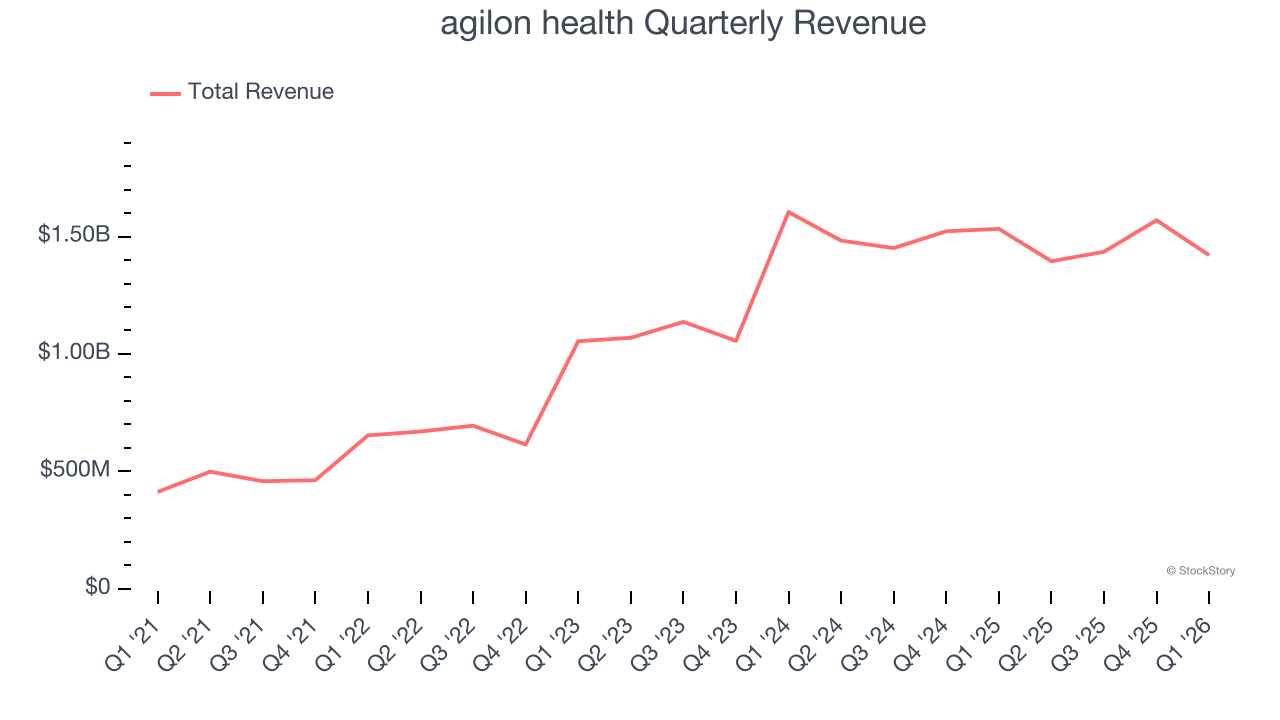
Long-term growth is the most important, but within healthcare, a half-decade historical view may miss new innovations or demand cycles. agilon health’s annualized revenue growth of 9.4% over the last two years is below its five-year trend, but we still think the results were respectable. 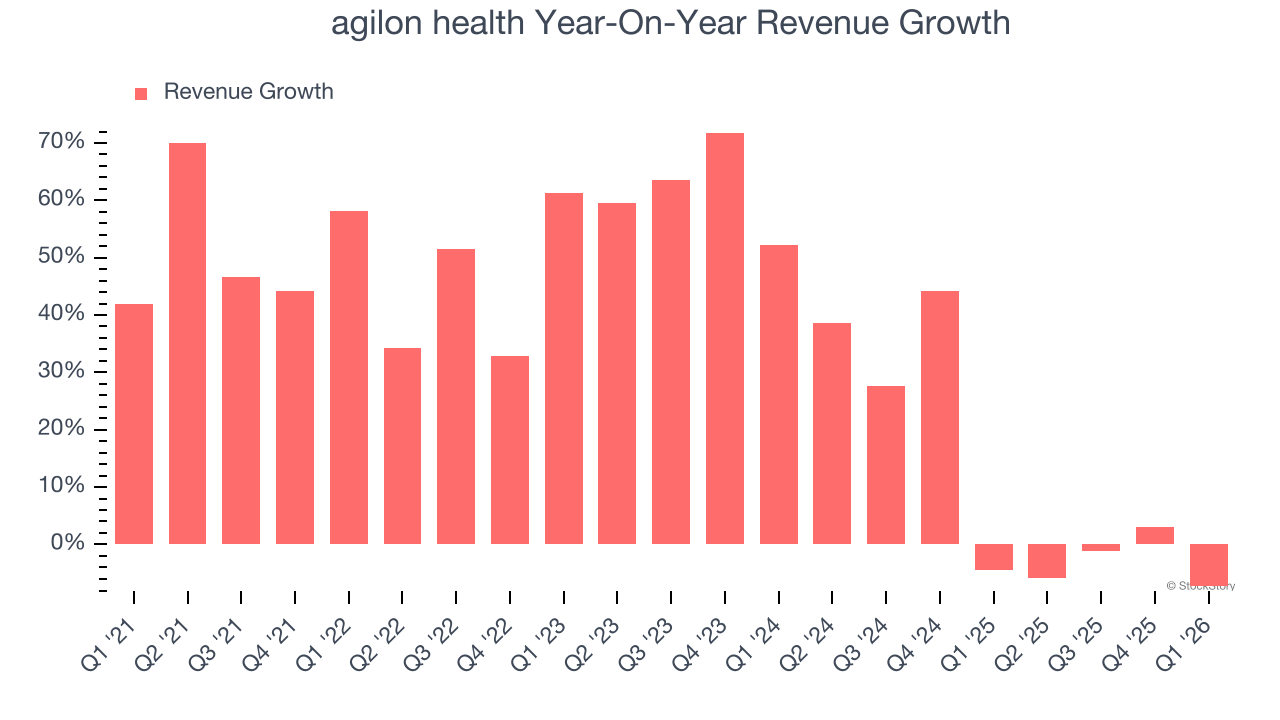
We can dig further into the company’s revenue dynamics by analyzing its number of customers, which reached 426,000 in the latest quarter. Over the last two years, agilon health’s customer base averaged 3.1% year-on-year declines. Because this number is lower than its revenue growth, we can see the average customer spent more money each year on the company’s products and services. 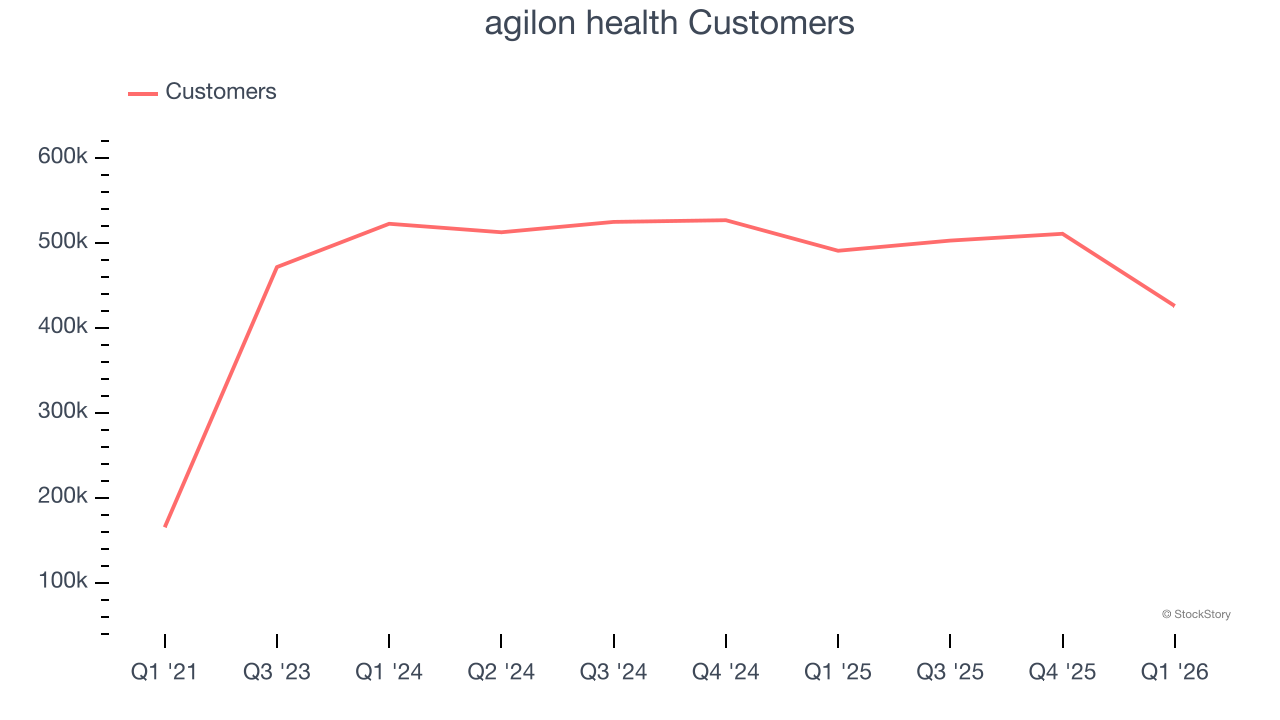
This quarter, agilon health’s revenue fell by 7.3% year on year to $1.42 billion but beat Wall Street’s estimates by 3.2%. Company management is currently guiding for a 4.3% year-on-year increase in sales next quarter.
Looking further ahead, sell-side analysts expect revenue to decline by 5.1% over the next 12 months, a deceleration versus the last two years. This projection doesn't excite us and suggests its products and services will see some demand headwinds.
ONE MORE THING: 3 Hidden Platforms Growing 3X Faster than Amazon, Google, and PayPal. Amazon, Google, and Meta all followed the same playbook: Dominate an ignored market. Build an unbeatable moat. Scale until you’re unstoppable.
These three platforms are running that exact playbook right now. The early investors in Amazon made fortunes. The early investors in these could do the same. Get All 3 Stocks Here for FREE.
Adjusted Operating Margin
Although agilon health broke even this quarter from an operational perspective, it’s generally struggled over a longer time period. Its expensive cost structure has contributed to an average adjusted operating margin of negative 4% over the last five years. Unprofitable healthcare companies require extra attention because they could get caught swimming naked when the tide goes out. It’s hard to trust that the business can endure a full cycle.
Looking at the trend in its profitability, agilon health’s adjusted operating margin decreased by 4.2 percentage points over the last five years. The company’s two-year trajectory also shows it failed to get its profitability back to the peak as its margin fell by 3.8 percentage points. This performance was poor no matter how you look at it - it shows its expenses were rising and it couldn’t pass those costs onto its customers.
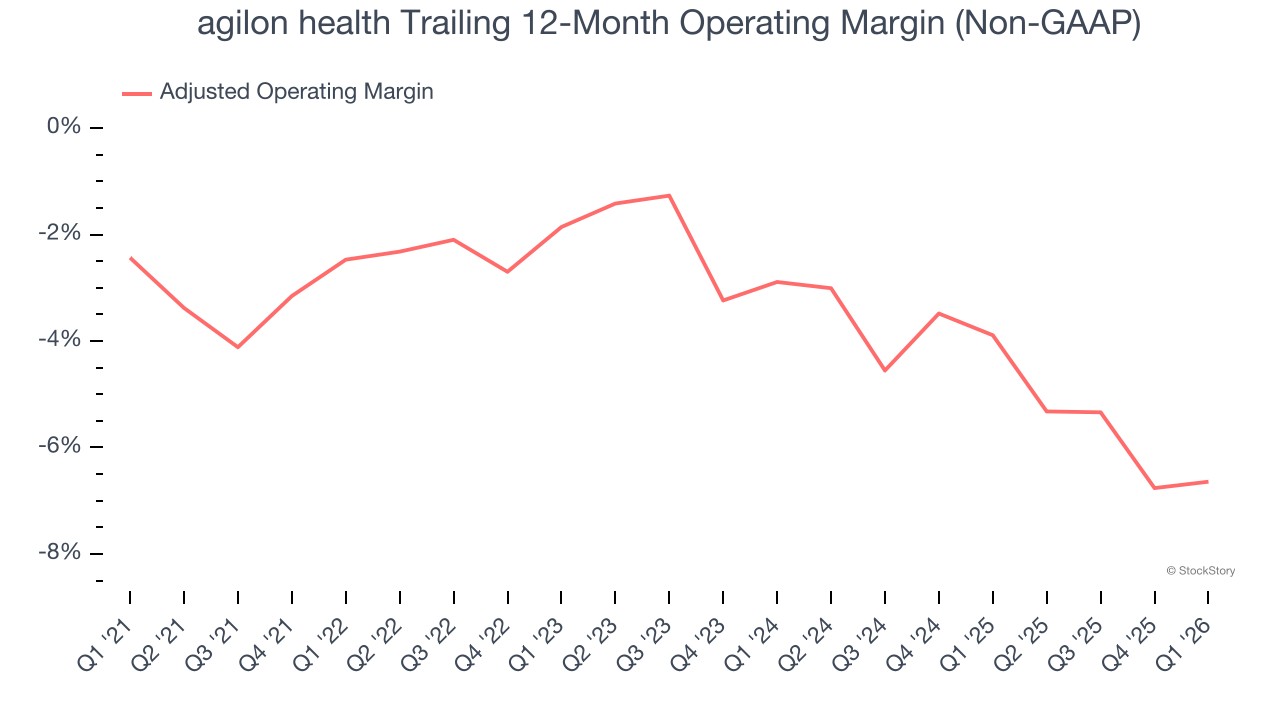
This quarter, agilon health’s breakeven margin was 0.7%, up 1 percentage points year on year. This increase was a welcome development, especially since its revenue fell, showing it was more efficient because it scaled down its expenses.
Earnings Per Share
We track the long-term change in earnings per share (EPS) for the same reason as long-term revenue growth. Compared to revenue, however, EPS highlights whether a company’s growth is profitable.
agilon health’s earnings losses deepened over the last five years as its EPS dropped 37.8% annually. We tend to steer our readers away from companies with falling EPS, where diminishing earnings could imply changing secular trends and preferences. If the tide turns unexpectedly, agilon health’s low margin of safety could leave its stock price susceptible to large downswings.
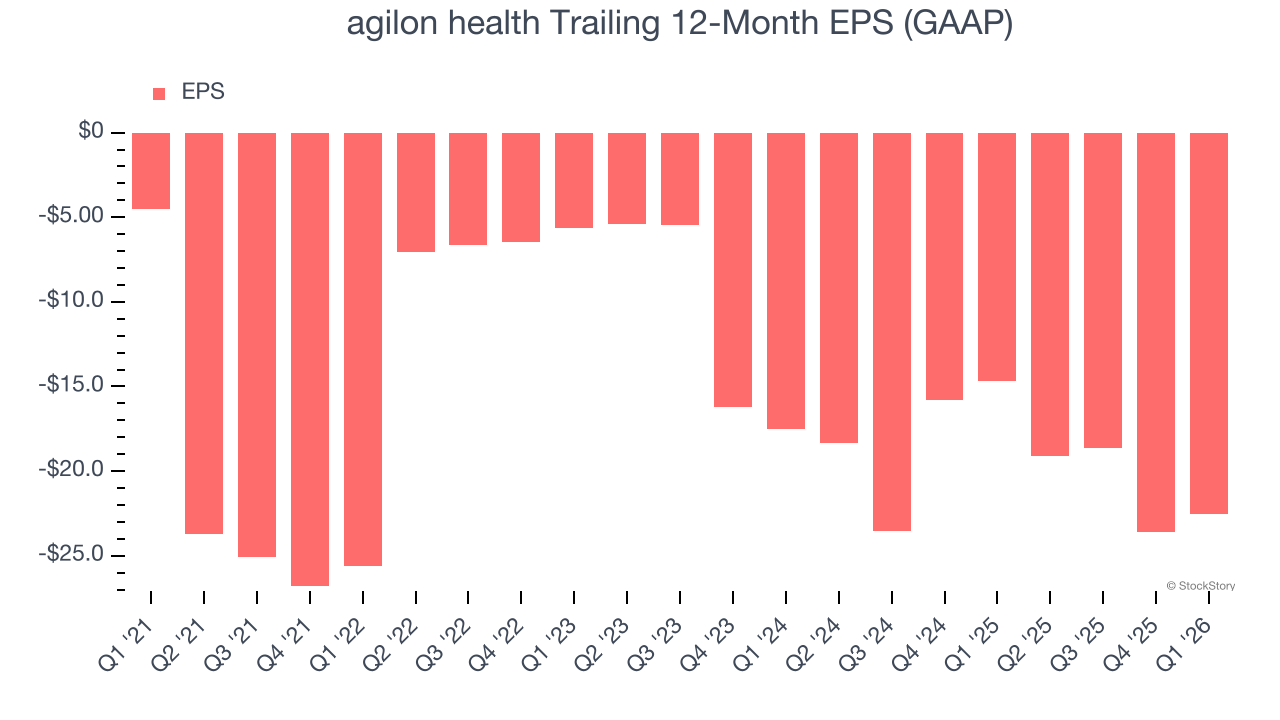
In Q1, agilon health reported EPS of $1.80, up from $0.73 in the same quarter last year. This print easily cleared analysts’ estimates, and shareholders should be content with the results. Over the next 12 months, Wall Street expects agilon health to improve its earnings losses. Analysts forecast its full-year EPS of negative $22.54 will advance to negative $6.42.
Key Takeaways from agilon health’s Q1 Results
We were impressed by agilon health’s optimistic EBITDA guidance for next quarter, which blew past analysts’ expectations. We were also glad its EPS outperformed Wall Street’s estimates. Zooming out, we think this quarter featured some important positives. The stock traded up 27.9% to $35.46 immediately after reporting.
agilon health may have had a good quarter, but does that mean you should invest right now? What happened in the latest quarter matters, but not as much as longer-term business quality and valuation, when deciding whether to invest in this stock. We cover that in our actionable full research report which you can read here (it’s free).