As of January 22, 2026, the India Semiconductor Mission (ISM) has officially transitioned from a series of ambitious policy blueprints and groundbreaking ceremonies into a functional, revenue-generating engine of national industry. With the nation’s first commercial-grade chips beginning to roll out from state-of-the-art facilities in Gujarat, India is no longer just a global hub for chip design and software; it has established its first physical footprints in the high-stakes world of semiconductor fabrication and advanced packaging. This momentum is a critical step toward the government’s stated goal of becoming one of the top four semiconductor manufacturing nations globally by 2032.
The significance of this development cannot be overstated. By moving into pilot and full-scale production, India is actively challenging the established order of the global electronics supply chain. In a world increasingly defined by "Silicon Sovereignty," the ability to manufacture hardware domestically is seen as a prerequisite for national security and economic independence. The successful activation of facilities by Micron Technology and Kaynes Technology marks the beginning of a decade-long journey to capture a significant portion of the projected $1 trillion global semiconductor market.
From Groundbreaking to Silicon: The Technical Evolution of India’s Fabs
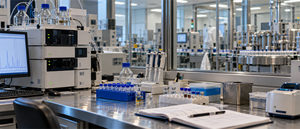
The flagship of this mission, Micron Technology’s (NASDAQ: MU) Assembly, Test, Marking, and Packaging (ATMP) facility in Sanand, Gujarat, has officially moved beyond its pilot phase. As of January 2026, the 500,000-square-foot cleanroom is scaling up for commercial-grade output of DRAM and NAND flash memory chips. Unlike traditional labor-intensive assembly, this facility utilizes high-end AI-driven automation for defect analytics and thermal testing, ensuring that the "Made in India" memory modules meet the rigorous standards of global data centers and consumer electronics. This is the first time a major American memory manufacturer has operationalized a primary backend facility of this scale within the subcontinent.
Simultaneously, the Dholera Special Investment Region has become a hive of high-tech activity as Tata Electronics, in partnership with Powerchip Semiconductor Manufacturing Corp (TPE: 6770), begins high-volume trial runs for 300mm wafers. The Tata-PSMC fab is initially focusing on "mature nodes" ranging from 28nm to 110nm. While these nodes are not the sub-5nm processes used in the latest smartphones, they represent the "workhorse" of the global economy, powering everything from automotive engine control units (ECUs) to power management integrated circuits (PMICs) and industrial IoT devices. The technical strategy here is clear: target high-volume, high-demand sectors where global supply has historically been volatile.
The industrial landscape is further bolstered by Kaynes Technology (NSE: KAYNES), which has inaugurated full-scale commercial operations at its OSAT (Outsourced Semiconductor Assembly and Test) facility. Kaynes is leading the way in producing Multi-Chip Modules (MCM), which are essential for edge AI applications. Furthermore, the joint venture between CG Power and Industrial Solutions (NSE: CGPOWER) and Renesas Electronics (TSE: 6723) has launched its pilot production line for specialty power semiconductors. These technical milestones signify that India is building a diversified ecosystem, covering both the logic and power components necessary for a modern digital economy.
Market Disruptors and Strategic Beneficiaries
The progress of the ISM is creating a new hierarchy among technology giants and domestic startups. For Micron, the Sanand plant serves as a strategic hedge against geographic concentration in East Asia, providing a resilient supply chain node that benefits from India’s massive domestic consumption. For the Tata Group, whose parent company Tata Motors (NYSE: TTM) is a major automotive player, the Dholera fab provides a captive supply of semiconductors, reducing the risk of the crippling shortages that slowed vehicle production earlier this decade.
The competitive landscape for major AI labs and tech companies is also shifting. With 24 Indian startups now designing chips under the Design Linked Incentive (DLI) scheme—many focused on Edge AI—there is a growing domestic market for the very chips the Tata and Kaynes facilities are designed to produce. This vertical integration—from design to fabrication to assembly—gives Indian tech companies a strategic advantage in pricing and speed-to-market. Established giants like Intel (NASDAQ: INTC) and Taiwan Semiconductor Manufacturing Company (NYSE: TSM) are watching closely as India positions itself as a "third pillar" for "friend-shoring," attracting companies looking to diversify away from traditional manufacturing hubs.
The Global "Silicon Shield" and Geopolitical Sovereignty
India’s semiconductor surge is part of a broader global trend: the $100 billion plus fab build-out. As nations like the United States, through the CHIPS Act, and the European Union pour hundreds of billions into domestic manufacturing, India has carved out a niche as the democratic alternative to China. This "Silicon Sovereignty" movement is driven by the realization that chips are the new oil; they are the foundation of artificial intelligence, telecommunications, and military hardware. By securing its own supply chain, India is insulating itself from the geopolitical tremors that often disrupt global trade.
However, the path is not without its challenges. The investment required to reach the "Top Four" goal by 2032 is staggering, estimated at well over $100 billion in total capital expenditure over the next several years. While the initial ₹1.6 lakh crore ($19.2 billion) commitment has been a successful catalyst, the next phase of the mission (ISM 2.0) will need to address the high costs of electricity, water, and specialized material supply chains (such as photoresists and high-purity gases). Compared to previous AI and hardware milestones, the ISM represents a shift from "software-first" to "hardware-essential" development, mirroring the foundational shifts seen during the industrialization of South Korea and Taiwan.
The Horizon: ISM 2.0 and the Road to 2032
Looking ahead to the remainder of 2026 and beyond, the Indian government is expected to pivot toward "ISM 2.0." This next phase will likely focus on attracting "bleeding-edge" logic fabs (sub-7nm) and expanding the ecosystem to include compound semiconductors and advanced sensors. The upcoming Union Budget is anticipated to include incentives for the local manufacturing of semiconductor chemicals and gases, reducing the mission's reliance on imports for its day-to-day operations.
The potential applications on the horizon are vast. With the IndiaAI Mission deploying 38,000 GPUs to boost domestic computing power, the synergy between Indian-made AI hardware and Indian-designed AI software is expected to accelerate. Experts predict that by 2028, India will not only be assembling chips but will also be home to at least one facility capable of manufacturing high-end server processors. The primary challenge remains the talent pipeline; while India has a surplus of design engineers, the "fab-floor" expertise required to manage multi-billion dollar cleanrooms is a skill set that is still being cultivated through intensive international partnerships and specialized university programs.
Conclusion: A New Era for Indian Technology
The status of the India Semiconductor Mission in January 2026 is one of tangible, industrial-scale progress. From Micron’s first commercial memory modules to the high-volume trial runs at the Tata-PSMC fab, the "dream" of an Indian semiconductor ecosystem has become a physical reality. This development is a landmark in AI history, as it provides the physical infrastructure necessary for India to move from being a consumer of AI to a primary producer of the hardware that makes AI possible.
As we look toward the coming months, the focus will shift to yield optimization and the expansion of these facilities into their second and third phases. The significance of this moment lies in its long-term impact: India has successfully entered the most exclusive club in the global economy. For the tech industry, the message is clear: the global semiconductor map has been permanently redrawn, and New Delhi is now a central coordinate in the future of silicon.
This content is intended for informational purposes only and represents analysis of current AI and semiconductor developments as of January 2026.
TokenRing AI delivers enterprise-grade solutions for multi-agent AI workflow orchestration, AI-powered development tools, and seamless remote collaboration platforms.
For more information, visit https://www.tokenring.ai/.