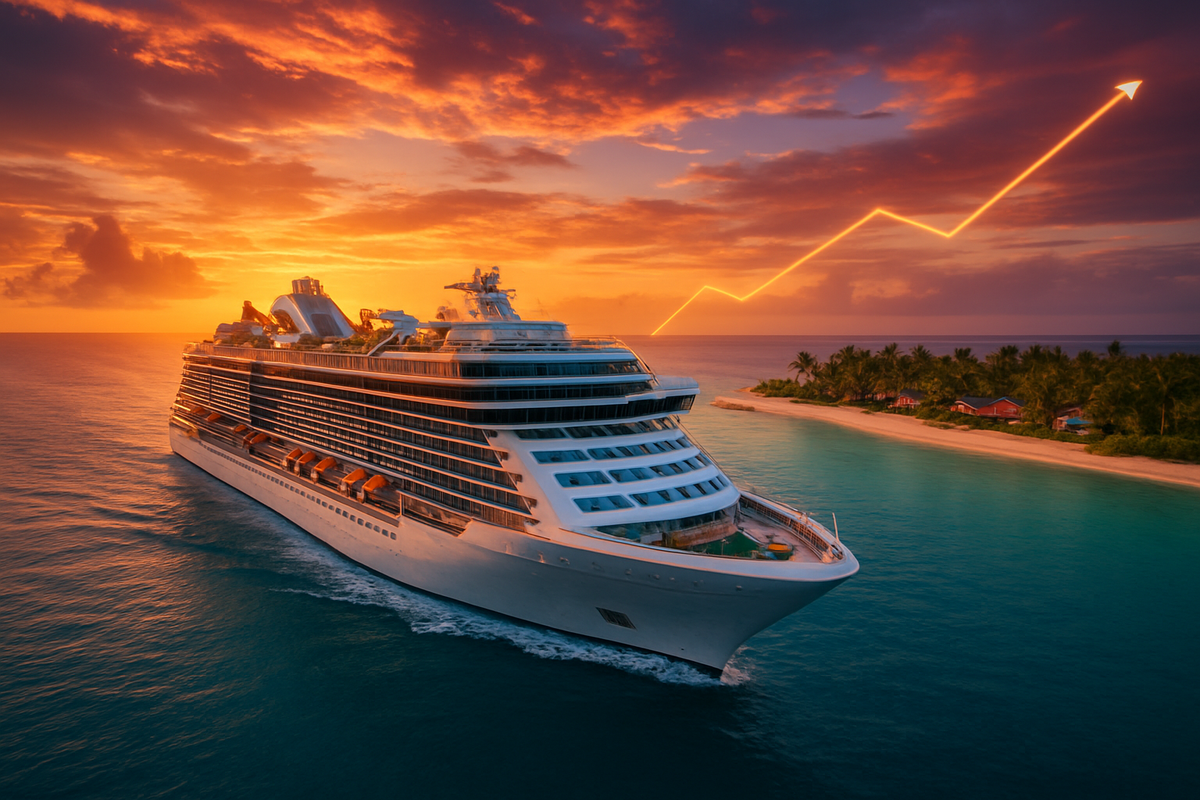
The cruise industry has officially transitioned from a recovery story into a full-scale growth engine, led by a blistering performance from Royal Caribbean Group (NYSE: RCL). In early 2026, the sector has witnessed a coordinated rally, fueled by Royal Caribbean's release of record-breaking 2025 financial results and an even more aggressive outlook for the year ahead. As of February 25, 2026, the company's stock has surged to all-time highs, dragging its industry peers along in a tide of investor optimism that shows no signs of ebbing.
The primary catalyst for this market enthusiasm is a potent combination of unprecedented "Wave Season" booking volume and significant pricing power. With nearly two-thirds of 2026 capacity already booked at record price points, the industry is entering what analysts describe as a "permanent promotion" era. This shift suggests that the demand for experiential travel is no longer just a post-pandemic fad but a structural change in consumer behavior, particularly among younger demographics who are increasingly choosing the high-seas over traditional land-based resorts.
Record Guidance and the "Perfecta" Path
On January 29, 2026, Royal Caribbean reported its fourth-quarter and full-year 2025 earnings, delivering an adjusted Earnings Per Share (EPS) of $15.64—a staggering 33% increase over the previous year. However, it was the company’s forward-looking guidance that truly ignited the markets. For the full year 2026, Royal Caribbean projected an adjusted EPS range of $17.70 to $18.10. This guidance places the company well ahead of its "Perfecta" financial goals, which aimed for a 20% compound annual growth rate in earnings and high-teens Return on Invested Capital (ROIC) by 2027.
The timeline leading up to this rally was defined by a series of strategic expansions and technical innovations. Throughout late 2025, the company ramped up its "Discovery Class" ship orders and announced a massive doubling of its Celebrity River Cruises fleet in Europe. Management, led by CEO Jason Liberty, characterized the first seven weeks of 2026 as the "best booking weeks in company history," noting that the volume of "close-in" bookings for the first half of the year has remained exceptionally high despite rising ticket prices. Initial market reactions were swift, with RCL shares jumping double digits in the days following the announcement, eventually crossing the $346 threshold.
A Divergent Tide: Winners and Laggards
While the rally has lifted the entire sector, a clear performance gap has emerged among the major players. Royal Caribbean (NYSE: RCL) remains the undisputed sector leader, commanding a premium valuation with a forward Price-to-Earnings (P/E) ratio of approximately 18.0x. Its success is heavily attributed to its "private destination" strategy, specifically the high-margin "Perfect Day at CocoCay" and the newly operational Royal Beach Club on Paradise Island. These destinations allow the company to capture a larger share of total passenger spend, driving net yields up by a projected 1.5% to 3.5% in 2026.
In contrast, Carnival Corporation (NYSE: CCL) is being viewed by many investors as a "value" or "catch-up" play. While Carnival's stock has seen a respectable year-to-date gain of roughly 8%, it trades at a significant discount to Royal Caribbean at approximately 12.5x P/E. Analysts point to Carnival's success in reducing its massive post-pandemic debt load and its own record booking levels as signs that it may follow in Royal Caribbean's wake. Meanwhile, Norwegian Cruise Line Holdings (NYSE: NCLH) has become the sector's laggard. Despite the favorable environment, Norwegian has struggled with higher operating costs and is currently facing pressure from activist investors, including Elliott Investment Management, who are pushing for a leadership overhaul and margin improvements to close the gap with RCL.
The Demographic Sea Change
The wider significance of this rally lies in the fundamental shift of the cruise industry's customer base. The average age of a cruise passenger has dropped into the mid-40s, with over one-third of passengers now under the age of 40. This demographic shift has forced cruise lines to pivot their product offerings, emphasizing high-tech amenities, social-media-friendly environments, and shorter "getaway" sailings that appeal to younger professionals. This trend has effectively insulated the industry from broader economic concerns, as these consumers prioritize "experiences over things."
Furthermore, the industry is benefiting from a "moat" created by limited supply. While demand is at an all-time high, the global shipyard capacity to build new mega-ships is constrained for years to come. This supply-demand imbalance gives companies like Royal Caribbean and Carnival immense pricing power that hasn't been seen in decades. Historically, the cruise sector was often seen as a discount vacation option; however, the current data suggests it is now competing directly—and winning—against premium land-based luxury resorts and theme parks.
Charting the Course for Late 2026
Looking ahead, the short-term focus for the industry will be the completion of the 2026 "Wave Season." If booking momentum carries through the end of March at these elevated price levels, further upward revisions to EPS guidance across the sector are likely. Strategically, the next phase of growth involves the deeper integration of "land-and-sea" vacations. Royal Caribbean’s continued investment in private beach clubs and exclusive land-based experiences suggests a pivot toward becoming a broader "lifestyle and vacation" brand rather than just a ship operator.
However, challenges remain on the horizon. The industry must navigate potential volatility in fuel costs and the ongoing pressure to meet aggressive decarbonization goals by 2030. Strategic pivots toward alternative fuels and more efficient engine designs will require significant capital expenditure. For investors, the potential for a "scenario-based" outcome is high: if interest rates begin to cool significantly in late 2026, the heavily-leveraged companies like Carnival could see an outsized benefit in their bottom-line earnings as debt servicing costs drop.
The Final Verdict on the Cruise Sector Surge
The early 2026 rally in the cruise sector, spearheaded by Royal Caribbean’s bullish $18 EPS guidance, marks a definitive era of profitability and growth for the industry. The key takeaways for the market are clear: Royal Caribbean has set a new standard for operational excellence and margin expansion, while the broader industry is riding a structural wave of consumer demand that appears resilient to traditional economic headwinds. The transition of cruising into a preferred vacation choice for Millennials and Gen Z has effectively expanded the total addressable market.
Moving forward, the market will be watching for any signs of consumer fatigue, though the current 67% booked status for the year provides a significant safety net. Investors should pay close attention to Norwegian's response to activist pressure and Carnival’s pace of debt repayment as secondary indicators of sector health. For now, the cruise industry is enjoying its most profitable "Wave Season" on record, with Royal Caribbean leading the charge into uncharted financial territory.
This content is intended for informational purposes only and is not financial advice.