Holding company and industrial conglomerate Icahn (NYSE: IEP) fell short of the market’s revenue expectations in Q1 CY2026, but sales rose 18.1% year on year to $2.21 billion. Its GAAP loss of $0.71 per share was significantly below analysts’ consensus estimates.
Is now the time to buy Icahn Enterprises? Find out by accessing our full research report, it’s free.
Icahn Enterprises (IEP) Q1 CY2026 Highlights:
- Revenue: $2.21 billion vs analyst estimates of $2.33 billion (18.1% year-on-year growth, 5.4% miss)
- EPS (GAAP): -$0.71 vs analyst estimates of $0.10 (significant miss)
- Adjusted EBITDA: -$216 million (-9.8% margin, 24.7% year-on-year growth)
- Adjusted EBITDA Margin: -9.8%, up from -15.4% in the same quarter last year
- Market Capitalization: $5.31 billion
Company Overview
Founded in 1987, Icahn Enterprises (NASDAQ: IEP) is a diversified holding company primarily engaged in investment and asset management across various sectors.
Revenue Growth
A company’s long-term sales performance is one signal of its overall quality. Any business can experience short-term success, but top-performing ones enjoy sustained growth for years. Unfortunately, Icahn Enterprises struggled to consistently increase demand as its $9.75 billion of sales for the trailing 12 months was close to its revenue five years ago. This was below our standards and suggests it’s a low quality business.
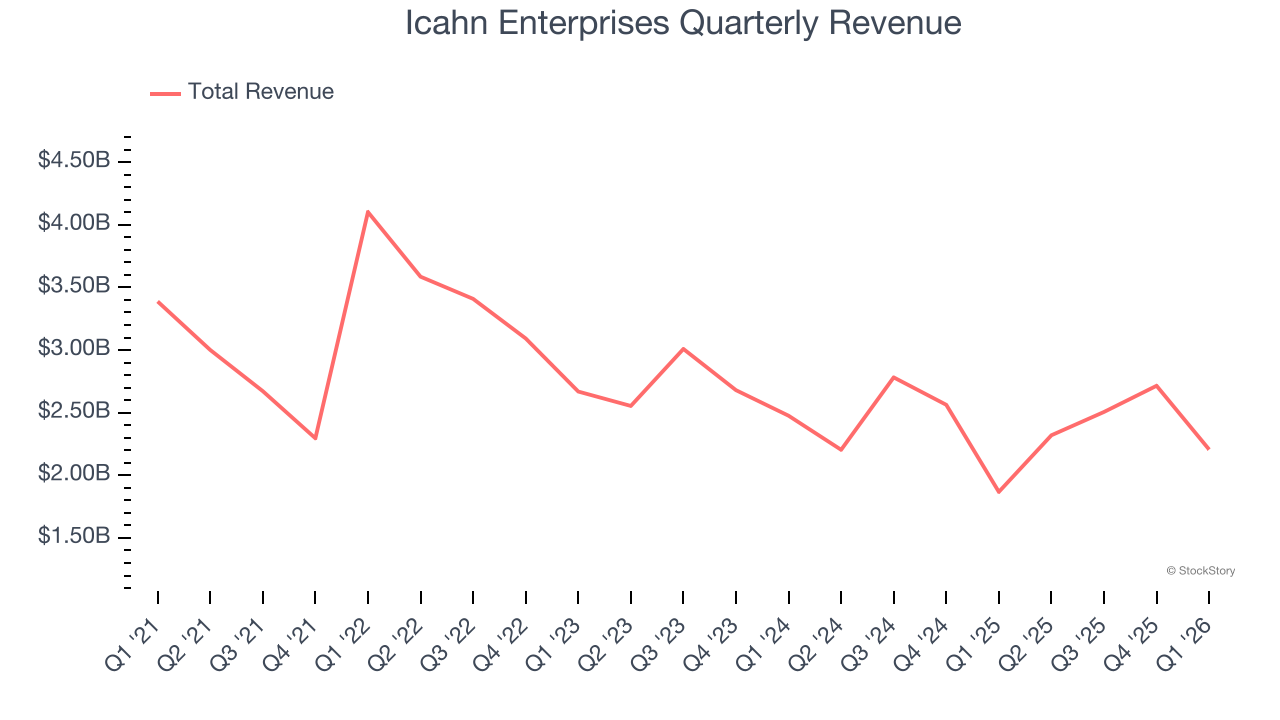
We at StockStory place the most emphasis on long-term growth, but within industrials, a half-decade historical view may miss cycles, industry trends, or a company capitalizing on catalysts such as a new contract win or a successful product line. Icahn Enterprises’s recent performance shows its demand remained suppressed as its revenue has declined by 4.6% annually over the last two years. 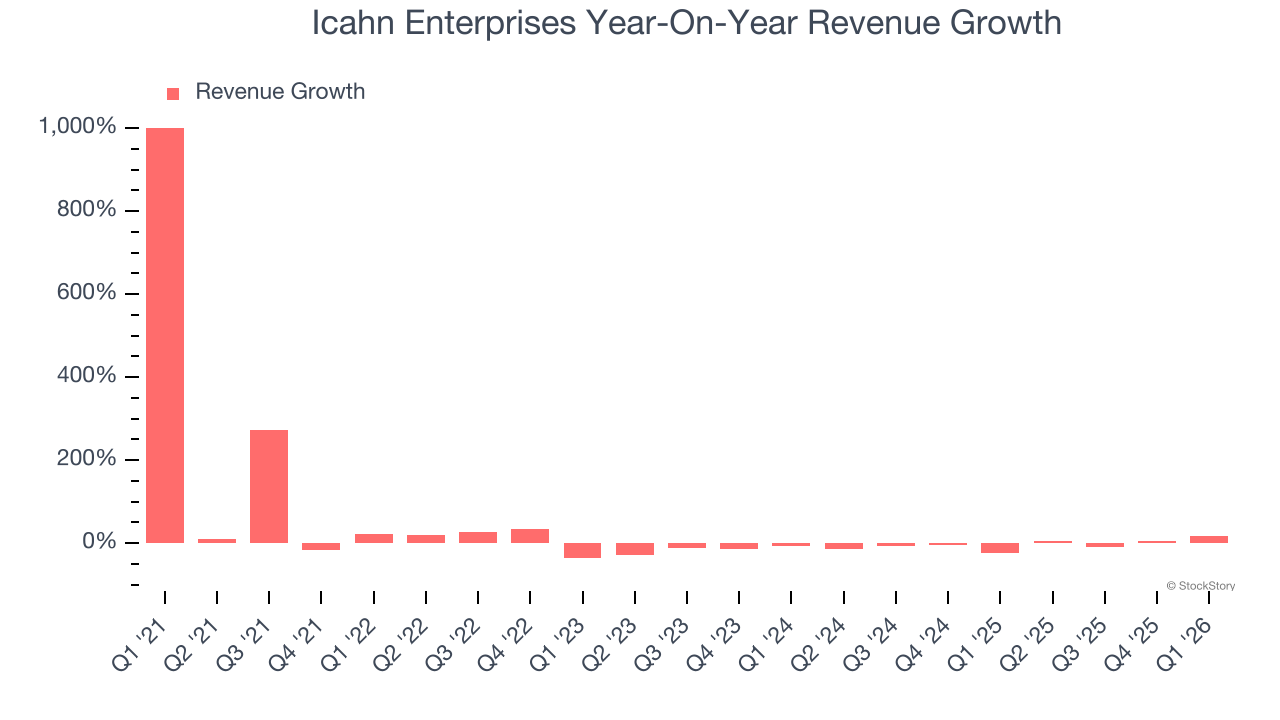
This quarter, Icahn Enterprises’s revenue grew by 18.1% year on year to $2.21 billion but fell short of Wall Street’s estimates.
Looking ahead, sell-side analysts expect revenue to decline by 1.4% over the next 12 months. Although this projection is better than its two-year trend, it’s hard to get excited about a company that is struggling with demand.
ALSO WORTH WATCHING: Nvidia’s Quiet Partner. Nvidia’s chips cost a hundred grand. The connectors that make them work cost even more. One company makes them all.
Every AI server needs specialized infrastructure the chip companies don’t make. High-speed cables. Power connectors. Thermal sensors. This 90-year-old company built a monopoly on it. The AI boom just started. This stock is still flying under the radar. Claim The Stock Ticker Here for FREE.
Operating Margin
Icahn Enterprises was roughly breakeven when averaging the last five years of quarterly operating profits, one of the worst outcomes in the industrials sector. This result isn’t too surprising given its low gross margin as a starting point.
Analyzing the trend in its profitability, Icahn Enterprises’s operating margin decreased by 3.4 percentage points over the last five years. Icahn Enterprises’s performance was poor no matter how you look at it - it shows that costs were rising and it couldn’t pass them onto its customers.
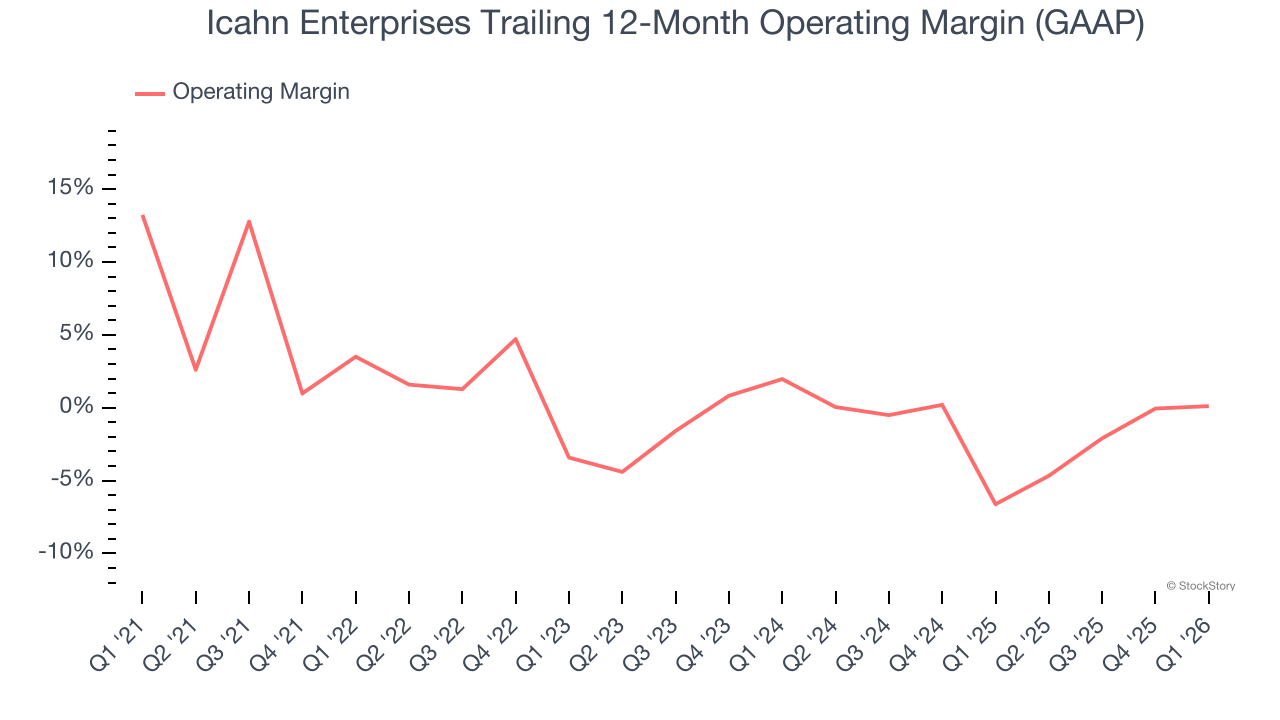
In Q1, Icahn Enterprises generated a negative 21.9% operating margin. The company's consistent lack of profits raise a flag.
Earnings Per Share
Revenue trends explain a company’s historical growth, but the long-term change in earnings per share (EPS) points to the profitability of that growth – for example, a company could inflate its sales through excessive spending on advertising and promotions.
Icahn Enterprises’s full-year EPS was flat over the last five years. This performance was underwhelming across the board.
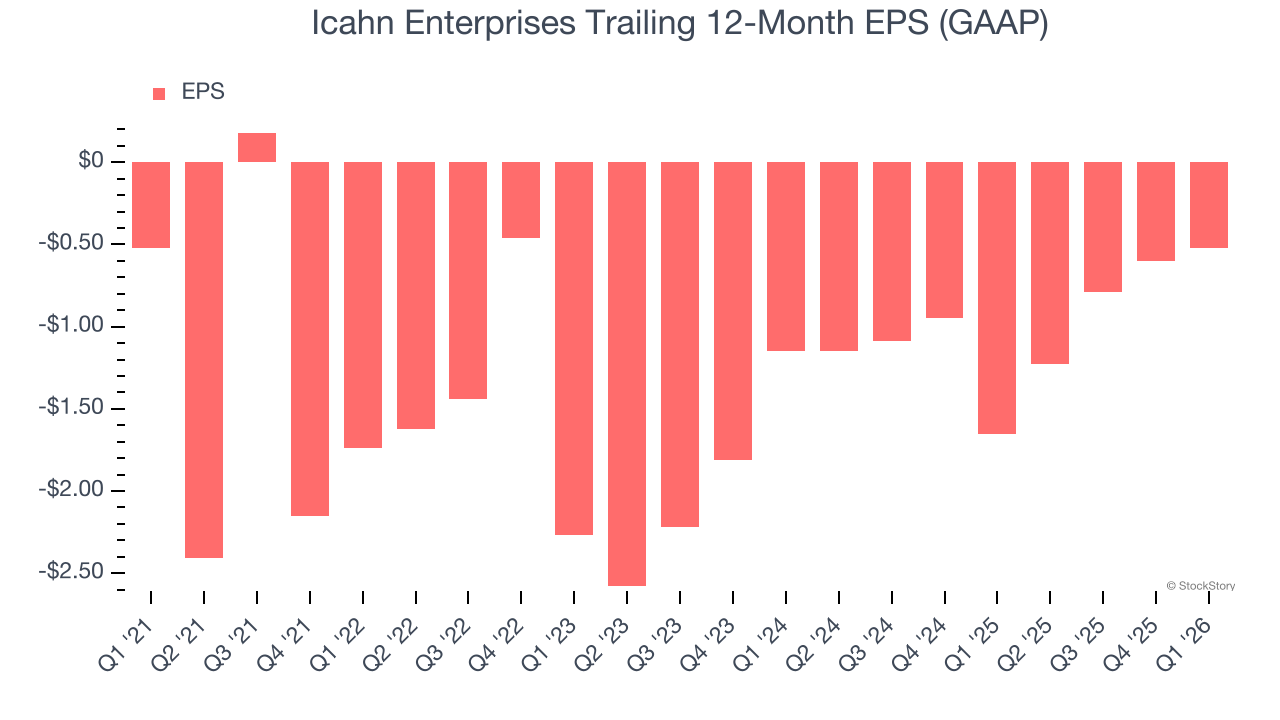
Like with revenue, we analyze EPS over a more recent period because it can provide insight into an emerging theme or development for the business.
For Icahn Enterprises, its two-year annual EPS growth of 32.8% was higher than its five-year trend. Its improving earnings is an encouraging data point, but a caveat is that its EPS is still in the red.
In Q1, Icahn Enterprises reported EPS of negative $0.71, up from negative $0.79 in the same quarter last year. Despite growing year on year, this print missed analysts’ estimates. We also like to analyze expected EPS growth based on Wall Street analysts’ consensus projections, but there is insufficient data.
Key Takeaways from Icahn Enterprises’s Q1 Results
We struggled to find many positives in these results. Its revenue missed and its adjusted operating income fell short of Wall Street’s estimates. Overall, this was a softer quarter. The stock traded down 7% to $7.74 immediately after reporting.
Icahn Enterprises’s latest earnings report disappointed. One quarter doesn’t define a company’s quality, so let’s explore whether the stock is a buy at the current price. The latest quarter does matter, but not nearly as much as longer-term fundamentals and valuation, when deciding if the stock is a buy. We cover that in our actionable full research report which you can read here (it’s free).