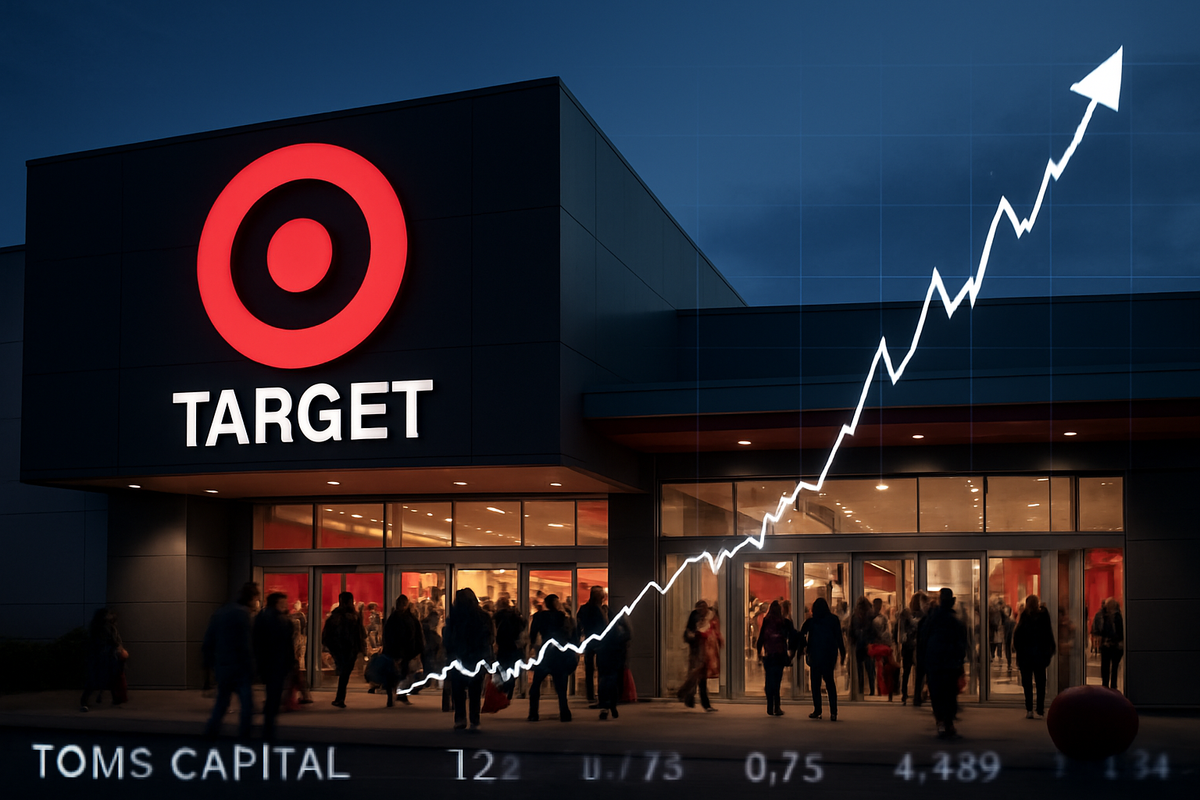
In a move that has sent shockwaves through the retail sector as the new year begins, Toms Capital Investment Management (TCIM), the activist hedge fund led by billionaire Noam Gottesman, has revealed a significant stake in Target Corporation (NYSE: TGT). The investment, finalized in the closing days of 2025, arrives as the Minneapolis-based retailer struggles to emerge from a multi-year slump that saw its stock price plummet nearly 30% over the past twelve months. For investors, the arrival of Gottesman signals a high-stakes "Bullseye Bounce"—a calculated bet that activist pressure can force a rapid recovery in Target’s valuation and operational efficiency.
The timing of the stake is particularly critical, as it coincides with a major leadership transition at the retail giant. With long-time CEO Brian Cornell stepping into an Executive Chairman role and former CFO Michael Fiddelke taking the helm as CEO today, January 1, 2026, Toms Capital is positioned to exert maximum influence over the company’s strategic direction. The immediate market reaction has been one of cautious optimism, with Target’s shares showing signs of life as traders speculate on a potential board shake-up or a pivot toward aggressive cost-cutting and real estate monetization.
Activism at the Helm: The Stake and the Players
The investment by Toms Capital was first reported in late December 2025, following a year where Target’s stock hit a multi-year low of approximately $83. While the exact size of the stake remains undisclosed, analysts estimate the position to be worth several hundred million dollars, giving Gottesman a "meaningful" seat at the table. This is not Gottesman’s first foray into corporate restructuring; Toms Capital has a history of targeting underperforming consumer giants, including previous campaigns at Kellanova (NYSE: K) and Kenvue (NYSE: KVUE), to unlock shareholder value through spin-offs and operational streamlining.
The "Bullseye Bounce" strategy, a term now circulating among Wall Street analysts, hinges on Target’s current depressed valuation—trading at roughly 13 times forward earnings—compared to its historical averages. The activist thesis suggests that Target’s core brand remains strong, but its execution has faltered in the face of shifting consumer habits. By entering the fray just as Michael Fiddelke assumes the CEO role, Toms Capital is essentially acting as an external catalyst to accelerate Fiddelke’s mandate. The firm is expected to push for a $1 billion annual restructuring plan that has already seen the elimination of 1,800 corporate roles in late 2025.
Retail Rivalry: Winners and Losers in the New Landscape
The entry of an activist investor into Target’s boardroom creates a ripple effect across the entire retail landscape. The primary "winner" in the short term may be the Target shareholder, who finally sees a floor established for the stock price. However, the move highlights the widening gap between Target and its primary competitors. Walmart (NYSE: WMT) and Costco (NASDAQ: COST) have spent much of 2025 capturing market share from Target, as consumers "traded down" to essential goods and bulk-value purchasing. Walmart, in particular, saw its stock rise 11% in 2025 by leveraging its dominant grocery business—a category where Target has historically lacked the same scale.
Conversely, the losers in this scenario could be Target’s long-term reliance on high-margin discretionary categories like home décor and apparel. As Toms Capital pushes for efficiency, Target may be forced to scale back its "merchandising authority" in these areas to focus on lower-margin, high-frequency essentials to drive foot traffic. Furthermore, Amazon (NASDAQ: AMZN) continues to loom as a formidable threat, with its essentials category growing twice as fast as its overall business in late 2025. If Target’s turnaround focuses too heavily on cost-cutting at the expense of its unique "cheap-chic" brand identity, it risks losing its most loyal suburban customer base to Amazon’s convenience or Walmart’s price leadership.
A Wider Significance: The Return of Retail Activism
The Toms Capital intervention at Target is emblematic of a broader trend in 2025: the resurgence of shareholder activism in the retail sector. As inflation and tariff-related price hikes squeezed margins throughout the past year, boards have come under intense scrutiny for failing to adapt to a "K-shaped" consumer recovery. The 2025 calendar year saw a record number of board seats won by activists, with firms like Elliott Investment Management building massive stakes in companies ranging from PepsiCo (NASDAQ: PEP) to Barnes & Noble.
This event also reflects a historical precedent where large-cap retailers are forced into radical transformations after periods of prolonged underperformance. Much like the activist-driven turnarounds of the past decade, the "Bullseye Bounce" will likely involve a debate over Target’s massive real estate portfolio. With over $45 billion in land and building assets, there is growing pressure from the activist community for Target to consider real estate investment trust (REIT) spin-offs or sale-leaseback agreements—a move that could provide an immediate cash infusion but carries long-term operational risks.
The Road Ahead: What to Expect in 2026
Looking forward, the success of the "Bullseye Bounce" will depend on the synergy—or lack thereof—between Michael Fiddelke and Noam Gottesman. In the short term, investors should watch for an official "letter to the board" from Toms Capital, which will likely outline specific demands for board representation and a more aggressive timeline for the company’s $5 billion planned investment in store remodels and digital infrastructure. If the board resists, a public proxy fight in the spring of 2026 remains a distinct possibility.
Long-term, Target must solve its "discretionary dilemma." While the activist-led cost-cutting may shore up the balance sheet, the company needs a strategic pivot to reclaim its status as a destination for style-conscious shoppers. Potential scenarios include a renewed focus on exclusive "designer-to-mass" partnerships or a significant expansion of its grocery and pharmacy footprint to match the frequency of visits seen at Walmart. The market will be closely monitoring quarterly comparable sales; any further contraction in 2026 could lead to calls for even more drastic measures, including a potential merger or a total overhaul of the executive suite.
Summary and Investor Outlook
The arrival of Toms Capital at Target marks a definitive end to the "wait-and-see" approach that characterized the final years of the Cornell era. For large-cap retail investors, the key takeaway is that Target has officially transitioned from a defensive dividend play into a high-volatility turnaround story. The "Bullseye Bounce" offers a compelling upside if the activist can successfully trim the fat without bruising the brand, but the competitive headwinds from Walmart and Amazon remain formidable.
In the coming months, the market will look for signs of operational stabilization and clarity on the relationship between the new CEO and his activist shadow. Investors should maintain a close eye on Target’s margin recovery and its ability to recapture the high-income "trade-down" shopper who has recently migrated to warehouse clubs. While the path to recovery is fraught with challenges, the presence of a seasoned activist like Gottesman suggests that, for Target, the status quo is no longer an option.
This content is intended for informational purposes only and is not financial advice.