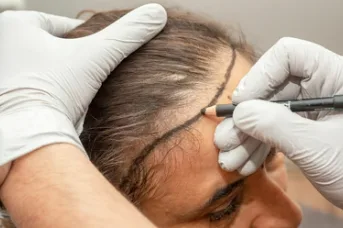
For many years, hair transplantation was viewed largely as a treatment for men. That picture has changed. Across Australia, the United Kingdom and the United States, clinics report a steady increase in women booking consultations and exploring procedural options for hair loss. Industry data suggests that women now account for roughly 15 to 25% of hair transplant consultations, with higher proportions in metropolitan areas.
This growth is supported by ongoing advancements in diagnostic and procedural techniques, leading to a clearer understanding of female pattern hair loss, not trends alone. It also reflects greater openness around hair health. Women are presenting earlier for medical assessment, and clinicians are responding with more structured, evidence-based pathways.
Why More Women Are Booking Assessments
Female hair loss often presents differently from male pattern baldness. Instead of a receding hairline or distinct crown baldness, women more commonly experience diffuse thinning across the mid-scalp. The Ludwig classification remains widely used to describe these patterns, ranging from mild central thinning to more advanced scalp visibility.
Australian data suggests that up to 40% of women experience noticeable hair thinning by age 50. Hormonal shifts, genetic predisposition, iron deficiency, thyroid disease and autoimmune conditions can all contribute. Postpartum shedding and menopausal changes also play a role.
Social attitudes have shifted as well. Conversations around skin, ageing and body image are more open. Hair loss has entered that dialogue. Women now view medical consultation as a practical step rather than a last resort. Increased access to credible information online has also encouraged earlier clinic presentations.
Importantly, women tend to attend appointments earlier in the course of hair loss. Early assessment improves the range of available options and helps stabilise shedding before surgical planning begins.
The Role of Diagnosis-First Pathways
A significant change in female hair transplantation is the move toward diagnosis-first pathways. Today, clinics often don’t start with a procedure discussion, but rather with a medical evaluation.
A thorough assessment typically includes:
- Detailed medical history
- Family history of hair loss
- Blood tests to exclude iron deficiency or thyroid dysfunction
- Dermatoscopic scalp examination
- Evaluation of hair shaft calibre and density
Diffuse thinning may reflect telogen effluvium, which often resolves with treatment of the underlying trigger. Alopecia areata requires a different approach again. Traction alopecia, common in women who wear tight hairstyles, has its own progression pattern.
Only once the underlying diagnosis is clear can a clinician determine whether transplantation is appropriate. In some cases, medical therapy, nutritional correction or Plasma Growth Factor Treatment may be recommended before any surgical planning.
This structured pathway is designed to support patient selection and management. It reduces the risk of transplanting into unstable or actively shedding areas. It also protects donor reserves, which are particularly important in female patients.
Understanding Female Pattern Types and Surgical Planning
Surgical planning for women differs significantly from planning for men. Pattern type influences everything from graft numbers to incision angle.
Diffuse Mid-Scalp Thinning
This is the most common presentation. Hairline position is usually preserved. The goal is to increase density in the central parting and crown without creating unnatural density differences.
In these cases, surgeons must carefully place grafts between existing hairs. This requires precision to avoid transecting native follicles. Smaller recipient sites and specialised instruments help minimise trauma.
Frontal Hairline Thinning
Some women experience frontal recession, particularly after menopause or long-term traction. Here, design becomes critical. Female hairlines are typically softer and less angular than male hairlines. The density gradient must look natural from multiple angles.
Traction Alopecia
Long-term tension from braids, extensions or tight ponytails can permanently damage follicles. When scarring has stabilised, transplantation may restore density along the margins. Careful assessment ensures the scarring process is inactive before proceeding.
Scarring Alopecia
In selected cases where inflammation has ceased, transplantation can help disguise scarred areas. This requires conservative graft planning and realistic expectations.
Donor Area Considerations in Women
Women often present with diffuse thinning that may extend into traditional donor zones. This complicates planning. A surgeon must confirm that the donor area maintains stable density and is not affected by progressive miniaturisation.
Trichoscopic analysis helps evaluate follicle health. If miniaturisation occurs within the donor region, medical stabilisation should be prioritised before surgery.
Because women typically wear their hair longer, donor area blending is especially important. Strategic extraction patterns reduce visible thinning when hair is worn down or styled up.
Advances in Technique and Instrumentation
Follicular unit extraction involves using small punches. Magnification is used to match graft angles to the natural growth direction. Graft handling protocols aim to maintain follicle viability. Temperature control, hydration and minimal out-of-body time support survival rates.
Women often require fewer grafts than men, as density enhancement rather than full coverage of the bald area is the primary objective. This can mean shorter procedure times and focused restoration.
The Role of Combined Therapies
Management of female hair loss increasingly integrates procedural and non-procedural treatments.
Topical and oral therapies can help stabilise androgen-driven thinning. Iron supplementation corrects deficiency-related shedding. Plasma Growth Factor Treatment supports follicle activity and may improve hair shaft thickness in selected patients.
By addressing both underlying causes and cosmetic density, clinicians aim to create a more natural-looking appearance. Transplantation then becomes part of a broader plan rather than a standalone intervention.
In metropolitan centres such as those offering hair restoration in Melbourne, multidisciplinary teams often collaborate to support pre- and post-procedure care.
Consumer Expectations and Education
Today’s female patients arrive well-informed. Many have researched online forums, medical literature and clinic websites. This awareness is positive, but it requires careful discussion during consultation.
Clear communication covers:
- The realistic density that can be achieved
- The timeline for visible growth
- The possibility of ongoing thinning in untreated areas
- The importance of long-term maintenance
Hair growth after transplantation follows a predictable cycle. Initial shedding of transplanted hairs occurs within weeks. Visible regrowth typically begins around three to four months, with continued thickening over twelve months.
Providing this information reduces anxiety and improves satisfaction.
Factors in Hair Transplantation Outcomes
Several factors contribute to hair transplant outcomes for women:
- Earlier diagnosis and stabilisation
- Utilisation of surgical tools
- Hairline design principles
- Donor area assessment
- Integrated medical management
Local demand has mirrored global trends, with more women each year booking consultations for a hair transplant in Melbourne.
The Importance of Regulated Care
Hair transplantation is a medical procedure. In Australia, practitioners must comply with AHPRA standards, including accurate advertising and informed consent processes.
Patients should verify:
- Medical registration status
- Experience in female hair loss specifically
- Transparent consultation processes
- Clear explanation of risks and recovery
These procedures are generally considered to be safe when performed by medical practitioners in appropriate settings, but patients must understand that all medical procedures carry potential risks, including infection, scarring and uneven growth.
From Stigma to Structured Care: The Evolution of Female Hair Loss Management
The rise of female hair transplantation reflects a broader shift in how women approach hair health. This growth reflects developments in diagnosis, procedural techniques, and the clinical understanding of female pattern hair loss.
As research into hair follicle biology advances, treatment planning will likely become even more individualised. Genetic profiling and advanced imaging may further refine candidate selection.
For now, key factors for planning and assessing suitability include thorough diagnosis, conservative planning, and appropriate surgical technique.
Women experiencing thinning should arrange a medical evaluation early. Not every patient requires transplantation, as some benefit most from medical therapy alone.
The increase in female consultations shows that stigma around hair loss continues to decrease. More women feel comfortable discussing concerns with qualified clinicians. That openness supports better diagnosis and more structured treatment pathways.
In hair restoration in Melbourne, the focus remains on long-term hair health.