A sponsorship payment arrives in crypto. An affiliate platform sends your monthly earnings. A collaborator asks to be paid for editing your latest video. For creators working with digital assets, a crypto wallet becomes part of running the business.
The best crypto wallet for influencers should make those tasks straightforward. It should support the assets you receive, offer convenient transfers, and help you put your earnings to use. For publishers who recommend crypto products, affiliate tools can add another reason to choose a particular wallet.
This selection brings together six options for 2027: Trust Wallet, Trustee Plus, SafePal, Tangem, Ledger, and Trezor. They cover mobile apps and hardware wallets, with different strengths for payments, crypto management, and audience recommendations. Their order does not represent a ranking.

What Should Influencers Look for in a Crypto Wallet?
Start with how you earn and spend. If you receive frequent payments and pay collaborators, convenient transfers and exchange tools will matter. If you accumulate crypto between campaigns, your priorities may include a dedicated hardware setup.
Four factors help narrow the choice:
Asset and network support: compatibility with the cryptocurrencies and payout networks your partners use.
Payment flexibility: convenient ways to send, exchange, or spend your earnings.
Clear costs: understandable transfer fees, exchange quotes, and any additional service charges.
Audience relevance: a product you can explain confidently and recommend to the people who follow your content.
A wallet’s affiliate program is a separate consideration. You can receive affiliate earnings in a compatible wallet without joining that wallet provider’s own partner program.
Trust Wallet
Broad access to crypto and Web3
Trust Wallet combines a mobile crypto wallet with a browser extension. It supports multiple blockchain ecosystems and includes tools for receiving, sending, buying, swapping, and connecting to decentralized applications.
For influencers working with different crypto projects, that breadth can be useful. You might receive payment in one asset, hold another, and demonstrate a blockchain application as part of your content. Managing those activities through a familiar interface can make your workflow easier to organize.
It also gives educational creators a range of subjects to cover, from basic transfers to using Web3 applications.
Why it belongs in this selection: Trust Wallet suits creators who want a versatile cryptocurrency wallet that can support both payments and broader blockchain activity.
For your audience: It is a relevant option for tutorials aimed at users exploring several networks. Any paid creator collaboration should be evaluated separately from the wallet’s core features.
Trustee Plus
A crypto wallet with payment and referral tools
Trustee Plus brings receiving, sending, and exchanging crypto together in one app. Its crypto card adds a way to use digital assets for purchases, connecting the income you receive with the expenses you pay.
For an influencer or affiliate marketer, this creates a practical workflow: receive a campaign payment, exchange part of your earnings, send funds to a collaborator, or use the card for subscriptions and everyday spending.
The app also includes referral tools for sharing invitations, managing links, viewing statistics, and tracking rewards. Creators can use these features to follow the results of recommendations shared through their content and communities.
Why it belongs in this selection: Trustee Plus connects crypto income, transfers, exchanges, and card payments within one app. That combination is particularly relevant to creators who actively use their earnings.
For your audience: Content can demonstrate a complete journey—from installing a crypto wallet and receiving a payment to exploring how to get a crypto card and use it for purchases.
SafePal
App-based crypto management with a hardware option
SafePal offers a mobile app, browser extension, and hardware wallets. This gives users a choice of formats within the same product ecosystem.
For creators, the appeal is flexibility. You can explore app-based crypto management and consider a hardware device as your needs develop. The different products also provide useful subjects for comparisons, setup guides, and demonstrations.
SafePal operates a sales-based affiliate program with tracking links, reporting tools, and promotional materials. That gives publishers a direct connection between educational product content and qualifying purchases.
Why it belongs in this selection: SafePal offers several ways to build a crypto setup, making it relevant to users whose needs extend beyond a single app.
For your audience: It suits content that explains the differences between software and hardware wallets. Specify which product you are demonstrating so readers know what they need to follow along.
Tangem
A hardware wallet built around smartphone use
Tangem combines hardware cards or a ring with a smartphone app. Users interact with the hardware through NFC to authorize transactions, while the app provides access to supported crypto management features.
The format may appeal to creators who work mainly from a phone and want a physical device involved in managing their crypto. It also lends itself to visual content: showing how the product works can be more useful than describing it in a feature list.
Tangem’s referral program provides a unique link, discounts for referred buyers, and rewards for qualifying purchases. It also offers marketing resources for participants.
Why it belongs in this selection: Tangem offers a distinctive hardware experience that fits a smartphone-based routine.
For your audience: Setup videos, transaction demonstrations, and explanations of backup options can help viewers understand whether the format suits them.
Ledger
Hardware signing with a broad crypto ecosystem
Ledger combines hardware devices with companion wallet software. Its ecosystem includes asset management and access to services such as buying and swapping through integrated providers.
For influencers receiving crypto regularly, a hardware device can become part of managing accumulated earnings. Different devices and application integrations also give users room to build a setup around their preferred assets and working habits.
Ledger’s affiliate program specifically addresses bloggers, YouTubers, influencers, and other crypto publishers, making it relevant to creators producing product-focused content.
Why it belongs in this selection: Ledger is worth exploring for creators who want hardware authorization alongside tools for managing a broader portfolio.
For your audience: Device comparisons and practical walkthroughs can help readers understand the experience before purchasing a hardware wallet.
Trezor
A dedicated hardware wallet setup
Trezor offers hardware wallets used with Trezor Suite, its crypto management interface. Its product range gives users different device options for building a dedicated hardware setup.
For creators who keep a portion of their earnings over longer periods, Trezor provides another approach to organizing those holdings. Choosing a device involves matching its asset support and connection options with how you expect to use it.
Trezor also offers an affiliate program for creators, influencers, and entrepreneurs, with resources for publishers promoting its products.
Why it belongs in this selection: Trezor suits users interested in a dedicated hardware wallet and a structured process for managing their crypto.
For your audience: Educational content can focus on device setup, receiving assets, transaction approval, and recovery procedures.
How to Choose a Crypto Wallet for Your Work
Think through one complete payment cycle before choosing an app or device.
Where does the payment come from? Which asset and network does the sender use? Will you keep the funds, exchange them, pay someone else, or spend them?
For frequent payments, compare how easily each wallet handles receiving addresses, transaction history, transfers, and exchanges. If spending is part of the workflow, a crypto wallet with a payment card can make that capability particularly relevant.
For funds you move less often, explore whether a hardware device fits your routine. Consider the setup process, compatibility, and how you will protect recovery information.
If you plan to recommend the product, try the features your audience will actually use. A useful tutorial answers practical questions: how to install a crypto wallet, receive the first payment, send funds, and understand the costs.
Match the Partner Program to Your Content
Different programs reward different activities. Hardware wallet programs commonly connect rewards to product purchases, while an app’s referral program may reward other qualifying user activity.
Compare the tools as well as the reward structure. Separate tracking links, useful reporting, promotional resources, and support can make a program easier to work with.
Your content format matters too. Hardware reviews can suit an audience researching a purchase. App tutorials can suit readers who want to download a crypto wallet and start using it. Payment guides can introduce a crypto card through an everyday scenario, such as paying for a software subscription.
Comparing the Six Crypto Wallets
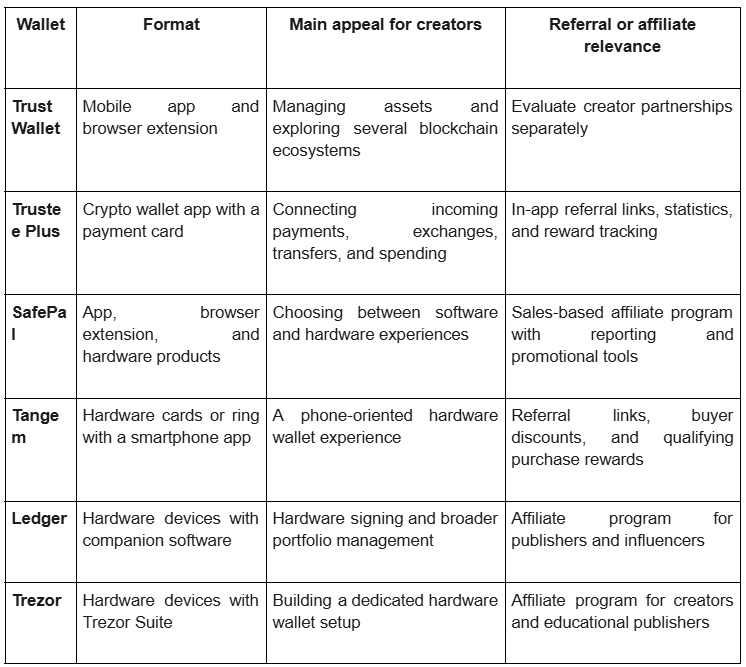
Choosing Your Crypto Wallet for 2027
Choose a wallet around the work you do. Trust Wallet offers broad access to crypto and Web3, while SafePal combines several software and hardware formats. Tangem, Ledger, and Trezor provide different hardware experiences.
Trustee Plus stands out when receiving crypto is part of a wider payment routine. Transfers, exchanges, a crypto card, and referral tools give creators several ways to manage and use their earnings through one app.
The strongest recommendation for your audience starts with that same practical fit: a crypto wallet you understand, use confidently, and can explain through real examples.