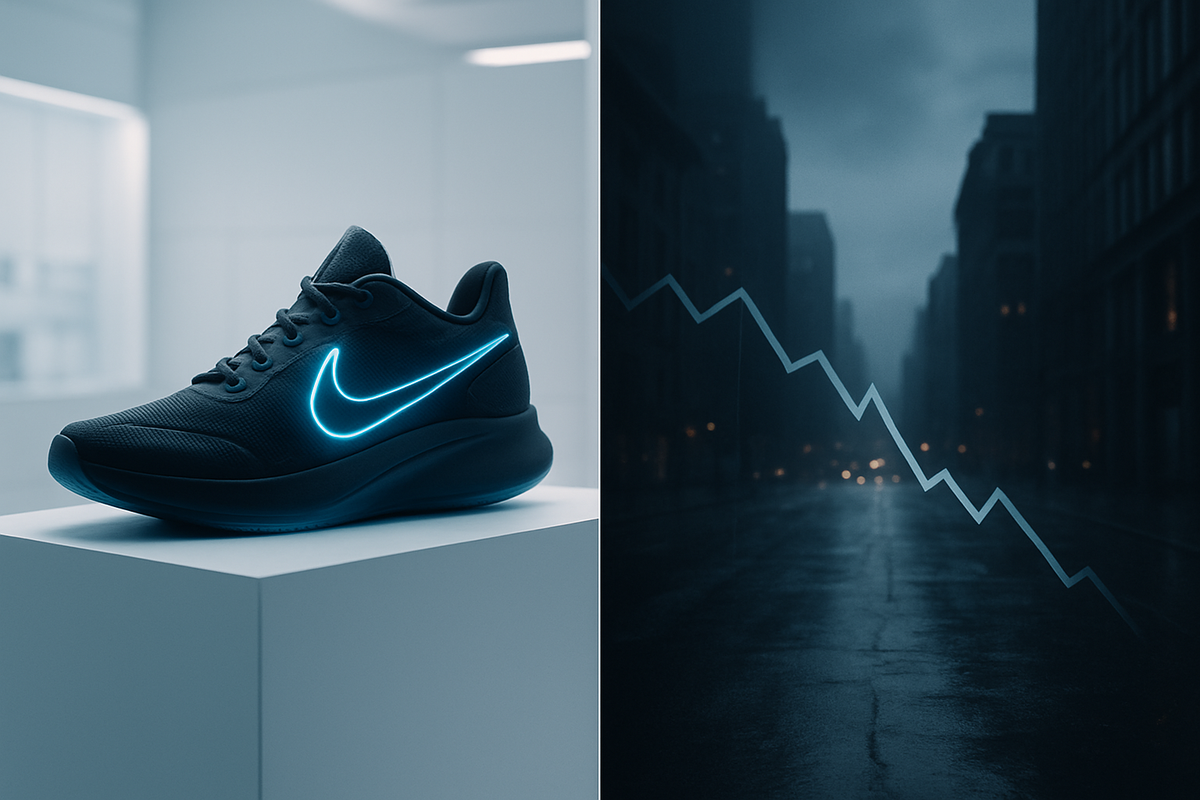
As 2025 draws to a close, Nike Inc. (NYSE: NKE) finds itself at a curious crossroads. On the streets and in the gym, the "Swoosh" is regaining the cultural cachet it arguably lost during the early 2020s, fueled by a return to sport-centric innovation and high-profile collaborations. However, on Wall Street, the reception remains decidedly chilly. Despite a flurry of positive brand signals and a late-December insider buying spree that sparked a brief holiday rally, the stock’s performance has remained largely neutral over the second half of the year, struggling to break out of a narrow trading range.
This divergence highlights a growing gap between consumer sentiment and the harsh realities of a fragmented global economy. While CEO Elliott Hill has successfully orchestrated a "back-to-basics" strategy that has revitalized product pipelines, the company is simultaneously battling a "K-shaped" US consumer recovery and significant headwinds in Greater China. For investors, the question is no longer whether Nike can make "cool" shoes again—it is whether that coolness can translate into margin expansion in an era of rising tariffs and cautious spending.
A Year of Strategic Resets and Leadership Signals
The final weeks of 2025 have been a whirlwind for the Beaverton-based giant. On December 18, Nike reported its fiscal 2026 second-quarter results, which presented a starkly divided picture of the company’s health. While earnings per share of $0.53 handily beat analyst expectations of $0.37, the underlying numbers revealed deep-seated challenges. North American revenue rose a healthy 9%, largely driven by a massive 24% surge in wholesale shipments as Nike aggressively restocked shelves at partners like Foot Locker (NYSE: FL) and Dick’s Sporting Goods (NYSE: DKS). Conversely, revenue in Greater China plummeted by 16%, continuing a year-long slide that has become the primary anchor on the company’s valuation.
The stock’s initial reaction to the earnings report was a 12% plunge, as investors focused on a 300-basis-point contraction in gross margins—a result of $1.5 billion in annualized tariff-related costs and heavy discounting required to clear inventory in the struggling Chinese market. However, the narrative shifted dramatically on Christmas Eve. SEC filings revealed that Apple (NASDAQ: AAPL) CEO and Nike Director Tim Cook purchased 50,000 shares of Nike stock, a $3 million show of confidence that helped the stock claw back nearly 5% in a single session. This "insider-led" rally has provided a floor for the stock as the year ends, but it has not yet convinced the broader market that the turnaround is complete.
Under the leadership of Elliott Hill, who took the helm in late 2024, Nike has spent much of 2025 dismantling the "Digital-First" strategy of his predecessor. Hill has reorganized the company into sport-specific categories—Running, Basketball, Soccer, and Training—moving away from the lifestyle-heavy focus that many critics felt diluted the brand’s performance DNA. The most visible success of this shift was the September 2025 launch of "NikeSkims," a joint venture with Kim Kardashian’s SKIMS. The collaboration reportedly doubled SKIMS' direct-to-consumer sales in its first 48 hours and provided Nike with a high-margin entry into the competitive "sculpting-apparel" market, significantly boosting brand sentiment among Gen Z and Millennial women.
Winners and Losers in the Sportswear Shakeup
The primary beneficiary of Nike’s strategic pivot has been the traditional retail sector. By moving away from an exclusive direct-to-consumer (DTC) model, Nike has breathed new life into wholesale partners. Foot Locker and Dick’s Sporting Goods have seen their inventories refreshed with high-demand Nike performance gear, helping them navigate a broader retail slowdown. For these retailers, a healthy Nike is the tide that lifts all boats, and the 24% growth in Nike’s wholesale channel suggests that the "omnichannel" balance is finally being restored.
However, the competitive landscape has permanently shifted. While Nike was focused on its internal restructuring, agile competitors like On Holding (NYSE: ONON) and Deckers Brands (NYSE: DECK)—the parent company of Hoka—captured significant market share among affluent "everyday runners" and wellness enthusiasts. Even as Nike’s running segment grew 20% in late 2025, Hoka continued to report record revenue increases of nearly 28%. These "speedster" brands maintain gross margins north of 60%, far outpacing Nike’s current 40.6%, suggesting that Nike is winning back fans but is having to work much harder—and spend much more on marketing—to do so.
On the losing side of the current equation are companies with heavy exposure to the Chinese consumer and those caught in the "Tariff Shadow." Nike’s 16% drop in China is a warning shot for other global brands. Furthermore, lower-income-focused retailers are struggling as the US market experiences a "K-shaped" recovery. While Nike’s premium $150+ sneakers are selling well to high-income earners, the brand has seen a pullback from lower-income cohorts and younger Gen Z consumers, who have reportedly cut their personal apparel budgets by as much as 23% in the face of persistent inflation and high borrowing costs.
Innovation and the Neuroscience Trend
Nike’s current position fits into a broader industry trend where "lifestyle" is taking a backseat to "functionality and wellness." The sportswear market in 2025 is no longer just about looking good; it is about measurable performance and mental well-being. This is evidenced by Nike’s upcoming "Nike Mind" project, set for a January 2026 launch. This neuroscience-driven footwear line uses independent foam nodes to stimulate brain sensory regions, aiming to assist in mental focus and physical recovery. This move into "neuro-performance" mirrors broader tech-health integrations seen across the consumer landscape.
The broader significance of Nike’s struggle also lies in the geopolitical arena. The "Tariff Shadow" mentioned in recent earnings calls is a significant policy implication that all multinational corporations are watching. With Nike absorbing roughly 50% of new trade-related costs to avoid alienating US consumers with massive price hikes, the company is essentially trading short-term margin for long-term market share. This is a historical precedent reminiscent of the early 1990s, where global brands had to navigate similar trade volatility, often leading to a permanent shift in supply chain geography toward Southeast Asia and South America.
Furthermore, the resurgence of Adidas (ETR:ADS) under CEO Bjørn Gulden has proven that "brand heat" is cyclical. Adidas successfully rode the "Terrace" sneaker trend (Samba and Gazelle models) throughout 2025, narrowing the gap with Nike in the lifestyle segment. This forced Nike to accelerate its innovation cycle, proving that the era of "easy growth" through colorway refreshes of 40-year-old shoes (like the Dunk or Air Force 1) is officially over.
The Road Ahead: 2026 and Beyond
Looking toward 2026, Nike’s success will likely hinge on two factors: the stabilization of the Chinese market and the successful rollout of its new innovation pipeline. In the short term, the launch of "Nike Mind" in January will serve as a litmus test for whether consumers are willing to pay a premium for "wellness-tech" in their footwear. If successful, it could provide the margin expansion that investors are currently craving. Strategically, Nike may need to consider further pivots in its China strategy, perhaps through more localized designs or deeper partnerships with domestic Chinese digital platforms to combat the rise of local competitors like Anta and Li-Ning.
Long-term, the challenge remains the "K-shaped" consumer. Nike must find a way to maintain its aspirational status while offering value to a squeezed middle class. Market opportunities may emerge in the "lifestyle-performance" crossover space, similar to the NikeSkims success, where the brand can command high margins by blurring the lines between gym wear and daily fashion. However, the "Tariff Shadow" will continue to loom, potentially requiring a multi-year restructuring of the company’s global manufacturing footprint.
Final Thoughts for the Investor
The story of Nike in late 2025 is one of a "Giant Awakened" but still hampered by a heavy suit of armor. The brand sentiment is undeniably improving—the "Swoosh" is back in the conversation, the innovation engine is humming, and the leadership has the confidence of major stakeholders like Tim Cook. Yet, the stock’s neutral performance reflects a market that is waiting for the "how" to catch up with the "what." Investors are looking for concrete evidence that Nike can navigate a fractured global trade environment without sacrificing the profitability that made it a blue-chip darling for decades.
Moving forward, the key metrics to watch will be gross margin recovery and the performance of the running category. If Nike can claw back its 44-45% margin target while fending off On and Hoka, the stock could see a significant re-rating. For now, Nike remains a high-quality turnaround play in a difficult macro environment—a brand that has regained its soul but is still searching for its stride on the balance sheet.
This content is intended for informational purposes only and is not financial advice.