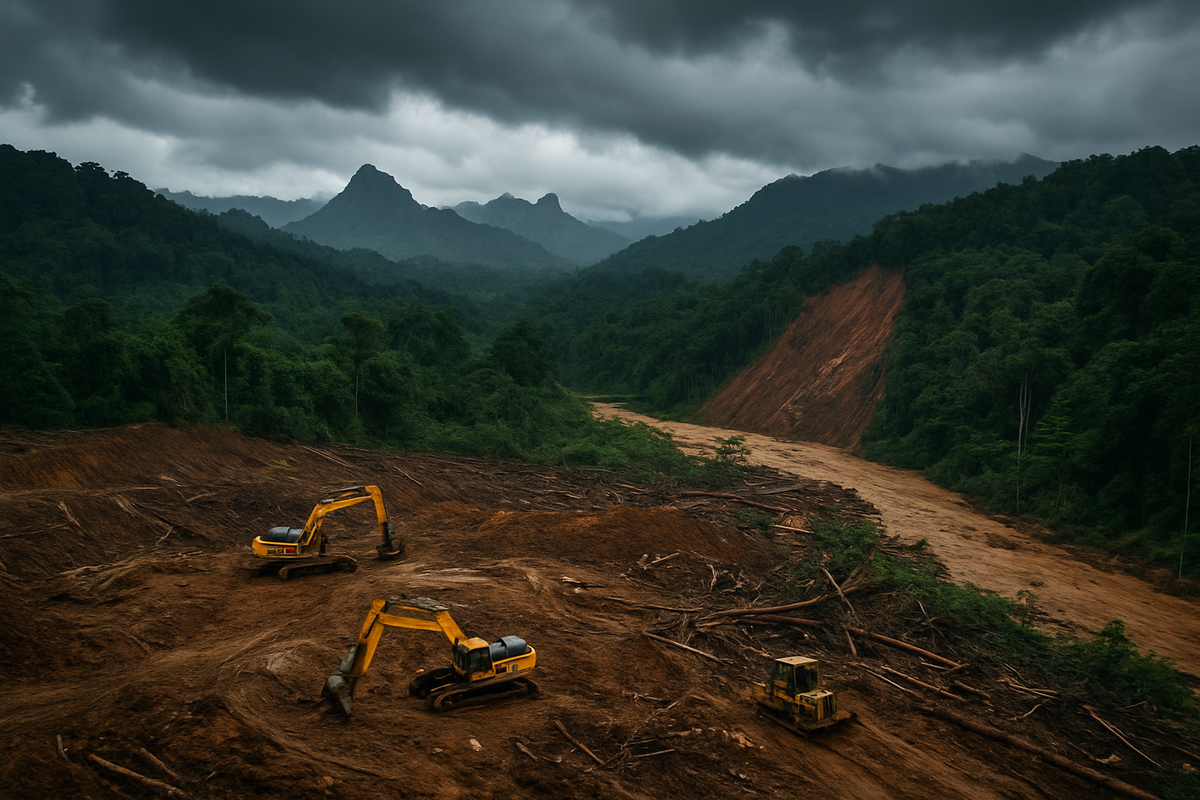
In a move that has sent shockwaves through Southeast Asia’s commodities markets, Indonesian President Prabowo Subianto has officially revoked the business permits of 28 companies operating across the mining, forestry, and plantation sectors in Sumatra. The decision, announced on January 20, 2026, marks one of the most aggressive environmental enforcement actions in the nation’s history, directly linking corporate land management to the catastrophic natural disasters that claimed over 1,200 lives in late 2025.
The sweeping administrative crackdown targets approximately 1.01 million hectares of land. The executive order follows a multi-agency audit which concluded that excessive deforestation and poor land-use practices within these concessions significantly exacerbated the landslides and flash floods triggered by Cyclone Senyar in November and December. For investors, the move signals a sharp pivot in Jakarta’s regulatory philosophy, prioritizing "ecological carrying capacity" and disaster accountability over traditional resource extraction and industrial expansion.
Audit Links Industrial Activity to Human Catastrophe
The revocation is the culmination of a month-long investigation by the Forest Area Enforcement Task Force (Satgas Penataan Kawasan Hutan). The audit focused on the Batang Toru and Garoga watersheds in North Sumatra, as well as vulnerable regions in West Sumatra and Aceh. Investigators presented evidence that operations within these 28 concessions had stripped critical highland cover, leaving the soil unable to absorb the record-breaking rainfall brought by Cyclone Senyar. The resulting mudslides destroyed entire villages and disrupted vital infrastructure, leading to a humanitarian crisis that the Prabowo administration has blamed squarely on corporate negligence.
Among the 28 entities, 22 are holders of Forestry Utilization Business Permits (PBPH), while the remaining six represent high-profile mining, plantation, and hydropower interests. The North Sumatra region bore the brunt of the enforcement, with 15 companies losing their licenses. In addition to the permit revocations, the Indonesian government is reportedly pursuing civil damages totaling more than US$280 million from several of the firms involved to fund regional reconstruction and victim compensation.
The initial industry reaction has been one of shock and rapid divestment. In the days following the January 20 announcement, the Indonesia Stock Exchange saw a significant sell-off in the basic materials and energy sectors. Trade bodies have expressed concerns over the "suddenness" of the revocations, arguing that many of the targeted firms had previously passed annual environmental compliance reviews. However, the President’s office has remained firm, stating that previous standards were "manifestly insufficient" in the face of climate-driven extreme weather.
Corporate Fallout: Heavyweights Hit by the Pen
The market impact of the revocations has been most visible in the stock performance of Indonesia’s largest industrial conglomerates. PT Astra International Tbk (IDX:ASII), one of the country’s most widely held stocks, saw its share price tumble by nearly 13% as investors processed the news. Astra’s exposure comes through its heavy-equipment and mining subsidiary, PT United Tractors Tbk (IDX:UNTR), which fell 15% following the announcement.
The primary driver for the slump in UNTR and ASII is the inclusion of PT Agincourt Resources in the revocation list. Agincourt operates the Martabe Gold Mine, one of Indonesia’s most productive precious metal assets. The revocation of its operating permits represents a massive blow to United Tractors’ gold mining revenue stream, which had been a key hedge against the softening coal market. Similarly, PT Toba Pulp Lestari Tbk (IDX:INRU), a major player in the pulp and paper industry owned by the Tanoto family, faced an immediate trading suspension after its concessions in North Sumatra were targeted.
While the "losers" are clear, the "winners" in this scenario are less obvious and largely non-corporate. Small-holder cooperatives and community-based forestry programs may benefit if the government follows through on plans to redistribute some of the land for sustainable agroforestry. Furthermore, environmental consulting firms and ESG (Environmental, Social, and Governance) auditing agencies are expected to see a surge in demand as other resource companies scramble to "disaster-proof" their permits to avoid a similar fate.
A New Era of Post-Disaster Accountability
This event fits into a broader global trend where governments are increasingly using administrative law to hold corporations accountable for the indirect environmental costs of their operations. Historically, Indonesia has revoked permits for "dormancy"—where land was held but not developed. This 2026 action, however, sets a precedent for "disaster-linked revocation," where active, productive sites are shuttered because their environmental footprint is deemed too hazardous to the public.
The ripple effects are already being felt by competitors who were not on the list. Major miners and palm oil producers are reportedly conducting emergency internal audits of their drainage systems and forest buffer zones. The regulatory implication is clear: the Prabowo administration is shifting away from the "Omnibus Law" era of deregulation toward a framework where the "Right to Operate" is contingent on a company's ability to prove it does not increase regional flood risks.
Comparisons are being drawn to the 2015 haze crisis, which led to a moratorium on peatland development. However, the 2026 revocations are more targeted and legally aggressive. By specifically citing the 1,200 deaths from the Sumatra floods, the government has framed this as a matter of national security and public safety, making it politically difficult for companies to lobby for a simple reversal of the decision.
The Road Ahead: Legal Battles and Restoration
In the short term, the primary focus will be the legal arena. Both PT United Tractors Tbk and PT Toba Pulp Lestari Tbk have issued public disclosures indicating they will seek legal clarification and potentially file suits in the State Administrative Court (PTUN). They argue that their operations were conducted within the bounds of the law and that the floods were an "act of God" rather than a result of corporate activity. These legal battles could drag on for years, creating a period of prolonged uncertainty for the affected concessions.
Strategically, the Indonesian government has announced that approximately 900,000 hectares of the revoked land will be converted into permanent conservation forests. This pivot is part of a larger plan to restore the ecological integrity of the Batang Toru ecosystem, which is the only habitat of the Tapanuli orangutan. For the mining and forestry sectors, this means a permanent reduction in available "concessionable" land in Sumatra, likely driving up the price of existing timber and mineral assets in less sensitive areas.
Market opportunities may emerge in the restoration economy. President Prabowo has hinted at a massive reforestation program that could be funded by international carbon credits. Companies that can pivot from extraction to "land rehabilitation" and "ecosystem services" may find a more hospitable regulatory environment in the coming decade.
Conclusion and Investor Outlook
The revocation of these 28 permits is a watershed moment for the Indonesian economy. It marks the end of an era where industrial growth in Sumatra was pursued with limited regard for the island's fragile topography. The key takeaway for the market is that "compliance" is no longer a static box to be checked; it is a dynamic requirement that can be retroactively judged against the backdrop of climate events.
Moving forward, the market for Indonesian resource stocks will likely be bifurcated. Companies with transparent, high-standard environmental protections may command a premium as "safe" bets, while those operating in high-risk watersheds will face higher cost-of-capital and persistent regulatory risk. The immediate focus for investors should be on the upcoming court filings from PT Astra International Tbk and its subsidiaries, as well as the government’s next steps regarding the "US$280 million" damage claims.
In the coming months, watch for the "Disaster Accountability" framework to be potentially expanded to other islands, such as Kalimantan or Sulawesi. If the Sumatra revocations stand, they will serve as the blueprint for a new Indonesian industrial policy—one where the cost of a permit includes the price of the forest it replaces.
This content is intended for informational purposes only and is not financial advice.