Although Mercury is closest to the Sun, it remains one of the hardest worlds to reach. The BepiColombo mission, a project by the European Space Agency and the Japan Aerospace Exploration Agency, is expected to enter Mercury’s orbit in November 2026. The spacecraft will reach Mercury after a seven-year interplanetary journey. This milestone marks major progress in humanity’s efforts to face extreme space conditions.
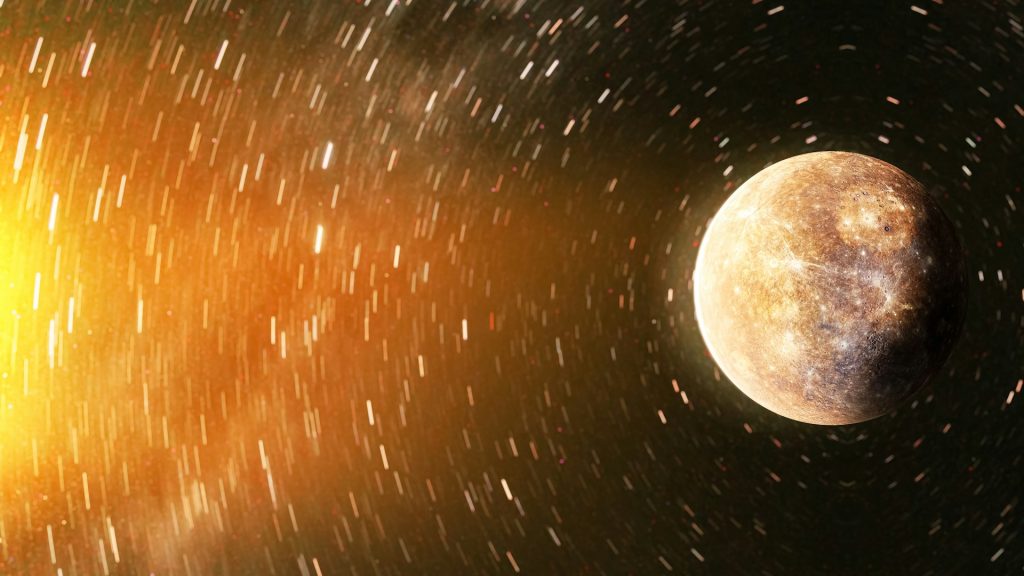
BOSTON, MA (MERXWIRE) – Have you wondered why Mars and Jupiter are often visible at night, but Mercury rarely is? Mercury is only slightly larger than Earth’s Moon. It orbits extremely close to the Sun, hiding within the Sun’s dazzling light most of the time. This makes it one of the hardest planets to observe.
Nevertheless, humanity’s exploration of Mercury is about to enter a new era. The European Space Agency (ESA) and the Japan Aerospace Exploration Agency (JAXA) have jointly developed the BepiColombo spacecraft. They plan to arrive at their final destination—Mercury’s orbit—by the end of 2026.
According to the latest mission timeline, BepiColombo launched in 2018. It has already travelled for more than seven years, covering over nine billion kilometres in space. The spacecraft is expected to officially enter Mercury’s orbit in November 2026. The scientific community sees this as a genuine “impossible mission.”
Mercury is one of the toughest planets for orbit insertion in our Solar System. Its close proximity to the Sun creates an intense gravitational pull that constantly accelerates spacecraft. Without precise control, a probe could fall into the Sun. To prevent this, BepiColombo relies on a series of gravity-assist manoeuvres. It uses the gravity of Earth, Venus, and Mercury to slow down and adjust its path. The process is like braking repeatedly on a cosmic highway. This is why the mission needs seven years to complete.
Mercury’s environment brings further obstacles beyond the trip itself. Daytime surface temperatures can reach 430 degrees Celsius—hot enough to melt lead. At night, temperatures may fall to minus 180 degrees, creating extreme swings. Even so, scientists believe layers of ice may exist in craters near Mercury’s poles. Determining whether Mercury has water is a key mission goal.
Mercury’s unusual internal structure still intrigues scientists. Its metallic core is extremely large. This gives the planet the look of a world that lost its outer layers. Researchers hope BepiColombo’s observations will reveal why Mercury has a strong magnetic field. They also want to know if a colossal impact shaped the planet early in the Solar System’s history.
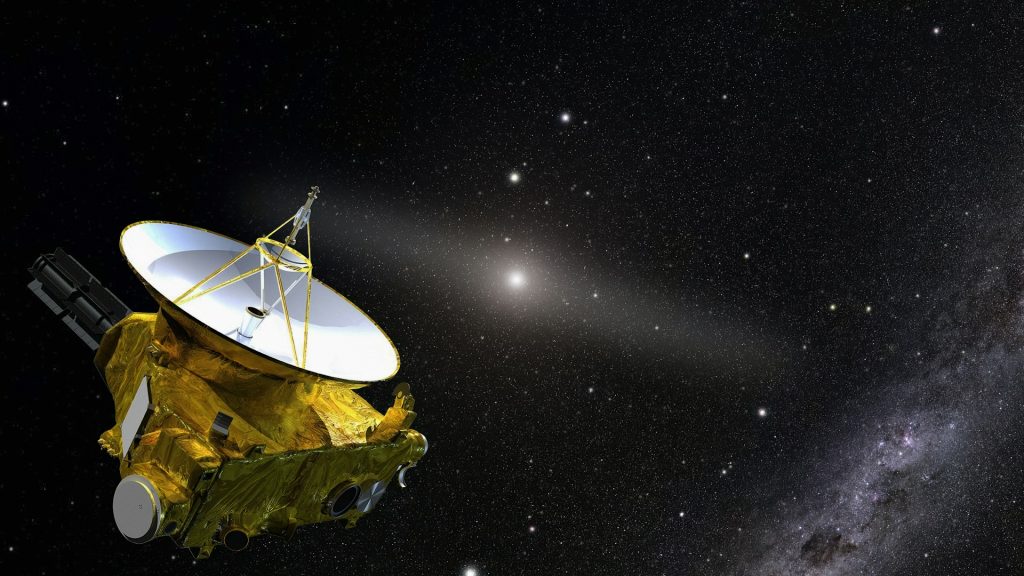
As BepiColombo moves into its final approach, humanity could soon make major new discoveries about Mercury. This fresh wave of Mercury exploration excites space enthusiasts worldwide. It also highlights our determination to confront extreme environments and expand cosmic exploration. Soon, the first images and scientific data will be transmitted back to Earth. The mysterious planet long hidden by the Sun’s brilliance may finally reveal its true nature.