The collaboration pairs a field-ready vaccine program with gene-editing research aimed at reducing devils' susceptibility to a transmissible cancer that has cut wild populations by roughly 80%
A contagious facial cancer has erased roughly 80% of Tasmania's wild devils since it surfaced in the 1990s, and biting, a natural behavior for feeding and mating, spreads it faster than conservation can contain it. The Colossal Foundation, the nonprofit conservation arm of Colossal Biosciences, is now joining the fight. It has partnered with the University of Tasmania to attack Devil facial tumour disease (DFTD) on two fronts.
This press release features multimedia. View the full release here: https://www.businesswire.com/news/home/20260701301813/en/
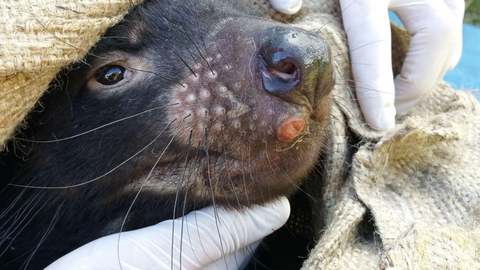
Colossal Foundation Partners With University of Tasmania on Vaccines and Gene Editing to Fight Devil Facial Tumour Disease
Two related cancers, DFT1 (first documented in 1996) and DFT2 (identified in 2014), are nearly always fatal, and because devils are Tasmania's apex scavenger and predator, their loss ripples across the island's ecosystems.
The partnership pairs two approaches: a field-ready oral bait vaccine designed to train the devil immune system to destroy DFT1 and DFT2 cells, developed by the University of Tasmania's Wild Immunology Group under Associate Professor Andrew Flies; and gene-editing research on LZTR1, a gene implicated in the origin of DFT1. The goal is to explore whether correcting devil-specific mutations could reduce susceptibility to the disease.
The Colossal Foundation is also establishing a new fat-tailed dunnart research colony at the Menzies Institute for Medical Research in Hobart, built on husbandry protocols from Colossal's thylacine de-extinction program. The colony will let researchers run vaccine safety trials in a biologically relevant marsupial model — a required step before any devil trials begin.
"Devil facial tumour disease is one of the most devastating wildlife diseases on Earth," said Matt James, Executive Director of the Colossal Foundation. "...By combining [Andy Flies'] work with Colossal's marsupial husbandry, reproductive science, and gene-editing platform, we have a real opportunity to accelerate this effort and give the Tasmanian devil a fighting chance."
"We've spent years developing a vaccine designed to train the devil immune system to fight these cancers but progress is slow due to the challenges of working with an endangered species and having a lack of marsupial research tools," said Associate Professor Andrew Flies at the Menzies Institute for Medical Research, University of Tasmania. "...Partnering with the Colossal Foundation can significantly accelerate our vaccine work, and allow us to explore a gene-editing strategy in parallel that could enhance the vaccine and make devils more resistant to DFTD."
The collaboration builds on the marsupial biotechnology platform Colossal developed through its thylacine de-extinction program, which previously enabled engineered cane toad toxin resistance for the endangered northern quoll.
ABOUT THE COLOSSAL FOUNDATION
The Colossal Foundation is a 501(c)(3) dedicated to supporting the use of cutting-edge technologies to conservation efforts globally to help prevent extinction of keystone species. The organization deploys cutting-edge de-extinction technologies and support to empower partners in the field to reverse the extinction crisis. www.ColossalFoundation.org.
ABOUT THE UNIVERSITY OF TASMANIA AND THE MENZIES INSTITUTE FOR MEDICAL RESEARCH
The University of Tasmania is Australia’s fourth-oldest university and the only university based in Tasmania, with a deep institutional commitment to research that addresses the unique conservation, health, and environmental challenges of its island state. The Menzies Institute for Medical Research, University of Tasmania’s flagship medical research institute, is one of Australia’s leading health and medical research institutes. The Menzies Wild Immunology Group, led by Associate Professor Andrew Flies, focuses on wildlife immunology and vaccine development, including efforts to protect Tasmanian devils from devil facial tumour disease. Learn more at menzies.utas.edu.au.
ABOUT BONORONG WILDLIFE SANCTUARY
Established in 1981, Bonronog Wildlife Sanctuary is an iconic enterprise committed to the conservation of native species, through wildlife rescue and rehabilitation, education, and experiences that connect people and wildlife. Learn more at bonorong.com.au.
View source version on businesswire.com: https://www.businesswire.com/news/home/20260701301813/en/
Contacts
Colossal Press Contacts: Emily Mailaender // emily@colossal.com