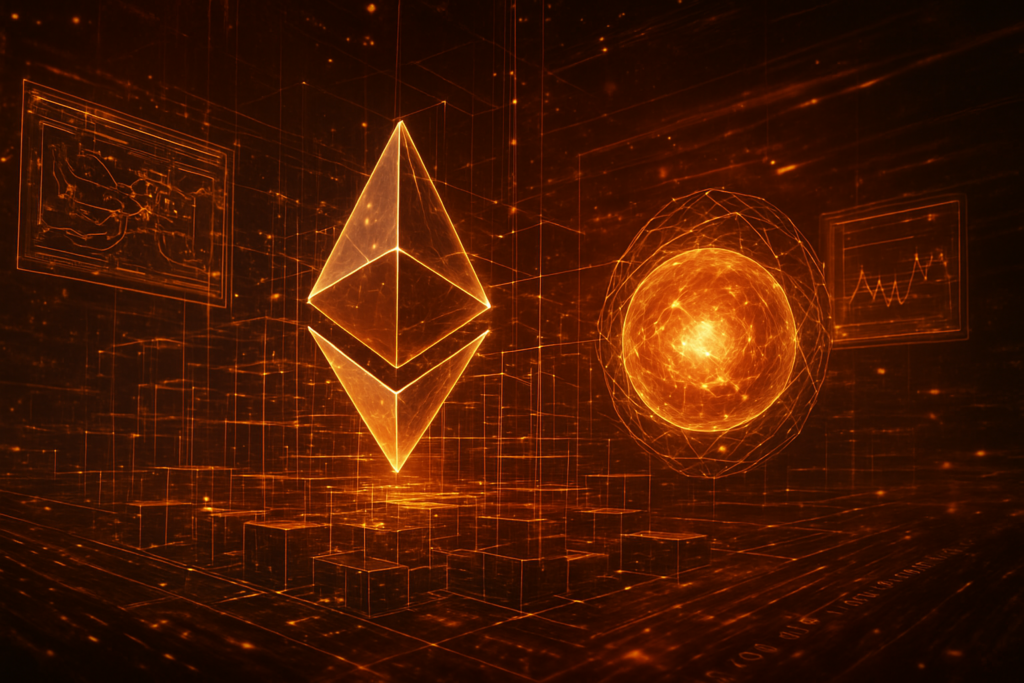
The evolution of the Ethereum network reached a pivotal turning point with the successful activation of the Pectra (Prague-Electra) upgrade on the Holesky testnet. While this milestone occurred in early 2025, its ripples continue to define the Ethereum ecosystem as we navigate the opening weeks of 2026. The Holesky deployment served as the ultimate stress test for a suite of features that have since become the backbone of institutional staking and user-centric account abstraction.
At the time of its Holesky launch, Pectra was the most ambitious upgrade in Ethereum’s post-Merge history, bundling 11 major Ethereum Improvement Proposals (EIPs). The transition on Holesky was not without its hurdles—initial inactivity leaks and client misconfigurations delayed finalization for several epochs—but the resolution of these issues paved the way for the flawless mainnet activation on May 7, 2025. Today, as Ethereum scales toward its 10,000 Transactions Per Second (TPS) goal, the industry looks back at Pectra as the moment the network effectively "grew up."
Market Impact and Price Action
The lead-up to the Pectra testnet activation saw Ether (ETH) break through significant resistance levels. In early 2025, as developers confirmed the Holesky timeline, ETH saw a 15% surge, reclaiming the $3,800 level as institutional interest shifted from Bitcoin ETFs to the upcoming "smart account" narrative. Trading volumes on major exchanges like Coinbase Global, Inc. (NASDAQ: COIN) reached 12-month highs during the testnet window, as market participants anticipated the impact of EIP-7251 (Max Effective Balance).
Technically, the Pectra cycle established a robust support floor at $3,200. The market recognized that the upgrade would significantly reduce the operational overhead for "Mega-Validators." By raising the maximum effective balance from 32 ETH to 2,048 ETH, the network allowed large-scale stakers to consolidate their nodes. This led to a brief contraction in the circulating supply of ETH as institutional "restaking" protocols like EigenLayer saw a massive influx of consolidated deposits. Comparing this to the previous Dencun upgrade, Pectra’s market effect was more sustainable, driven by the fundamental shift in how capital efficiency was realized at the protocol level.
Community and Ecosystem Response
The community response to the Holesky activation was a mix of technical fascination and developer relief. On social media platforms and developer forums, the spotlight was firmly on EIP-7702, a proposal championed by Vitalik Buterin that introduced a new transaction type. This allowed traditional Externally Owned Accounts (EOAs) to temporarily function as smart contract accounts, enabling "gasless" transactions and batching for the first time on a global scale.
Crypto influencers and protocol founders hailed the Holesky test as the "death of the seed phrase era." The ability for decentralized applications (dApps) to sponsor gas fees for users—tested extensively on Holesky—saw immediate adoption by DeFi heavyweights like Uniswap and Aave. Meanwhile, the staking community focused on EIP-7002, which allowed smart contracts to trigger validator exits. This technical improvement was a "God-send" for liquid staking providers, as it removed the centralized bottleneck of manual exits and significantly enhanced the security of liquid staking tokens (LSTs).
What's Next for Crypto
As of January 12, 2026, the Ethereum roadmap has moved beyond Pectra and into the Glamsterdam and Hegota cycles. However, the legacy of Pectra on Holesky is the foundation for the current PeerDAS (Peer Data Availability Sampling) implementation. By doubling the "blob" throughput during the Pectra era (EIP-7691), developers were able to gather the data necessary to launch the more advanced sampling techniques we see today on the Hoodi testnet.
Looking ahead, the strategic focus for 2026 is the implementation of Verkle Trees in the upcoming Hegota fork. This will enable "stateless clients," a goal that was only made possible by the state-management optimizations introduced during the Pectra cycle. Investors should monitor the progress of enshrined Proposer-Builder Separation (ePBS), which aims to further decentralize the MEV (Maximal Extractable Value) landscape—another technical debt being paid down following the stability Pectra brought to the validator set.
Bottom Line
The Pectra upgrade's journey through the Holesky testnet was a masterclass in Ethereum’s decentralized governance and technical resilience. For investors, the key takeaway is that Pectra transformed Ethereum from a "one-node-one-vote" system into an institutional-grade settlement layer capable of handling massive validator consolidation. This shift has been instrumental in the 2026 landscape, where Ethereum's dominance as the "Global Settlement Layer" is increasingly unchallenged.
As we look at the current metrics, the 2,048 ETH validator limit has reduced the network's message overhead by nearly 40%, allowing for faster finality and a more robust consensus layer. For the average user, the account abstraction features tested on Holesky have made Web3 applications as intuitive as traditional fintech apps.
Important Metrics to Monitor:
- Validator Consolidation Rate: How many nodes are currently operating at the 2,048 ETH cap.
- L2 Gas Compression: The continued impact of blob expansion on rollup profitability.
- Account Abstraction Adoption: The percentage of transactions utilizing EIP-7702 features.
Ethereum's path from the Pectra-Holesky milestone to the current 2026 ecosystem underscores the network's ability to evolve without sacrificing security, solidifying its position as the bedrock of the digital asset economy.
This article is for informational purposes only and does not constitute financial or investment advice. Cryptocurrency investments carry significant risk.