Buying a mattress used to mean visiting a furniture store, lying on a few beds, and choosing the one that felt comfortable enough. Today, shoppers can compare construction details, dimensions, customer reviews, delivery options, and prices before leaving home. This change has made mattress shopping more convenient, but it has also given buyers more details to evaluate before making a decision.
Three factors are receiving particular attention: the materials inside the mattress, the size that fits a person's lifestyle, and the convenience of ordering online. These choices are closely connected. A mattress may have appealing comfort features but be unsuitable for a small bedroom, while a well-sized option may not offer the right feel for the sleeper. Understanding how these decisions work together helps buyers focus on practical value rather than simply choosing the product with the longest feature list.
This is why shoppers comparing memory foam mattresses should review the full construction rather than relying on broad labels such as soft, premium, or advanced. Product descriptions can explain the intended feel, but the most useful information is specific: materials, thickness, available firmness options, care instructions, and compatibility with the intended bed frame.
Foam Has Become a More Detailed Buying Decision
Foam mattresses are no longer a single, uniform category. Manufacturers use different layers and formulations to influence cushioning, responsiveness, airflow, and overall support. Some designs contour closely around the body, while others combine softer comfort layers with firmer foam underneath. As a result, two mattresses described as memory foam can provide noticeably different experiences.
For buyers, this variety creates more choice but also makes it important to look beyond the material's name. The thickness of each layer, the type of cover, and the construction of the base can all affect how a mattress feels. A shopper who prefers a close, cushioned sensation may prioritize contouring, while someone who changes positions frequently may prefer a surface that feels easier to move on.
Mattress Size Is a Lifestyle Decision, Not Just a Measurement
The dimensions of a mattress affect more than how much room a person has while sleeping. They also determine how much space remains for walking, opening drawers, placing bedside tables, and arranging other bedroom furniture. A larger mattress can offer extra room, but it may make a compact bedroom feel crowded if the layout is not considered first.
Household needs also change over time. A single person furnishing a first apartment may prioritize floor space and flexibility, while a couple may value additional width. Someone who shares a bed with children or pets may have different requirements again. Thinking about how the bed will be used on ordinary nights provides a more useful starting point than choosing a size based on appearance alone.
When a king mattress is worth considering
A king mattress typically measures 76 inches wide by 80 inches long in the United States. Compared with a queen, it offers considerably more width, which can be useful for couples who want more personal sleeping space. However, the extra width requires a larger frame and enough clearance around the bed.
A king size mattress is not automatically the best choice for every couple. Buyers should measure the room, check door and drawer clearance, and account for the outer dimensions of the frame. If the larger bed makes it difficult to move around the room, a queen may provide a better overall balance. The right size is the one that supports comfortable sleeping without making the bedroom less practical.
Cooling Features Reflect a Wider Interest in Comfort
Temperature comfort has become an important consideration for people comparing mattresses. Some sleepers find that certain foam surfaces feel warm, particularly when the mattress contours closely around the body or when heavy bedding is used. Manufacturers have responded with different approaches, including breathable covers, gel-infused foam, and designs intended to improve airflow.
These features should be assessed carefully. A cooling label does not mean a mattress will feel equally cool to every person, because the room temperature, humidity, sheets, blankets, and individual preferences all play a role. Buyers should look for clear descriptions of how the materials are intended to work rather than treating a single feature as a guarantee of comfort.
A cooling-focused design may be particularly relevant for shoppers who like the feel of foam but want to pay closer attention to heat management. In these cases, it is sensible to compare the cover, foam layers, mattress thickness, and available product specifications. The goal is not to find a mattress with the most impressive terminology, but to find one whose construction fits the conditions in which it will be used.
How the Novilla AiryFlow Fits Into These Buying Priorities
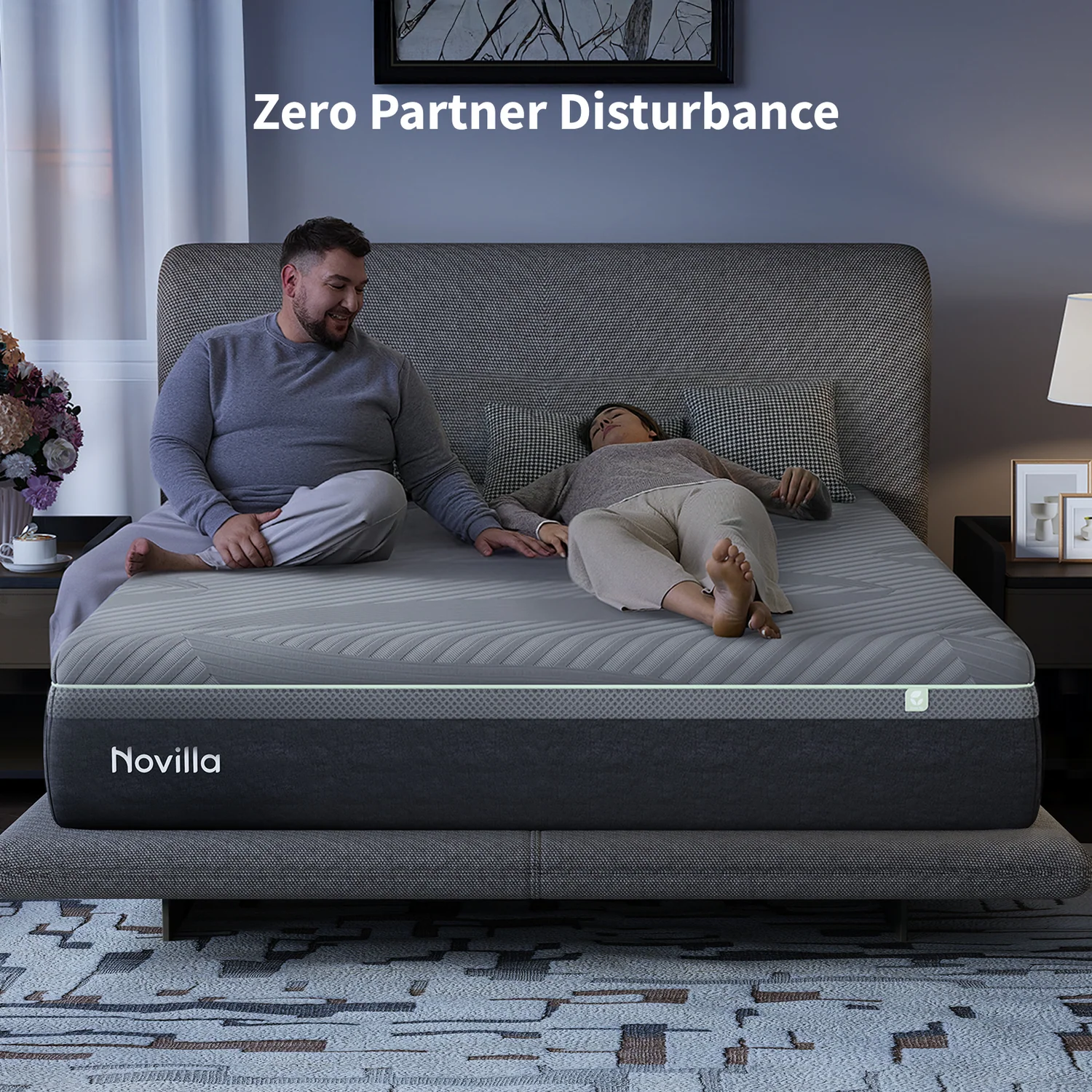
The Novilla AiryFlow Cooling Foam Mattress is an example of a product designed around foam comfort and temperature-focused construction. Its listed materials include an ice-silk cooling cover, NanoGEL memory foam, high-density support foam, green tea-infused support foam, and breathable mesh sides. Together, these elements are intended to provide contouring comfort while addressing airflow and the feel of the sleeping surface.
This construction may interest buyers who want an all-foam mattress but are also considering temperature management. The product is offered in multiple sizes and thicknesses, allowing shoppers to compare the profile with their bed frame and preferred sleeping height. Its medium-firm feel is positioned as a balance between cushioning and support, although the way it feels will depend on the individual sleeper.
The AiryFlow should be evaluated against practical needs rather than chosen on features alone. Buyers should confirm the dimensions of their selected version, check that the foundation meets the manufacturer's requirements, and review the current product information before ordering. It is also worth considering how existing bedding may affect the overall experience. A mattress is only one part of the sleep setup, and sheets or protectors can influence how the surface feels.
Online Shopping Has Changed How Buyers Compare Value
One of the biggest advantages of buying a mattress online is the ability to compare products at one's own pace. Instead of relying only on a showroom visit, shoppers can review dimensions, materials, construction details, prices, and customer feedback side by side. This is especially useful when comparing several models that look similar but use different internal designs.
Online product pages can also help buyers identify details that might be overlooked during a brief in-store visit. A shopper can check whether a mattress comes in the required size, compare thickness options, and review the conditions for delivery, returns, and warranties. However, online convenience works best when shoppers read the details carefully instead of making a decision from product photographs or promotional claims.
Reviews are useful, but they need context
Customer reviews can reveal recurring themes about setup, firmness, packaging, or long-term use. Still, a review reflects one person's experience and may not match another sleeper's preferences. Someone who loves a plush surface may dislike the same mattress that a firmer-bed enthusiast recommends.
Look for patterns across multiple reviews rather than focusing on one enthusiastic or critical comment. Pay attention to whether reviewers discuss similar needs, such as sleeping position, room temperature, or sharing the bed with a partner. Product specifications should remain the basis for confirming measurements and materials, while reviews can add context about individual experiences.
Delivery and Setup Are Part of the Purchase
A mattress purchase does not end when the payment is completed. Delivery arrangements, packaging, access to the bedroom, and setup instructions all affect the overall experience. Some mattresses are compressed and shipped in a box, which can make handling easier than moving a fully expanded mattress through narrow hallways. Buyers should still confirm the delivery method for the exact model they select.
Before ordering, measure the route from the entrance to the bedroom. Doorways, stairs, tight corners, and narrow corridors can complicate delivery even when the mattress itself fits the room. Check whether the package can be carried safely and whether another person will be needed to help with setup.
If a mattress arrives compressed, follow the manufacturer's instructions for unpacking and expansion. Different models may have different recommendations about how long to wait before use. Avoid assuming that every mattress is ready at the same speed, and retain relevant purchase information in case questions arise about setup or product support.
The Real Cost Includes More Than the Listed Price
Price is an important part of mattress shopping, but the lowest initial cost does not always provide the best value for a particular buyer. Construction, size, expected use, delivery, warranty coverage, and return conditions all contribute to the decision. Paying for features that do not address personal needs may be unnecessary, while overlooking an essential requirement can lead to dissatisfaction.
Buyers should compare the complete terms of each purchase. A sleep trial may have conditions, a warranty may cover certain defects rather than normal changes in comfort, and return arrangements may vary by product or seller. Reading these policies before checkout helps establish realistic expectations and makes it easier to compare different offers fairly.
It is also worth checking the total cost of the complete setup. A larger mattress may require a new frame, deeper fitted sheets, or a different protector. These extra expenses can affect the overall budget, so they should be considered before deciding whether a particular size or model represents good value.
A Smarter Way to Narrow the Choices
The growing range of mattress options gives buyers more control, but it also makes a clear decision process useful. Start by measuring the bedroom and identifying the size that will fit comfortably. Then consider sleeping position, preferred firmness, temperature concerns, and whether the mattress will be shared. These requirements help narrow the field before comparing specific products.
Next, examine the construction and purchase terms of the remaining options. Look for clear material descriptions, check compatibility with the intended frame, and compare delivery, trial, return, and warranty conditions. Use customer reviews to understand other buyers' experiences, but do not treat them as a substitute for product specifications or personal comfort preferences.
Ultimately, mattress shopping is becoming more informed because buyers can evaluate more than appearance and price. Foam construction, room dimensions, and online convenience each influence the decision in a different way. When shoppers consider all three together, they are better equipped to select a mattress that suits their bedroom, budget, and everyday routine.