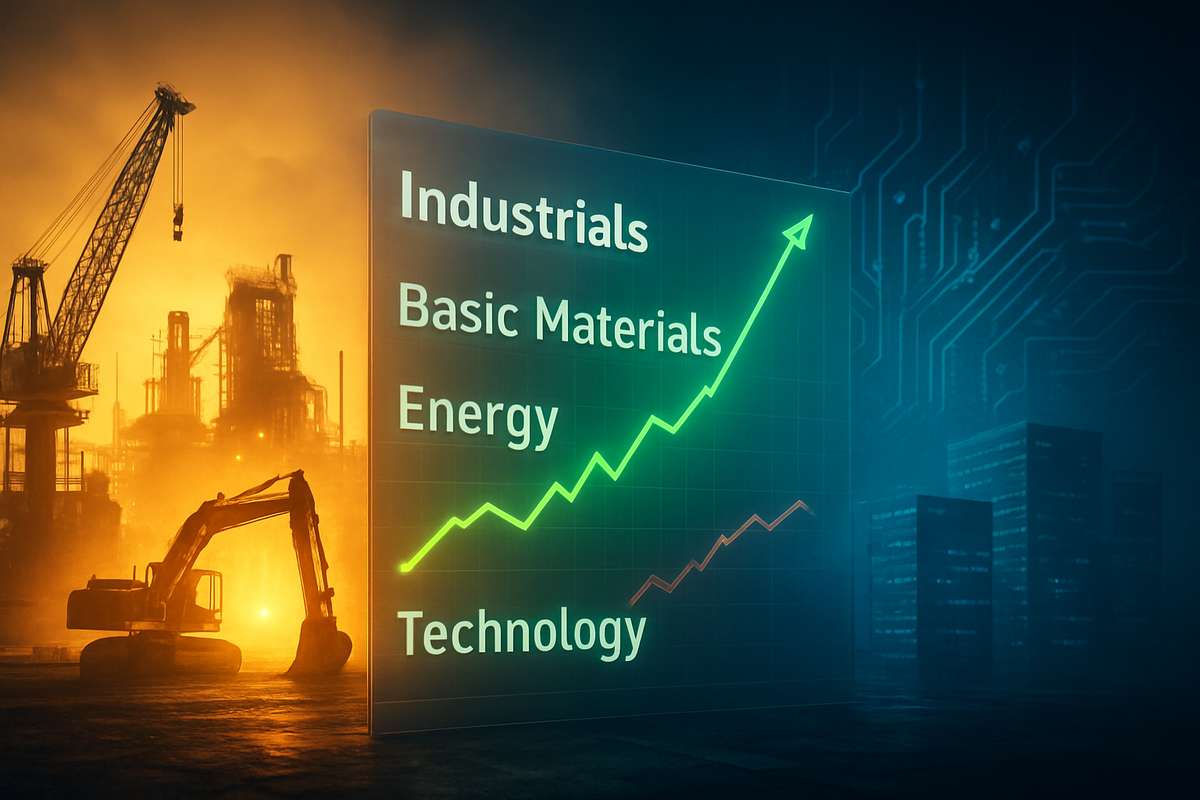
As of January 20, 2026, a historic transformation is sweeping through the U.S. stock market, marking the most significant reallocation of capital since the post-pandemic recovery. Investors are aggressively rotating out of the high-flying, mega-cap technology stocks that dominated the last decade and into the "unloved" sectors of the S&P 500. This "Great Rotation" has seen the tech-heavy Nasdaq struggle to maintain its footing while the Dow Jones Industrial Average (INDEXDJX:.DJI) and the Russell 2000 (INDEXRUSSELL:RUT) small-cap index surge to unprecedented heights.
The immediate implications are profound for both institutional and retail portfolios. For years, the "Magnificent Seven" trade was a safety net for investors, but that net is fraying as valuation fatigue sets in. In the first three weeks of January alone, the S&P 500 Equal Weight Index (RSP) has outperformed the standard market-cap-weighted index by more than 250 basis points, signaling that market breadth is finally expanding. This shift is not merely a technical correction but a fundamental repricing of the American economy, driven by a new era of fiscal stimulus and a pivotal shift in monetary policy.
The Broadening Market: A Timeline of the Great Rebalancing
The seeds of this rotation were sown in the latter half of 2025, following a series of dramatic macroeconomic shifts. The primary catalyst was the Federal Reserve’s "soft landing" pivot in the fourth quarter of 2025, which saw three consecutive 25-basis-point rate cuts. This move lowered the federal funds rate to a range of 3.50%–3.75%, providing a vital lifeline to mid-sized and small-cap companies that had been suffocated by high borrowing costs. By January 6, 2026, the Dow Jones Industrial Average pierced the 49,000 mark for the first time, fueled by a resurgence in banking and industrial stocks rather than the typical tech drivers.
Simultaneously, the legislative landscape shifted with the passage of the "One Big Beautiful Bill Act" (OBBBA) in July 2025. This landmark fiscal package restored 100% bonus depreciation and immediate R&D expensing, providing a massive incentive for "Old Economy" firms to accelerate capital expenditures. As these tax benefits began to hit corporate balance sheets in the first weeks of 2026, investors realized that earnings growth was no longer the exclusive domain of Silicon Valley. While the "Magnificent Seven" saw their earnings growth projections moderate to roughly 22%, the rest of the S&P 500—often referred to as the "S&P 493"—saw growth accelerate to double digits for the first time in years.
The initial market reaction has been swift and decisive. In the opening weeks of 2026, the Russell 2000 has surged 8.0% year-to-date, hitting new all-time highs and breaking out of a multi-year consolidation pattern. Meanwhile, the tech sector has transitioned from market leader to laggard, with many AI darlings experiencing their first sustained period of underperformance since 2022. This shift was punctuated in early January by a sudden leadership change in Venezuela, which ignited a global rally in energy and materials as markets began to price in the massive reconstruction of South American energy infrastructure.
Winners and Losers: From Silicon to Steel
The most visible casualties of this rotation are the former market darlings. Apple Inc. (NASDAQ: AAPL) and Meta Platforms Inc. (NASDAQ: META) have both seen their share prices slide by approximately 6% in January as investors question whether their valuations have become untethered from reality. Microsoft Corporation (NASDAQ: MSFT), despite its continued dominance in the enterprise AI space, has fallen nearly 5% this month as capital is pulled to fund positions in more cyclical sectors. These tech giants are facing a "valuation ceiling" where even positive earnings reports are met with selling pressure as the market seeks higher yields elsewhere.
Conversely, the winners of 2026 are found in the factories, mines, and oil fields. Caterpillar Inc. (NYSE: CAT) has emerged as a premier beneficiary of the domestic infrastructure boom and the global energy transition, with its shares continuing a record-breaking run that began in 2025. Similarly, in the Basic Materials sector, Freeport-McMoRan Inc. (NYSE: FCX) is trading at 15-year highs as copper prices skyrocket to $13,000 per tonne, driven by the massive electrification needs of new AI data centers. Nucor Corporation (NYSE: NUE) has also seen a 7% jump in early 2026, capturing the lion's share of the steel demand required for North American power grid modernization.
The financial sector is also seeing a renaissance, led by JPMorgan Chase & Co. (NYSE: JPM), which recently reported a "masterclass" quarter with a 49% surge in investment banking fees. The reopening of the IPO market in late 2025 and a flurry of M&A activity have turned traditional banks into major alpha-generators. Other specialized winners include GE Vernova Inc. (NYSE: GEV) and Eaton Corporation (NYSE: ETN), both of which are capitalizing on the structural need for power management solutions. For these companies, the narrative has shifted from being "boring value plays" to essential infrastructure providers for the next phase of the digital economy.
A Structural Shift in Global Industry Trends
This rotation is more than a fleeting trend; it reflects a deeper evolution in how technology is integrated into the global economy. In 2024 and 2025, "AI" was a buzzword that primarily benefited the companies building the chips and software. In 2026, the focus has shifted to "Agentic AI" implementation—the stage where traditional firms use these tools to expand margins and streamline operations. This has allowed companies like Comfort Systems USA, Inc. (NYSE: FIX) to achieve tech-like growth rates by applying advanced electrical and HVAC solutions to industrial construction at a scale previously thought impossible.
The policy implications of this shift are also becoming clearer. The massive fiscal injection from the OBBBA has essentially "front-loaded" economic growth, leading to a "supercycle" in materials and industrials. However, this has also created a new set of challenges for regulators and the Federal Reserve. With the 10-year Treasury yield hovering around 4.5%, there are growing concerns about the sustainability of this broadening rally if inflation remains "sticky" due to the surge in industrial activity. The historical precedent most often cited by analysts is the "Nifty Fifty" era of the early 1970s, where a narrow group of stocks eventually gave way to a much broader, albeit more volatile, market.
Navigating the Road to Dow 50,000
Looking ahead, the market appears poised to test the psychological milestone of 50,000 on the Dow Jones Industrial Average. In the short term, the primary challenge for investors will be managing the volatility that naturally accompanies such a massive rotation of capital. Strategic pivots are already underway at major hedge funds and institutional desks, which are moving from "growth at any price" to "growth at a reasonable price" (GARP). This suggests that the mid-cap space, currently trading at more attractive forward P/E ratios than mega-cap tech, may be the next frontier for the 2026 rally.
However, risks remain on the horizon. A potential DOJ probe into Federal Reserve independence and ongoing geopolitical tensions in regions like Greenland and the Middle East could quickly dampen investor sentiment. If the 10-year Treasury yield climbs significantly higher, it could create a "valuation gravity" that affects even the surging cyclical sectors. Market participants must also watch for signs of "over-earning" in the industrial sector, where the current boom in data center construction might eventually face saturation.
Conclusion: The New Market Paradigm
The stock market of early 2026 is no longer a one-trick pony. The "Great Rotation" has democratized gains across the S&P 500, proving that the American economic engine is capable of producing winners far beyond the confines of Silicon Valley. The key takeaway for investors is that the "passive" strategy of simply holding the largest tech companies is no longer the guaranteed path to outperformance it once was. Instead, a new era of active management and sector-specific expertise has returned to the forefront.
Moving forward, the market’s health will be measured not by the performance of a few trillion-dollar companies, but by the resilience of the "average" stock. As long as earnings growth continue to broaden and interest rates remain in a "neutral" zone, the 2026 rally has the potential to be one of the most durable in recent history. Investors should keep a close eye on the 10-year yield and upcoming quarterly reports from the industrial and materials sectors to gauge the longevity of this structural shift. The "Old Economy" hasn't just returned; it has reinvented itself for the AI age.
This content is intended for informational purposes only and is not financial advice