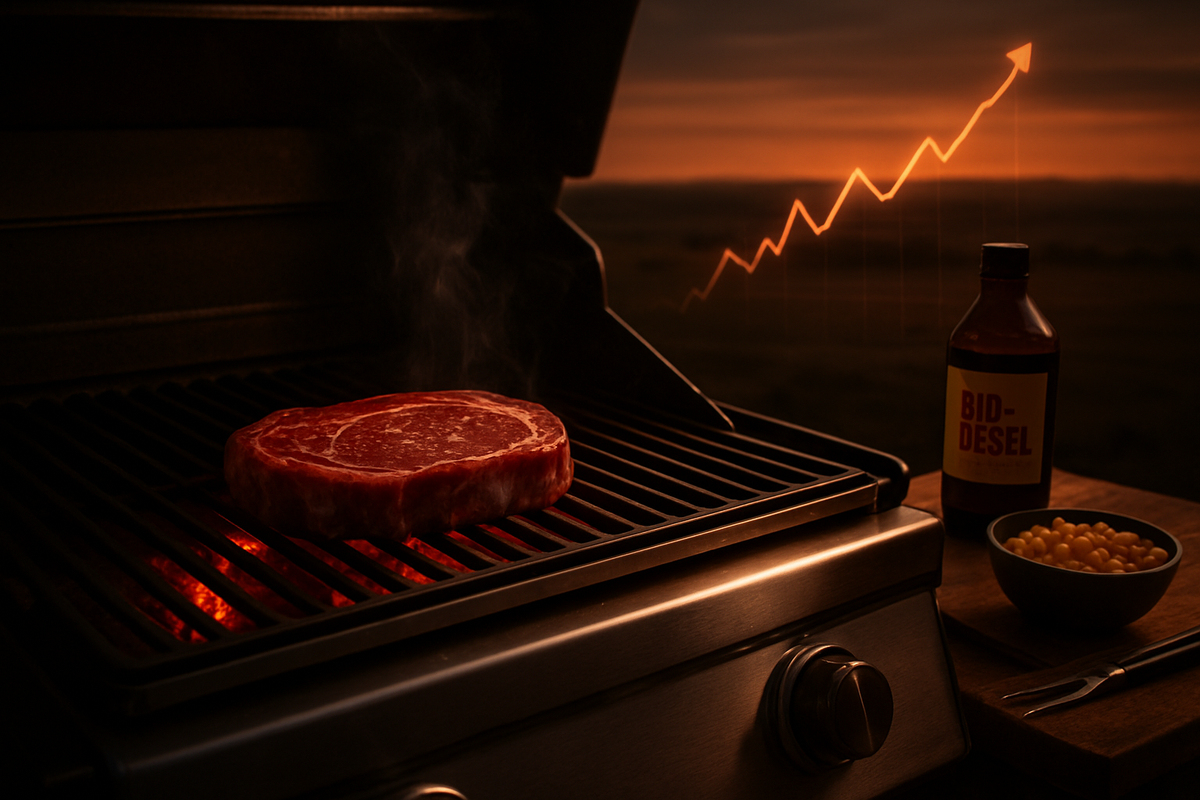
As American households prepare for the 2026 summer grilling season, the traditional center-of-the-plate staple is becoming a luxury item. According to data from Barchart and the latest reports from Feedlot Magazine, the livestock market is entering the warmer months characterized by a "Beef Super-Cycle"—a period of structural scarcity that has pushed cattle futures to historic heights. While February saw a minor technical correction in futures pricing, the underlying fundamentals of a decimated U.S. herd suggest that high prices are here to stay for the foreseeable future.
The immediate implications for the market are stark: retail beef prices are projected to average between $9.00 and $9.50 per pound during the peak grilling months. For consumers, this means a likely shift in backyard menus toward chicken and pork, while for the financial markets, it signals a period of intense margin pressure for domestic meat processors who are struggling to secure enough supply to keep plants running at efficient capacities.
The 75-Year Low: A Market in Contraction
The current state of the livestock market is the result of a multi-year contraction that has reached a critical inflection point in March 2026. According to the USDA’s January Inventory Report, the total U.S. cattle inventory has fallen to 86.2 million head—the lowest level recorded since 1951. Even more concerning for the long-term outlook is the size of the beef cow breeding herd, which has plummeted to 27.6 million head, the smallest since the early 1960s. This scarcity has created a "scramble" among feedlots to fill pens, driving feeder cattle prices to a volatile range of $358 to $370/cwt.
The timeline leading to this crisis began years ago with persistent droughts in the Southern Plains and was exacerbated by high interest rates throughout 2024 and 2025. These economic conditions forced many ranchers to sell off heifers rather than retain them for breeding, prioritizing immediate cash flow over long-term herd rebuilding. In February 2026, the 5-market average for fed steers reached a staggering $246.91/cwt. Although Barchart noted a slight dip in late February as traders locked in profits, the market found strong technical support at $233.00, signaling that the "floor" for cattle prices has risen significantly.
Market participants, including major feedlot operators and commercial buyers, have reacted with caution. The "Rebuild Delay" is now a standard term in the industry, referring to the fact that even if ranchers began retaining heifers today, it would take until at least 2028 to see a meaningful increase in beef production. This supply vacuum has turned the U.S. into a "net magnet" for global beef, as domestic production is forecast to contract another 2% this year.
Winners and Losers in the Protein Pivot
The record-high cost of cattle is creating a divergent landscape for public companies in the protein sector. Tyson Foods (NYSE: TSN) finds itself in a precarious position; analysts project its beef segment could face losses between $250 million and $500 million in 2026 as the cost of live animals outpaces what the company can pass on to retailers. However, Tyson’s diversified portfolio may provide a hedge, as its chicken and pork segments are seeing increased demand from cost-conscious consumers.
Conversely, JBS S.A. (OTC:JBSAY) is positioned to benefit from its global footprint. As the world’s leading beef supplier, JBS can leverage its vast production base in Brazil and Australia to export beef into the supply-starved U.S. market, effectively capturing the high prices that are hurting domestic-only processors. Similarly, Pilgrim’s Pride (NASDAQ: PPC) is emerging as a winner in this environment. As beef prices soar, the "substitution effect" is in full swing, driving record volumes for poultry producers as consumers look for cheaper protein alternatives for their grills.
In the grain and feed sector, Archer-Daniels-Midland (NYSE: ADM) and Bunge Global SA (NYSE: BG) are navigating a complex landscape. While corn prices have moderated to roughly $4.00 per bushel, providing some relief in feed costs, the massive demand for biofuels is creating a permanent price floor. Meanwhile, Beyond Meat (NASDAQ: BYND) continues to struggle despite the high cost of real beef, as it battles its own production inefficiencies and a 52-week decline in stock price, though some analysts suggest the narrowing price gap between plant-based and premium beef could offer a "last stand" opportunity for the brand.
Biofuels, Population, and the Broad Meats Complex
The current price environment is not merely a result of local cattle cycles; it is being driven by global structural shifts. The EPA’s 2026 Renewable Volume Obligations (RVO) have placed a heavy emphasis on biomass-based diesel. This policy has effectively tethered the meat complex to the energy market. As more acreage is dedicated to crops for fuel rather than feed, the "meats and grains complex" faces a permanent increase in the cost of production. This synergy between energy and agriculture ensures that even during bumper crop years, feed costs for livestock stay elevated compared to historical norms.
Beyond domestic policy, global population growth is exerting relentless pressure on supply. Middle-income economies in Asia and Latin America are seeing a rise in protein consumption per capita. This global demand competes directly with the U.S. domestic market, ensuring that any excess supply is quickly absorbed by international buyers. This represents a significant shift from previous decades where the U.S. was largely insulated from global protein fluctuations.
Historically, the cattle market has been cyclical, but 2026 feels different to many industry veterans. The combination of environmental pressures, biofuel mandates, and the widespread use of GLP-1 weight-loss medications—which have surprisingly sustained high-protein demand while reducing caloric intake from processed carbohydrates—has created a unique demand profile that the current shrunken herd is ill-equipped to meet.
The Road Ahead: 2028 and Beyond
In the short term, the market should prepare for a volatile summer. If the 2026 grilling season sees even a moderate uptick in consumer confidence, beef prices could break through the $10.00 per pound barrier at retail. For companies like Tyson and JBS, the strategic pivot will likely involve heavy investments in automation and "case-ready" meat solutions to reduce labor costs and maximize the yield of every carcass. We may also see more aggressive consolidation as smaller, independent processors find it impossible to compete for the limited supply of expensive cattle.
Long-term, the livestock industry must address the "Rebuild Delay." Until interest rates soften further or the government introduces specific incentives for herd expansion, the U.S. will remain reliant on imports. Market opportunities may emerge for specialized producers focusing on "regenerative" or "grass-fed" labels, which command even higher premiums and appeal to the demographic least affected by inflationary pressures.
Summary for Investors and Consumers
As we head into the heart of 2026, the livestock market is a study in structural imbalance. The key takeaways for the market are:
- Inventory Crisis: The U.S. cattle herd is at its lowest level in 75 years, ensuring a multi-year supply shortage.
- Margin Squeeze: Domestic processors (TSN) face significant headwinds, while global players (JBSAY) and poultry producers (PPC) are better positioned.
- Policy Impact: Biofuel mandates have fundamentally changed the cost structure of animal feed.
Investors should watch for the USDA's mid-year cattle reports and any shifts in the EPA’s biofuel stance, as these will be the primary catalysts for price movement in the second half of the year. For the average American, the 2026 grilling season will likely be remembered not for the heat of the grill, but for the sting of the receipt.
This content is intended for informational purposes only and is not financial advice.