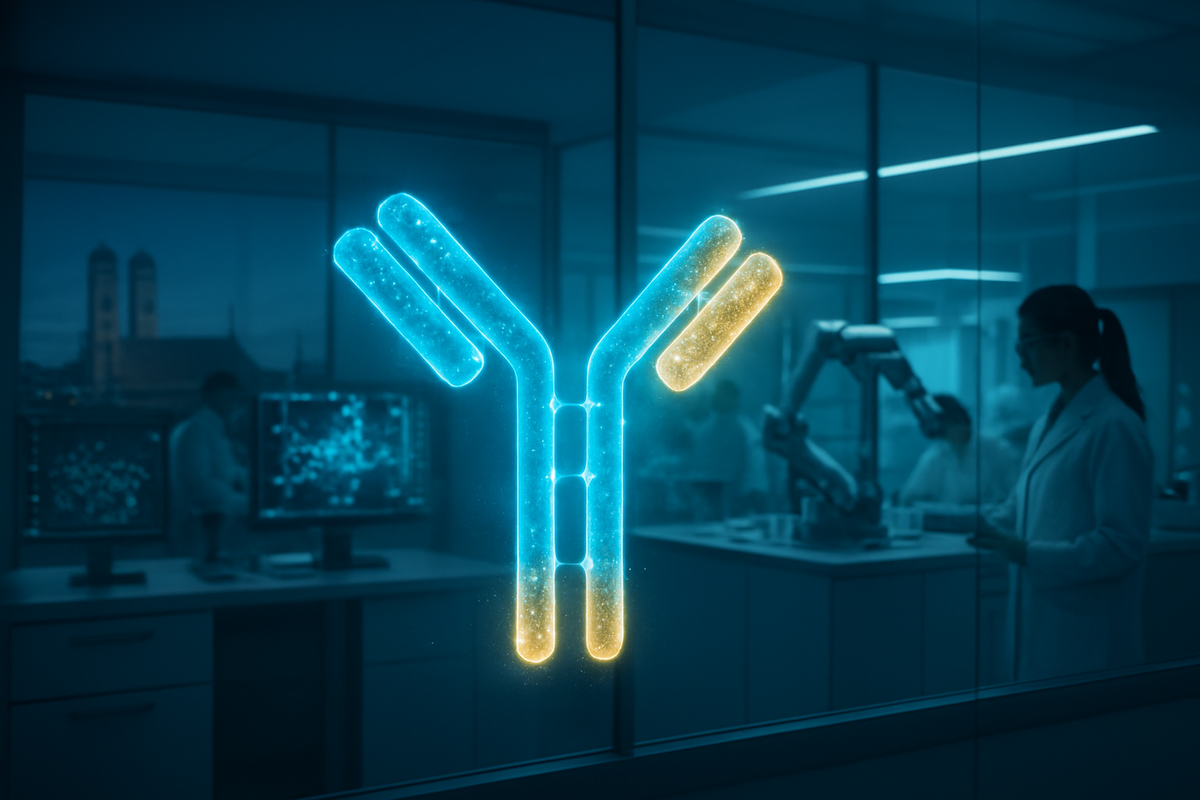
In a bold move to dominate the rapidly evolving cancer treatment landscape, Gilead Sciences (Nasdaq: GILD) announced on April 7, 2026, its acquisition of the German biotech firm Tubulis for a total consideration of up to $5 billion. This strategic maneuver, consisting of $3.15 billion in upfront cash and $1.85 billion in potential development milestones, marks Gilead’s most significant push into the Antibody-Drug Conjugate (ADC) space since its landmark purchase of Immunomedics. The deal not only grants Gilead control over two promising clinical assets but also secures a proprietary technology platform designed to overcome the toxicity hurdles that have plagued first-generation oncology treatments.
The immediate implications of the deal are profound for the biotech M&A landscape. By acquiring Tubulis, Gilead is signaling a shift away from simple licensing agreements toward full "platform ownership." This move allows the Foster City-based giant to internalize discovery and manufacturing capabilities, effectively establishing a new European center for ADC innovation in Munich. As the market digests the news, the transaction is being viewed as a direct challenge to the oncology dominance of industry peers like AstraZeneca (Nasdaq: AZN) and Pfizer (NYSE: PFE), while reinforcing the narrative that ADCs are the "new frontier" of precision medicine.
A Strategic Hub for Next-Generation Precision
The road to the Tubulis acquisition began in early 2023 when the two companies first entered into a limited research collaboration. Over the following three years, the success of Tubulis’ modular "Tubutecan" platform in early-phase trials made it an irresistible target for Gilead. The deal, which is expected to close in the second quarter of 2026, centers on Tubulis’ ability to solve the "stability-toxicity" paradox. While traditional ADCs often suffer from "premature payload release"—where the toxic chemotherapy drug detaches from the antibody before reaching the tumor—Tubulis utilizes a proprietary P5 conjugation chemistry. This creates an ultra-stable bond, ensuring the therapy remains inert in the bloodstream and only activates once inside the targeted cancer cell.
Key players in this transaction include Gilead CEO Daniel O’Day, who has spent the last five years pivoting the company from its traditional dominance in HIV and Hepatitis C toward a diversified oncology portfolio. On the Tubulis side, CEO Dominik Schumacher will continue to lead the Munich site, which Gilead intends to operate as a standalone research organization. This "Kite Pharma" model—referencing Gilead’s successful 2017 acquisition of a cell therapy leader—is designed to preserve the biotech’s agile culture while leveraging Gilead’s massive clinical development and commercial infrastructure. Initial industry reactions have been overwhelmingly positive, with analysts noting that the 59% objective response rate (ORR) seen in Tubulis’ recent ovarian cancer data suggests a "best-in-class" potential.
Shifting Tides: Winners and Losers in the ADC Race
The acquisition sends a clear warning shot to AbbVie (NYSE: ABBV), which became a leader in the ovarian cancer space following its $10.1 billion purchase of ImmunoGen. AbbVie’s flagship ADC, Elahere, targets the folate receptor alpha (FRα), which is present in roughly 35-40% of patients. In contrast, Gilead’s newly acquired asset, TUB-040, targets NaPi2b—a protein expressed in upwards of 80% of epithelial ovarian cancers. If TUB-040 continues its strong clinical performance, Gilead could effectively "out-reach" AbbVie by addressing a much broader patient population, potentially turning a former niche market into a multi-billion-dollar blockbuster.
On the other hand, Merck & Co. (NYSE: MRK) may find itself as an indirect winner of the deal. Merck’s heavy investment in its partnership with Daiichi Sankyo for Topoisomerase-I (Topo-I) payloads is validated by Gilead’s move. As Gilead adopts the Tubutecan platform—which also utilizes Topo-I inhibitors—the industry-wide consensus on this specific payload class strengthens. However, AstraZeneca (Nasdaq: AZN) may face increased pressure. Their ADC candidate, Dato-DXd, has struggled with safety concerns, specifically interstitial lung disease (ILD). If Tubulis’ P5 chemistry proves as stable in large-scale trials as it has in Phase I, Gilead could offer a safer alternative for lung cancer patients, potentially siphoning market share from AstraZeneca’s established franchises.
The 2026 M&A Landscape and the "Platform" Trend
This acquisition fits into a broader 2026 trend where "Big Pharma" is no longer content with buying individual drugs; they are buying the "factories" that create them. Following Pfizer’s (NYSE: PFE) massive integration of Seagen, the industry has recognized that owning the underlying chemistry (the linkers and conjugation methods) is the only way to maintain a long-term competitive advantage. This deal reflects a maturation of the ADC sector, which has grown from a $16 billion market in 2025 to a projected $20 billion-plus in 2026.
Regulatory implications also play a significant role. Under the current FTC landscape of 2026, which has seen a shift toward allowing "bolt-on" acquisitions while scrutinizing mega-mergers, the $5 billion Gilead-Tubulis deal is positioned in a "sweet spot." Unlike larger deals that face antitrust hurdles for "product hopping," Gilead’s expansion is seen by regulators as genuine innovation in an unmet medical need—platinum-resistant ovarian cancer. This precedent suggests that the $1 billion to $5 billion acquisition range will remain the primary engine for biotech growth throughout the remainder of the decade.
The Path Forward: Clinical Hurdles and Market Expansion
In the short term, all eyes will be on the Phase II data for TUB-040, expected in late 2026. Gilead must navigate the high-stakes transition from a small-scale biotech operation to a global clinical program without losing the technical precision that makes the Tubulis platform unique. A potential strategic pivot may involve the use of Tubulis’ "Alco5" technology, which allows for the stable conjugation of protein degraders. This could lead to the development of Degrading Antibody Conjugates (DACs), a "next-next-gen" modality that could extend Gilead’s reach into autoimmune diseases beyond oncology.
The long-term challenge for Gilead will be managing its "ADC Hub" in Munich while maintaining its current lead with Trodelvy. If successful, the synergy between these platforms could allow Gilead to dominate multiple lines of treatment across lung, breast, and ovarian cancers. However, the market remains volatile; any emerging safety signals or "off-target" toxicities in the larger Phase II/III trials could quickly cool investor enthusiasm. For Gilead, the success of this acquisition is not just about one drug—it is about proving that their 2030 goal of generating one-third of revenue from oncology is achievable.
Summary and Investor Outlook
Gilead’s $5 billion acquisition of Tubulis represents a calculated bet on the future of "ultra-stable" oncology therapies. By internalizing a cutting-edge platform, Gilead has secured a way to rapidly iterate on new targets, potentially leapfrogging competitors who rely on older licensing agreements. The establishment of a Munich-based ADC hub mirrors successful past strategies and positions the company as a top-tier player in a market that is increasingly defined by technological sophistication rather than just marketing muscle.
Moving forward, investors should closely monitor the integration of Tubulis into Gilead’s oncology unit and keep a watchful eye on the upcoming NaPi2b clinical readouts. As the FTC continues to permit these targeted, high-science acquisitions, expect Gilead to remain aggressive in the M&A space. The primary takeaway for the market is clear: the "ADC arms race" has moved beyond simple efficacy; it is now a battle of stability, safety, and platform versatility.
This content is intended for informational purposes only and is not financial advice.