In a move that marks the single largest private capital raise in corporate history, OpenAI has finalized a staggering $122 billion restructuring and funding round, vaulting the company’s valuation to an unprecedented $852 billion. Finalized in late March 2026, the deal represents a fundamental pivot from a research-led laboratory to an industrial infrastructure titan. By bringing on hardware and cloud giants as strategic anchors, OpenAI is no longer just building models; it is building the physical and economic foundation for a post-intelligence era.
The implications for the global financial markets are profound. This restructuring effectively treats "compute" as the primary utility of the 21st century, akin to oil in the 20th or electricity in the 19th. With a valuation now nipping at the heels of the world’s trillion-dollar public tech giants, OpenAI has effectively created a "compute-standard" economy, forcing competitors and nation-states to recalibrate their digital sovereignty and capital allocation strategies.
The Road to $852 Billion: A Corporate Metamorphosis
The journey to this historic moment began in earnest in October 2025, when OpenAI completed its transition into a Public Benefit Corporation (PBC). This structural overhaul was a prerequisite for the massive capital infusion, allowing the entity to offer unlimited returns to investors while maintaining a mission-driven governance layer. The "OpenAI Foundation" remains the ideological anchor, holding a 26% stake and the power to appoint the board, but the new OpenAI Group PBC is now the engine of global expansion.
The $122 billion round was led by a "who’s who" of the semiconductor and cloud industries. Amazon.com Inc. (NASDAQ: AMZN) emerged as the largest strategic contributor with a $50 billion investment, followed by Nvidia Corp. (NASDAQ: NVDA) at $30 billion and SoftBank Group (OTC:SFTBY) at $30 billion. The remaining $12 billion was filled by a consortium of institutional leaders including BlackRock and individual retail access through specialized AI-focused ETFs. This diversification marks a significant cooling of the once-exclusive relationship with Microsoft Corp. (NASDAQ: MSFT), which saw its historical interest converted into a 27% equity stake in the new PBC.
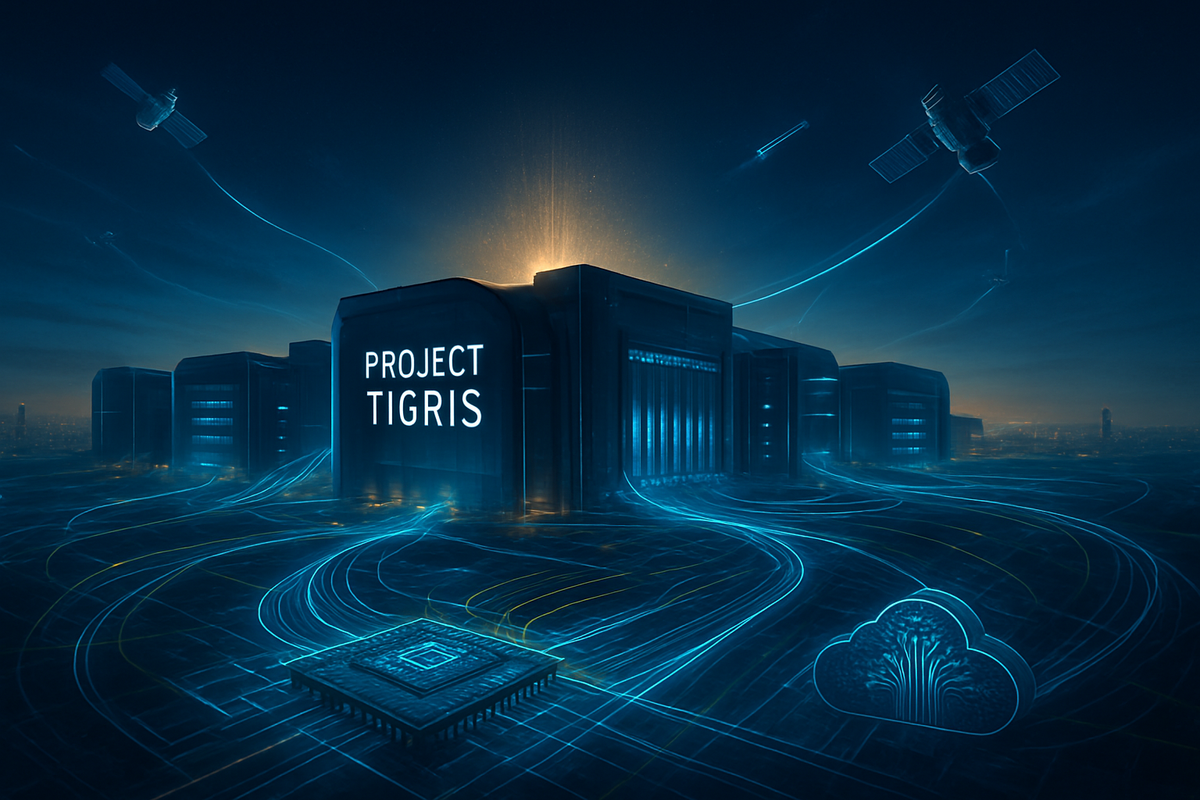
Market reactions have been explosive. Following the announcement, the "OpenAI ecosystem"—a basket of stocks including its primary hardware providers—added over $400 billion in combined market cap in a single week. Analysts point to "Project Tigris," the internal codename for OpenAI’s infrastructure roadmap, as the primary catalyst. Under the leadership of former Intel executive Sachin Katti, OpenAI is now deploying capital at a rate of roughly $1 billion per week into data centers, specialized silicon, and energy generation.
Winners and Losers in the New Compute Order
Nvidia stands as a clear winner in this restructuring. By contributing $30 billion—much of it structured as high-priority access to its next-generation Vera Rubin AI accelerators—Nvidia has effectively locked in its most important customer for the next decade. For investors in (NASDAQ: NVDA), this deal provides a clear floor for demand, ensuring that OpenAI’s massive "Tigris" data centers will be built on Nvidia’s architectural backbone.
Amazon’s $50 billion play is equally transformative. By integrating OpenAI’s "Frontier" models deeply into the AWS ecosystem, Amazon (NASDAQ: AMZN) has effectively neutralized Microsoft’s (NASDAQ: MSFT) first-mover advantage in cloud AI. Furthermore, OpenAI has committed to utilizing Amazon’s custom Trainium chips for its inference workloads, providing a massive boost to Amazon’s internal silicon efforts. Conversely, Microsoft finds itself in a complex position; while the value of its stake has skyrocketed to over $230 billion, it has lost its status as OpenAI’s sole provider, signaling a more competitive landscape for Azure in the years ahead.
The "losers" in this scenario are likely the smaller AI labs and traditional legacy software firms that lack the capital to compete with OpenAI’s gigawatt-scale infrastructure. Alphabet Inc. (NASDAQ: GOOGL) and Meta Platforms Inc. (NASDAQ: META) now face a rival that is not only vertically integrated from chips to consumers but is also backed by the very hardware vendors they rely on. The sheer scale of OpenAI's $600 billion infrastructure target by 2030 creates a "compute moat" that may be impossible for any but the largest sovereign wealth funds to bridge.
A New Industrial Paradigm: Compute as a Utility
The broader significance of this event cannot be overstated. We are witnessing the birth of a new industrial trend where the distinction between software companies and utility providers is blurring. Historically, the build-out of the American railroad system or the telecommunications grid provides the closest parallel. Just as those networks became the necessary substrate for all other commerce, OpenAI’s global footprint of data centers is positioning itself as the "intelligence grid" for the global economy.
Regulatory scrutiny is expected to intensify. The transition to a Public Benefit Corporation was a strategic move to preempt some of these concerns, but the sheer concentration of compute power—backed by the dominant hardware and cloud providers—will likely trigger antitrust investigations in both the U.S. and the EU. Furthermore, the "AGI Safeguard" in OpenAI’s charter, which expires commercial rights once a "Superintelligence" is reached, remains a wildcard. If OpenAI moves toward an IPO in late 2026, as rumored, the disclosure requirements regarding its progress toward this milestone will be a watershed moment for financial transparency in the AI sector.
The Horizon: From Tigris to IPO
Looking ahead to the remainder of 2026, the primary challenge for OpenAI will be execution. Building out a "gigawatt of infrastructure every week" is a logistical feat that involves navigating local power grid constraints and geopolitical tensions. Strategic pivots toward nuclear energy and direct partnerships with utility companies are already underway. Investors should watch for announcements regarding "Project Tigris" sites in Europe and the Middle East, as these will signal OpenAI’s progress in bypassing domestic energy bottlenecks.
A potential IPO in Q4 2026 is the most anticipated event on the horizon. If market conditions remain favorable, an OpenAI public debut could exceed $1 trillion, making it a cornerstone of the global equity markets. However, any delays in hardware delivery from (NASDAQ: NVDA) or integration issues with (NASDAQ: AMZN) could provide an opening for rivals. The industry will also be watching Broadcom Inc. (NASDAQ: AVGO), which is reportedly partnering with OpenAI on its own bespoke silicon to reduce long-term dependence on off-the-shelf accelerators.
Conclusion: A Market Forever Changed
OpenAI’s $122 billion restructuring is more than just a capital raise; it is a declaration of intent. By securing the backing of the world’s most powerful hardware and cloud entities, Sam Altman and his team have effectively established a new layer of the global economy. The transition to a Public Benefit Corporation provides a unique hybrid of venture-style growth and utility-like stability, creating a template for the "super-corporations" of the future.
For the market, the message is clear: the AI era has moved past the experimental phase and into the industrial phase. Capital is no longer being spent on "if" AI will scale, but on the physical infrastructure required to ensure it must scale. Investors should keep a close eye on the quarterly earnings of Nvidia, Amazon, and Microsoft for clues on the pace of the Tigris build-out, as well as any regulatory shifts that could challenge this new AI hegemony. The next six months will determine if OpenAI can successfully manage this massive influx of capital to deliver on the promise of global AGI.
This content is intended for informational purposes only and is not financial advice.