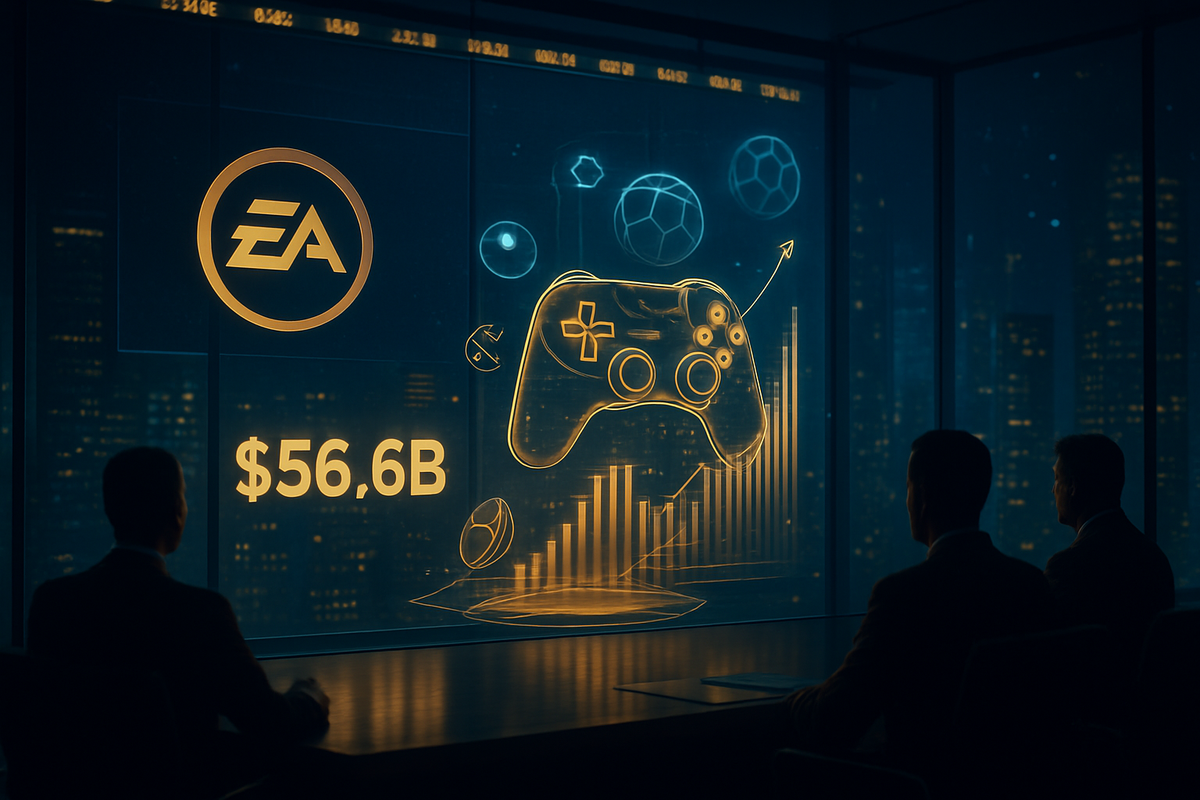
In a move that has sent shockwaves through the technology and entertainment sectors, Electronic Arts (NASDAQ: EA) has finalized its transition from a public mainstay to a privately held titan. The $56.6 billion take-private acquisition, led by a high-powered consortium including the Public Investment Fund (PIF) of Saudi Arabia and Silver Lake Partners, represents the largest leveraged buyout (LBO) in the history of the video game industry. By removing the company from the scrutiny of the public markets, the new owners aim to shield the creator of Madden NFL and The Sims from the volatile "quarterly treadmill" that has plagued the gaming sector’s financial performance in recent years.
The deal, which valued EA at $210 per share, was officially cleared by the final batch of international regulators this week, marking a definitive end to EA’s 37-year run as a public company. For the broader market, this event is more than just a change in ownership; it is a signal of a massive shift in how large-cap tech companies view the benefits of public listing versus the flexibility of private equity. As of today, April 9, 2026, EA has officially begun the process of delisting from the NASDAQ, leaving investors to wonder which industry giant will be the next to vanish from the public tickers.
The Road to $210: Anatomy of the Megadeal
The seeds of the EA acquisition were sown in late 2024, as the gaming industry struggled with ballooning development costs and a cooling post-pandemic market. Rumors of a potential sale began to intensify in September 2025, when a sudden 15% spike in EA's stock price forced the company to confirm it was in "preliminary discussions" regarding a strategic transaction. By September 29, 2025, the board of directors officially accepted a bid from a consortium led by Saudi Arabia’s PIF and Silver Lake. The offer of $210 per share represented a healthy 25% premium over the company’s unaffected trading price, a figure that many analysts deemed necessary to win over a skeptical shareholder base.
The financing of the $56.6 billion deal was a feat of financial engineering, particularly given the macroeconomic climate of 2025. JPMorgan Chase & Co. (NYSE: JPM) led the debt financing, arranging a staggering $20 billion debt package that highlighted a renewed appetite for large-scale LBOs among major banks. The remaining $36 billion in equity was provided by the consortium members, with the PIF rolling over its existing 9.9% stake to become the dominant owner. This move further cements Saudi Arabia's "Vision 2030" goals, positioning the kingdom as a central player in the global gaming ecosystem through its Savvy Games Group.
Internal approval for the merger was nearly unanimous. At a special meeting held on December 22, 2025, approximately 99% of votes cast by EA shareholders were in favor of the deal. The sentiment among institutional investors was clear: with the gaming industry shifting toward high-risk AI integration and decade-long development cycles, the certainty of a cash exit at $210 per share was far more attractive than the uncertain growth prospects of a public publisher.
Winners and Losers in the Wake of Private Gaming
The clear winners of this transaction are the EA shareholders, who realized a significant premium on their holdings at a time when the broader gaming sector was facing stagnation. However, the ripple effects extend far beyond the balance sheets of institutional funds. Take-Two Interactive Software, Inc. (NASDAQ: TTWO) and Ubisoft (OTC:UBSFY) have seen their stock prices fluctuate wildly as speculators bet on whether they will be the next targets for private equity or strategic acquisition. For Take-Two, the EA deal sets a high valuation benchmark for their own IP portfolio, particularly as the industry anticipates the next iteration of Grand Theft Auto.
Conversely, traditional "Mega-Platform" competitors like Microsoft Corporation (NASDAQ: MSFT) and Sony Group Corporation (NYSE: SONY) may find themselves in a more challenging position. While Microsoft’s acquisition of Activision Blizzard gave them a massive foothold, a privately held EA—unburdened by quarterly earnings calls—could theoretically afford to be more aggressive with its licensing and platform exclusivity deals. Smaller developers and independent studios may also lose out, as the "PE-Powered Giant" version of EA is likely to lean into consolidation, potentially acquiring smaller "feeder" studios to fuel its live-service pipeline without needing to justify the acquisitions to a public board.
Financial institutions also find themselves on both sides of the coin. While JPMorgan Chase & Co. (NYSE: JPM) and its peers earned substantial fees for orchestrating the $20 billion debt package, the removal of a $56 billion market-cap company from the NASDAQ reduces the pool of high-quality, liquid tech stocks available to public investors. This "hollowing out" of the public gaming sector leaves retail investors with fewer options to gain exposure to the industry's growth, effectively gatekeeping one of the most profitable sectors of entertainment behind the walls of private equity.
A New Paradigm: The Private Equity Pivot in Tech
The EA buyout is not an isolated incident but rather the climax of a broader trend that accelerated through 2024 and 2025. As public markets became increasingly focused on short-term AI monetization and immediate profitability, many tech companies found themselves undervalued relative to their long-term IP potential. The "Take-Private" trend reached a fever pitch in 2025, with nearly $250 billion in global deals, as companies sought to escape the "quarterly treadmill." EA's move follows the precedent set by other tech delistings, where the goal is to undergo massive structural shifts—such as EA's pivot toward AI-generated content and proprietary distribution platforms—away from the prying eyes of Wall Street.
This shift also highlights a growing bifurcation in the tech landscape. We are seeing the emergence of two distinct types of industry titans: the "Mega-Platforms" like Alphabet Inc. (NASDAQ: GOOGL) and Apple Inc. (NASDAQ: AAPL), which use their massive balance sheets to maintain public dominance, and the "PE-Powered Giants" like the new EA, which operate with the secrecy and long-term horizon of a private firm. This trend could fundamentally change the competitive dynamics of the industry, as private companies can afford to take "big swings" on unproven technologies or niche IP that a public company’s shareholders would never tolerate.
Regulators have also been forced to adapt. While the Federal Trade Commission (FTC) and international bodies spent years scrutinizing Microsoft's vertical integration, the EA deal presented a different challenge: horizontal consolidation led by financial entities rather than direct competitors. The success of the EA buyout suggests that private equity may be the "path of least resistance" for industry consolidation, bypassing some of the antitrust hurdles that have slowed down acquisitions by The Walt Disney Company (NYSE: DIS) or other strategic buyers.
The Road Ahead: EA 2.0 and the Future of Interactive Media
Looking forward, the "privatized" Electronic Arts is expected to undergo a significant internal restructuring. Released from the need to hit quarterly revenue targets, management is likely to extend the development cycles for its most prestigious titles. We may see the "BioWare" and "DICE" studios return to their roots of long-term, high-quality development without the pressure of forced release windows. Furthermore, the integration of generative AI into the development pipeline—a move EA began in 2024—is expected to accelerate, potentially lowering the cost of producing massive open-world environments by as much as 40% over the next three years.
In the short term, the market will be watching for the final delisting of EA shares and the subsequent issuance of high-yield debt to secondary markets. Long-term, the strategic pivot may involve EA launching its own unified "Mega-App" for gaming, bypassing traditional app stores and platform holders to keep a larger share of transaction revenue. This would represent a direct challenge to the "walled gardens" of the current industry leaders, a move that would be far too risky for a public company but is perfectly suited for a PE-backed entity with a 10-year exit horizon.
Final Takeaways: What Investors Need to Watch
The $56.6 billion acquisition of Electronic Arts marks the end of an era for the public gaming market. The primary takeaway for investors is that the "value" in tech is increasingly being captured by private equity firms who are willing to pay a premium to take control of cash-flow-heavy assets. As the "Mega-LBO" returns to fashion, the disappearance of EA from the NASDAQ is a stark reminder that the public markets may no longer be the primary venue for high-growth tech maturation.
In the coming months, investors should keep a close eye on Take-Two Interactive Software, Inc. (NASDAQ: TTWO) and other remaining public publishers. If EA thrives under private ownership, it will likely trigger a second wave of take-private offers. Additionally, the performance of the debt used to finance this deal will be a key indicator of the health of the leveraged finance market. For now, the "Great Delisting" of EA stands as a monument to the power of private capital and a harbinger of a more consolidated, more secretive, and potentially more innovative future for the world of interactive entertainment.
This content is intended for informational purposes only and is not financial advice.