SPONSORED CONTENT -- (StatePoint) Cats are famously low-maintenance companions. They don’t need walks, they entertain themselves, and they’re perfectly happy ignoring you for hours at a time. But as any devoted cat owner knows, low-maintenance doesn’t mean no impact. From the food in their bowl to the litter in their box, cats leave a measurable mark on the planet. The good news is that a few small, practical changes can add up to something meaningful — without requiring a lifestyle overhaul or a bigger budget. Here’s where to start:
1. Rethink what’s in the bowl.
Pet food is one of the largest and least-discussed contributors to a cat’s environmental footprint. Meat-heavy diets — particularly those built around beef or lamb — carry a significant carbon cost in production. Shifting toward poultry-based or fish-based formulas, or incorporating more vet-approved plant-protein options, can meaningfully reduce the emissions associated with feeding time. Even small adjustments, multiplied across 49 million cat-owning households nationwide, represent a substantial collective impact.
2. Buy in bulk, buy less often.
Every trip to the pet store — or every delivery to your door — has a transportation footprint. Consolidating purchases into larger, less frequent orders reduces both packaging waste and the emissions associated with last-mile delivery. It’s one of those rare environmental wins that also saves money. Fewer, bigger purchases beat many small ones almost every time.
3. Choose toys that last.
The pet toy industry has its own version of fast fashion — cheap, plastic-heavy products designed to be replaced every few weeks. Durable toys made from natural materials like cotton, wool, or sustainably sourced wood last longer, generate less waste, and are often safer for cats who like to chew. One well-made toy beats 10 disposable ones on every metric that matters.
4. Switch your litter.
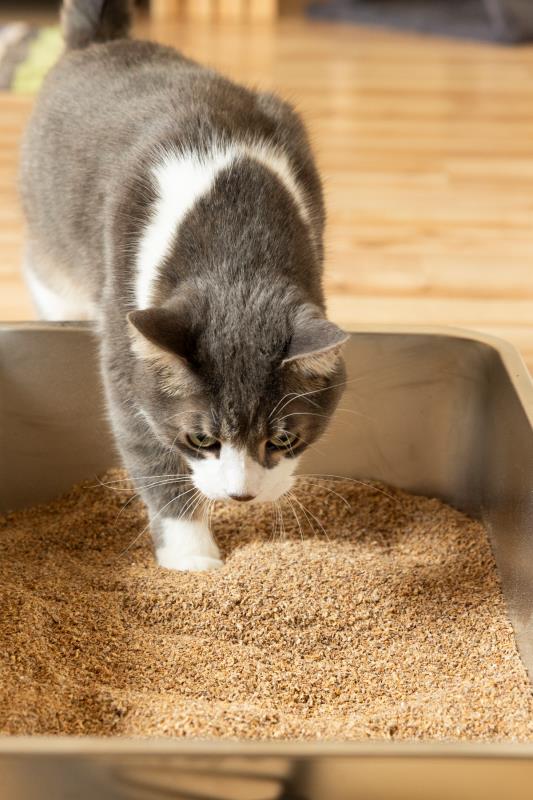
This is the big one. Conventional clay litter is made from sodium bentonite — a material extracted through strip mining that destroys topsoil, disrupts ecosystems, and never biodegrades once it reaches a landfill. Americans consume 5 billion pounds of it every year, most of it moving through the supply chain at 30 to 40 heavy pounds per household per month.
Lightweight, plant-based alternatives have closed the performance gap entirely. Catalyst, made from upcycled softwood fiber reclaimed from lumber production, covers one cat for two months in a single 15-pound bag and is now available at Walmart stores nationwide for under $10 a month. Thanks to its composition, it weighs less than conventional litter, requires less mining, and produces less waste, while helping you maintain the same clean litter box. Learn more at catalystpet.com.
5. Spay and neuter.
It’s the oldest advice in pet ownership, and still the most environmentally significant. Every unplanned litter adds animals to a system — shelters, resources, food, waste — that already runs at capacity. Spaying and neutering remains the single highest-impact decision a cat owner can make for the long-term health of both the pet population and the planet.
Small choices, made consistently, add up. This Earth Day, align your love of your cat with your love of the planet.
*****