Quarterly earnings results are a good time to check in on a company’s progress, especially compared to its peers in the same sector. Today we are looking at Avantor (NYSE: AVTR) and the best and worst performers in the research tools & consumables industry.
The life sciences subsector specializing in research tools and consumables enables scientific discoveries across academia, biotechnology, and pharmaceuticals. These firms supply a wide range of essential laboratory products, ensuring a recurring revenue stream through repeat purchases and replenishment. Their business models benefit from strong customer loyalty, a diversified product portfolio, and exposure to both the research and clinical markets. However, challenges include high R&D investment to maintain technological leadership, pricing pressures from budget-conscious institutions, and vulnerability to fluctuations in research funding cycles. Looking ahead, this subsector stands to benefit from tailwinds such as growing demand for tools supporting emerging fields like synthetic biology and personalized medicine. There is also a rise in automation and AI-driven solutions in laboratories that could create new opportunities to sell tools and consumables. Nevertheless, headwinds exist. These companies tend to be at the mercy of supply chain disruptions and sensitivity to macroeconomic conditions that impact funding for research initiatives.
The 10 research tools & consumables stocks we track reported a strong Q2. As a group, revenues beat analysts’ consensus estimates by 1.7% while next quarter’s revenue guidance was in line.
Luckily, research tools & consumables stocks have performed well with share prices up 13.8% on average since the latest earnings results.
Best Q2: Avantor (NYSE: AVTR)
With roots dating back to 1904 and embedded in virtually every stage of scientific research and production, Avantor (NYSE: AVTR) provides mission-critical products, materials, and services to customers in biopharma, healthcare, education, and advanced technology industries.
Avantor reported revenues of $1.69 billion, flat year on year. This print exceeded analysts’ expectations by 4.9%. Overall, it was an exceptional quarter for the company with a solid beat of analysts’ full-year EPS guidance estimates.
Emmanuel Ligner, President and Chief Executive Officer, says: "Our Revival program is strengthening how we serve our customers, leading to improved business performance."
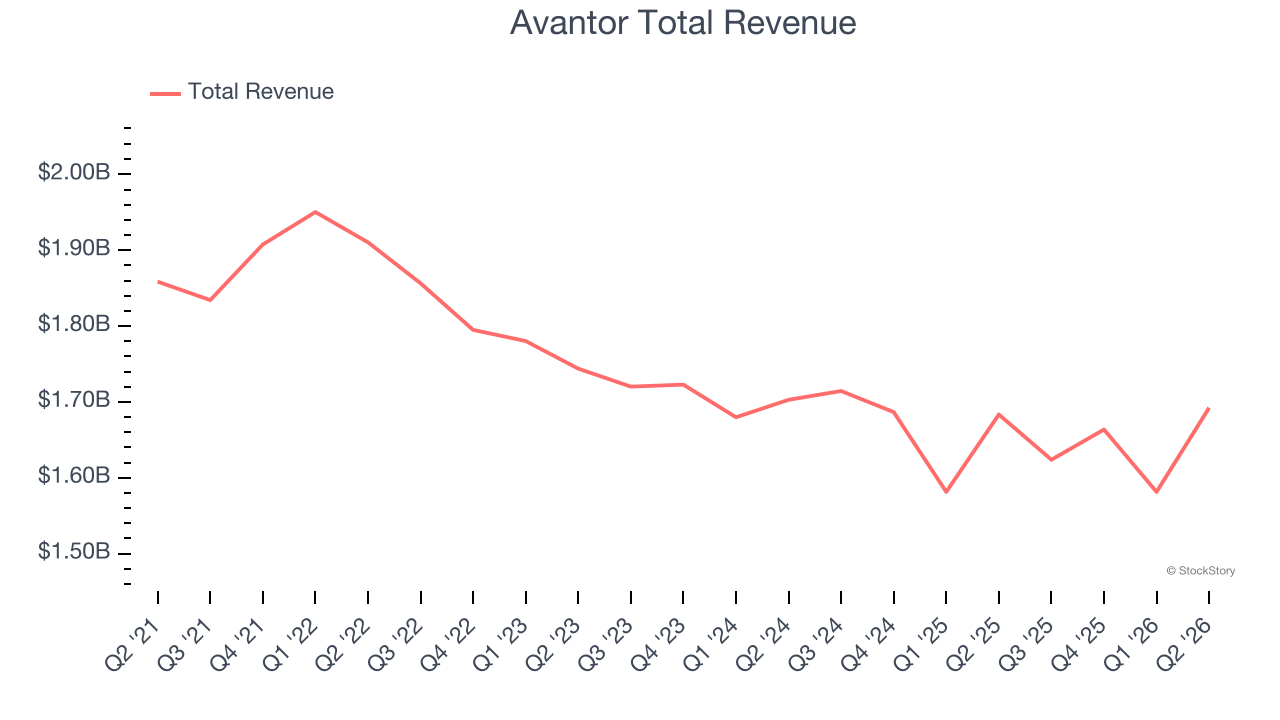
Avantor pulled off the biggest analyst estimate beat but had the slowest revenue growth of the whole group. Unsurprisingly, the stock is up 21.2% since reporting and currently trades at $15.06.
Is now the time to buy Avantor? Access our full analysis of the earnings results here, it’s free.
Sotera Health Company (NASDAQ: SHC)
With a critical role in ensuring the safety of millions of patients worldwide, Sotera Health (NASDAQGS:SHC) provides sterilization services, lab testing, and advisory services to ensure medical devices, pharmaceuticals, and food products are safe for use.
Sotera Health Company reported revenues of $321.4 million, up 9.2% year on year, outperforming analysts’ expectations by 3.8%. The business had a very strong quarter with a solid beat of analysts’ organic revenue and EPS estimates.
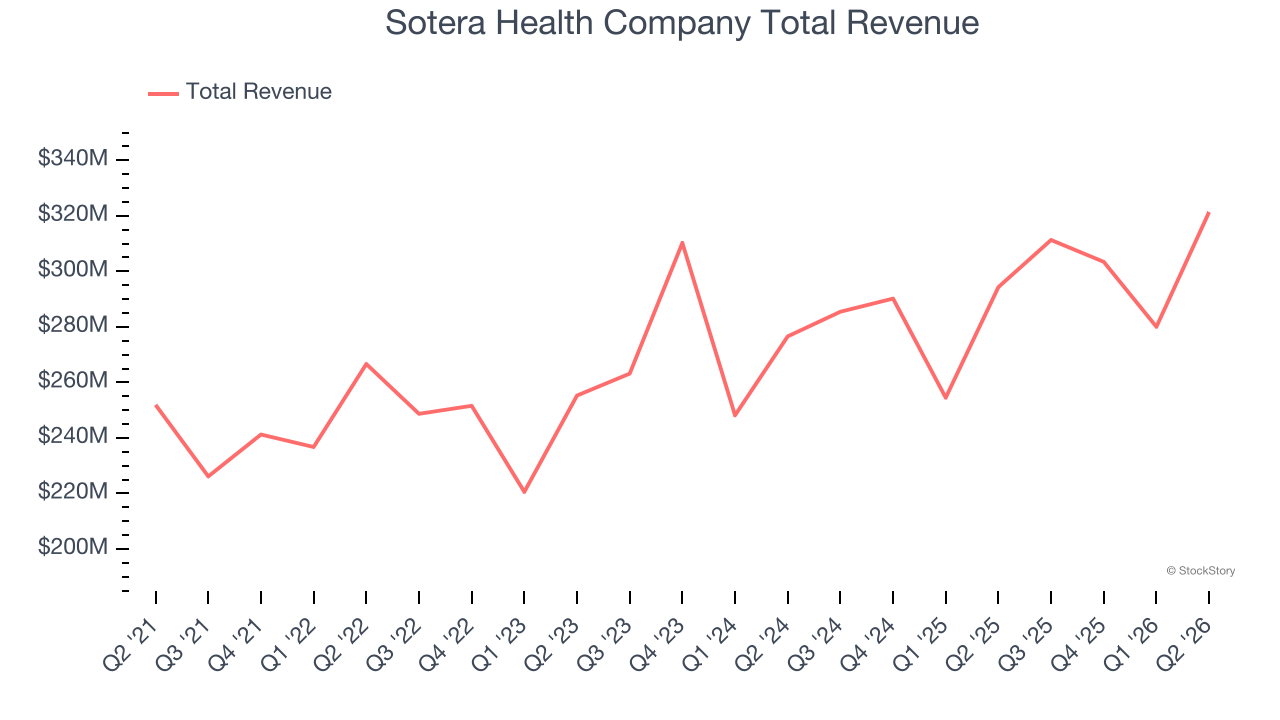
The market seems content with the results as the stock is up 2.8% since reporting. It currently trades at $18.49.
Is now the time to buy Sotera Health Company? Access our full analysis of the earnings results here, it’s free.
Weakest Q2: Bruker (NASDAQ: BRKR)
With roots dating back to the pioneering days of nuclear magnetic resonance technology, Bruker (NASDAQ: BRKR) develops and manufactures high-performance scientific instruments that enable researchers and industrial analysts to explore materials at microscopic, molecular, and cellular levels.
Bruker reported revenues of $838.5 million, up 5.2% year on year, falling short of analysts’ expectations by 1.9%. It was a slower quarter as it posted a slight miss of analysts’ organic revenue estimates and full-year revenue guidance slightly missing analysts’ expectations.
Bruker delivered the weakest performance against analyst estimates and weakest full-year guidance update among its peers. The stock is flat since the results and currently trades at $64.32.
Read our full analysis of Bruker’s results here.
Danaher (NYSE: DHR)
Born from a real estate investment trust that transformed into a manufacturing powerhouse, Danaher (NYSE: DHR) is a global science and technology company that provides specialized equipment, software, and services for biotechnology, life sciences, and diagnostics.
Danaher reported revenues of $6.27 billion, up 5.5% year on year. This number beat analysts’ expectations by 2.7%. It was a strong quarter as it also produced a narrow beat of analysts’ organic revenue and EPS estimates.
The stock is up 10.1% since reporting and currently trades at $221.50.
Read our full, actionable report on Danaher here, it’s free.
Revvity (NYSE: RVTY)
Formerly known as PerkinElmer until its rebranding in 2023, Revvity (NYSE: RVTY) provides health science technologies and services that support the complete workflow from discovery to development and diagnosis to cure.
Revvity reported revenues of $711.1 million, up 4.5% year on year. This print topped analysts’ expectations by 0.6%. Overall, it was a strong quarter as it also logged an impressive beat of analysts’ full-year EPS guidance estimates.
The stock is up 35.8% since reporting and currently trades at $156.49.
Read our full, actionable report on Revvity here, it’s free.
Market Update
Over the past year, investors have been forced to repeatedly answer the same question: what is the market’s biggest risk? The answer has changed several times, and each shift has reshaped market leadership.
Late in 2025 and early 2026, artificial intelligence became the market’s primary uncertainty. Investors questioned whether AI would erode software pricing power and weaken competitive moats as AI made it easier to replicate once-differentiated products.
By the spring, technology took a back seat to geopolitics. The U.S. conflict with Iran briefly became the market’s dominant narrative, raising concerns about oil prices, inflation, and global growth. But as energy markets remained orderly and fears of a prolonged supply disruption faded, investors quickly turned their focus back to fundamentals.
Want to invest in winners with rock-solid fundamentals? Check out our Hidden Gem Stocks and add them to your watchlist. These companies are poised for growth regardless of the political or macroeconomic climate.