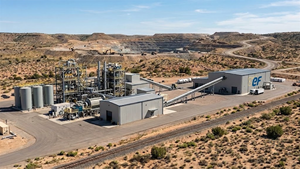
The global landscape of artificial intelligence reached a critical inflection point this February as the "memory bottleneck" continues to dictate the pace of innovation. Leading the charge, South Korean semiconductor giant SK Hynix (KRX: 000660) has formalized a massive $15.1 billion (20 trillion won) commitment to its M15X fab in Cheongju, specifically designed to churn out the next generation of High Bandwidth Memory (HBM). This capital expenditure marks one of the most aggressive bets in the history of the memory industry, signaling that the demand for AI infrastructure is far from peaking.
The immediate implications are profound for both the supply chain and global geopolitics. As of February 25, 2026, SK Hynix has officially begun commercial production of 5th-generation (1b) DRAM at the M15X facility, which serves as the foundational layer for HBM4—the specialized memory required for the newest generation of AI processors. By doubling down on its domestic production while simultaneously breaking ground on U.S.-based packaging facilities, SK Hynix is attempting to build an unassailable "moat" around its lucrative partnership with industry kingmaker NVIDIA (NASDAQ: NVDA).
Strategic Investment and the M15X Ramp-Up
The $15.1 billion investment in the M15X fab is the centerpiece of a multi-year strategy that has seen SK Hynix transform from a traditional DRAM maker into the premier "AI Memory Provider." The timeline for this expansion has been remarkably tight; after fast-tracking the construction of the M15X cleanroom, the facility opened in October 2025, several months ahead of initial projections. Today, the fab is ramping up to reach a capacity of 60,000 wafers per month by mid-2027, focusing almost exclusively on the ultra-dense HBM stacks that power large language models and generative AI.
In tandem with the Cheongju expansion, SK Hynix has widened its footprint into the United States, a move that has drawn significant attention from policymakers in Washington. Just two days ago, on February 23, 2026, the company began installing construction fencing at its new $3.87 billion advanced packaging site in West Lafayette, Indiana. This facility is critical because it introduces 2.5D packaging—a complex process where HBM is integrated directly onto a GPU—on American soil. This "turnkey" approach ensures that SK Hynix remains the primary supplier for U.S. giants like NVIDIA and Advanced Micro Devices (NASDAQ: AMD).
The initial market reaction to these developments has been one of cautious optimism tempered by the sheer scale of the spending. While SK Hynix's stock has seen a 12% uptick since the beginning of the year, analysts are closely monitoring the company's total capital commitment, which now exceeds $32 billion when including the newly announced P&T7 (Packaging & Test) facility adjacent to M15X. The industry is currently witnessing a "CapEx War," where the cost of staying relevant in the AI race is measured in tens of billions of dollars, leaving little room for error in production yields.
Winners and Losers in the AI Memory Arms Race
The primary winner in this escalation remains NVIDIA (NASDAQ: NVDA), whose upcoming "Vera Rubin" GPU platform requires a staggering 288GB of HBM4 per unit—nearly triple the memory found in the previous Blackwell architecture. SK Hynix’s aggressive capacity expansion ensures that NVIDIA can meet its delivery targets for 2026 and 2027. Furthermore, Taiwan Semiconductor Manufacturing Company (NYSE: TSMC) stands to benefit through its "Triad Alliance" with SK Hynix and NVIDIA, as the three companies have integrated their roadmaps to ensure that the HBM4 base dies and logic dies are perfectly synchronized.
However, the "AI memory race" has become increasingly crowded, presenting a direct challenge to SK Hynix’s dominance. Micron Technology (NASDAQ: MU), the leading U.S.-based competitor, has significantly ramped up its own efforts. Micron recently raised its 2026 capital expenditure to $20 billion, focusing on its Idaho mega-fabs. While Micron currently holds about 21% of the HBM market, its 12-layer HBM3E modules have gained favor for being 30% more power-efficient than competitors' offerings. Micron's strategic decision to pull forward funding for its Idaho sites while breaking ground on its $100 billion New York fab in January 2026 demonstrates that it is no longer willing to play second fiddle.
Samsung Electronics (KRX: 005930) is the "wildcard" that could potentially disrupt the status quo. After a rocky 2025 where it struggled to pass NVIDIA’s rigorous qualification tests, Samsung officially entered mass production for HBM4 this month. Samsung is leveraging its unique position as an Integrated Device Manufacturer (IDM), producing its own HBM logic dies in-house rather than relying on TSMC. If Samsung can successfully scale its HBM4 yields, it could capture up to 35% of the market by the end of 2026, likely at the expense of SK Hynix's current 60% share.
Broader Industry Significance and Trends
This event fits into a broader industry trend toward "custom silicon." Unlike traditional memory, which was treated as a commodity, HBM4 is becoming a highly customized component. The alliance between SK Hynix and TSMC to use 12nm logic processes for the memory base die marks a shift where the memory is no longer a separate part but an integral part of the processor's design. This represents a fundamental change in the semiconductor business model, moving from high-volume, standardized parts to specialized, high-margin "system-in-package" solutions.
The ripple effects extend beyond the chipmakers to the equipment manufacturers. Companies like ASML (NASDAQ: ASML) and Applied Materials (NASDAQ: AMAT) are seeing unprecedented demand for the lithography and Through-Silicon Via (TSV) tools required to stack memory layers. However, the sheer volume of capital being poured into HBM has raised concerns about a potential "oversupply" in the long term. Historically, the memory industry has been defined by boom-and-bust cycles; the current "AI Supercycle" is unique in its scale, but the risk of a market correction remains if AI software monetization fails to keep pace with the massive infrastructure spending.
From a policy perspective, the Indiana plant groundbreaking is a major win for the U.S. CHIPS and Science Act. It represents the first time a leading-edge HBM packaging facility will be located in the U.S., fulfilling a key goal of "onshoring" critical supply chains. This move mitigates risks associated with geopolitical tensions in the Taiwan Strait, providing a more stable supply of AI hardware for the U.S. defense and commercial sectors.
The Road Ahead: Short-Term Ramps and Strategic Pivots
In the short term, the market will focus on the HBM4 ramp-up. With SK Hynix and Samsung both aiming for full-scale mass production by the second half of 2026, the industry will watch for yield rates. High yields are the difference between massive profits and staggering losses in the memory business, especially with HBM4 units reportedly pricing at a 40% premium over previous generations. If SK Hynix can maintain its yield advantage, it will continue to command the highest margins in the sector.
Long-term, the focus will shift to "HBM4E" and beyond. As AI models move toward "World Models" that require even more massive datasets, the memory requirements will only grow. Strategic pivots are already occurring; SK Hynix is already developing 1c (6th generation) DRAM for a 2027 launch of HBM4E. The challenge for these companies will be balancing this specialized AI growth with the recovery of the traditional PC and smartphone markets, which have remained sluggish throughout 2025.
Another critical scenario to watch is the potential for "memory-centric" computing, where some AI processing tasks are moved directly into the HBM stack itself. This would further blur the lines between memory and logic companies. Investors should also keep a close eye on the "Rubin" GPU launch later this year; any delays in NVIDIA’s hardware roadmap could lead to a sudden inventory buildup for HBM suppliers who have spent billions to meet a specific delivery window.
Conclusion and Investor Outlook
The $15.1 billion commitment by SK Hynix is a clear statement of intent: the company intends to lead the AI era through sheer manufacturing might and strategic alliances. By securing its production in Korea and its packaging in the U.S., SK Hynix is positioning itself as the indispensable partner for the world’s AI leaders. However, with Micron and Samsung both hitting their stride in 2026, the competition has never been more intense.
As we move into the second quarter of 2026, the key takeaways for the market are clear. The AI infrastructure build-out is accelerating, not slowing down. The "memory wall" is being pushed back by innovative stacking technologies, but at a massive financial cost. For investors, the next few months will be critical to see which of the "Big Three" memory makers can deliver on their production promises without sacrificing margins.
In the coming months, watch for updates on the Indiana plant's progress and Samsung’s performance in the upcoming NVIDIA Rubin cycle. The ability to execute on these $15 billion+ projects will define the financial health of these companies for the next decade. While the rewards are potentially astronomical, the high-stakes nature of the 2026 HBM race means the margin for error has never been thinner.
This content is intended for informational purposes only and is not financial advice.