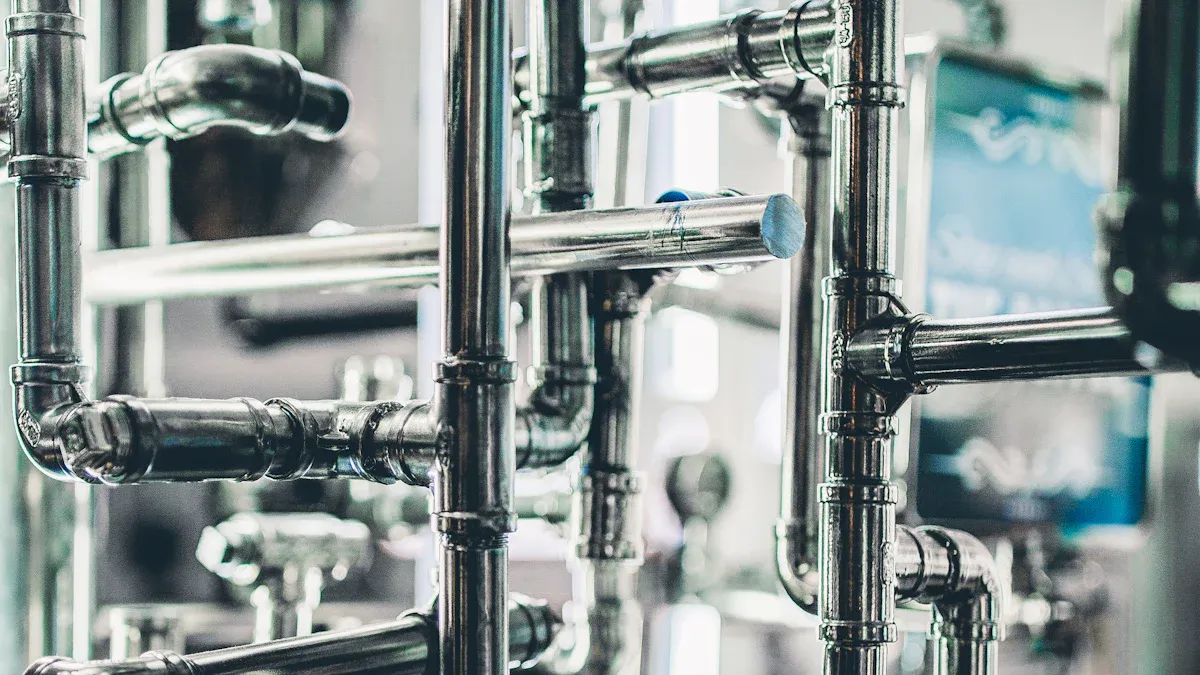
Selecting the correct Elbow Fittings is a critical decision for any industrial or commercial project. This choice relies heavily on the specific demands for pressure, temperature, and overall ease of installation. Engineers must carefully evaluate these essential factors. Proper selection directly impacts system integrity and ensures optimal operational performance.
Key Takeaways
- Threaded elbow fittings are easy to install and take apart, good for low-pressure jobs, and cost less at first.
- Butt weld elbow fittings are very strong and do not leak, good for high-pressure jobs, but cost more to install.
- Choose threaded fittings for simple jobs and butt weld fittings for important jobs that need to be very strong and safe.
When to Choose Threaded vs. Butt Weld Elbow Fittings
Engineers often face a critical decision when selecting the appropriate elbow fittings for a piping system. This choice significantly impacts the system’s performance, longevity, and overall cost. Understanding the optimal scenarios for each type ensures a robust and efficient design.
Optimal Scenarios for Threaded Elbow Fittings
Threaded elbow fittings offer distinct advantages in specific applications, primarily due to their ease of installation and disassembly. These fittings are particularly suitable for systems that may require frequent maintenance, modifications, or temporary setups. Installers can quickly connect and disconnect threaded components using standard tools, which reduces labor time and costs.
Note: Threaded fittings are generally preferred for lower pressure and temperature applications. For instance, a common guideline suggests 3000 psi (approximately 248 bar) for 3000 series fittings and 6000 psi (around 414 bar) for 6000 series fittings. The actual pressure capacity varies based on factors such as temperature, material composition, the specific fitting series, pipe schedule (SCH), and the type of connection (e.g., NPT, BSP, or SW). For example, a Galvanized 90º Female Elbow typically handles PN-16 / PN-25 (300 lbs) pressure within a temperature range of -20 to +300ºC.
Industries often utilize threaded fittings in utility lines, instrumentation lines, and non-critical process lines where minor leakage poses minimal risk. They are also common in residential and commercial plumbing systems. Certain industry standards and regulations govern the use of threaded elbow fittings, especially in critical applications. These include Directive 200//95/EC RoHS, Regulation 1907/2006, and other European regulations, which ensure compliance and safety.
Ideal Applications for Butt Weld Elbow Fittings
Butt weld elbow fittings are the preferred choice for high-integrity, permanent piping systems. Their design creates a seamless, leak-proof connection, making them indispensable in critical applications. These fittings excel in environments demanding extreme pressure, high temperatures, or corrosive media.
Tip: Butt weld fittings are typically recommended for use at pressure-temperature ratings specified by standards such as those listed in Table 126.1 and Table 326.1, as per ASME B31.1 (102.4.5) and ASME B31.3 (304.2.1) respectively. These standards dictate the suitable pressure and temperature limits for elbows manufactured in accordance with them. For elbows not conforming to these standards or lacking design formulas within the code, their ratings must be based on calculations consistent with the code’s design criteria, substantiated by specific means outlined in the respective codes.
Industries such as oil and gas, power generation, chemical processing, and nuclear facilities extensively use butt weld fittings. These sectors require piping systems that withstand severe operational conditions without compromise. The robust nature of a welded joint minimizes the risk of catastrophic failure, ensuring operational safety and environmental protection. While installation requires specialized welding skills and equipment, the long-term reliability and structural integrity of butt weld connections justify the initial complexity.
Understanding Threaded Elbow Fittings
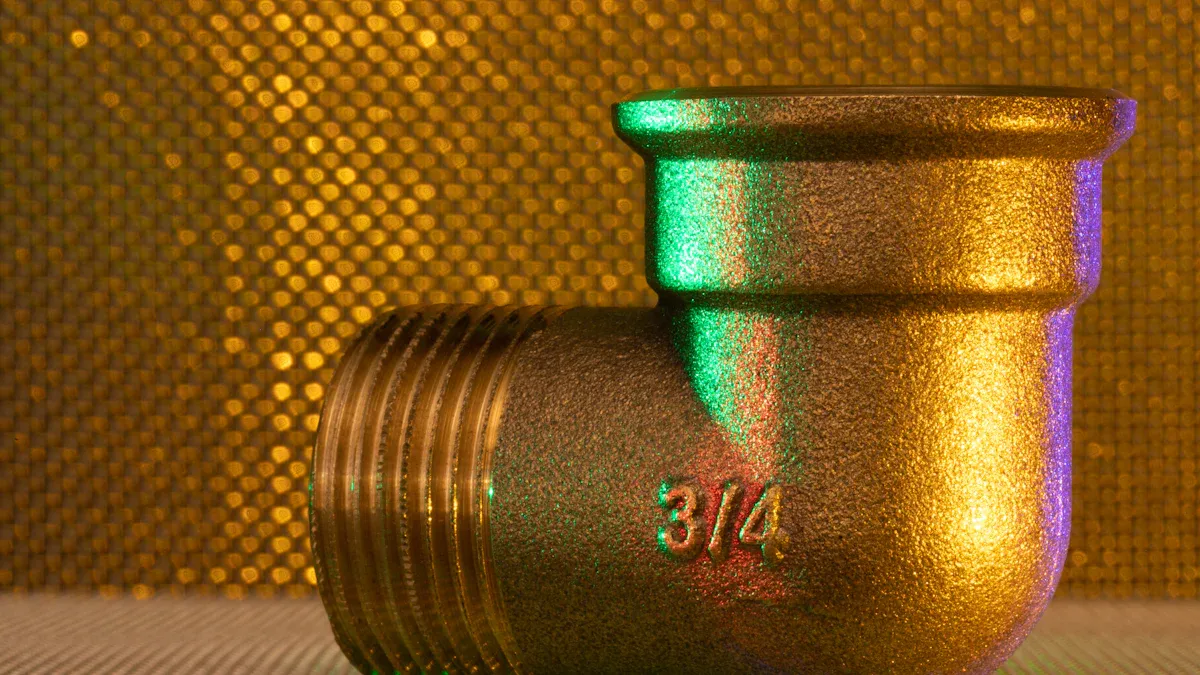
What Are Threaded Elbow Fittings
Threaded Elbow Fittings are components that change the direction of a pipe run. They feature internal or external threads, allowing them to screw onto pipes with corresponding threads. This design creates a mechanical connection without welding. Manufacturers produce these fittings from various materials to suit different applications.
Common materials for threaded Elbow Fittings include:
- Carbon steel
- Stainless steel: 316 / 316L, 304/304L, 304H, 310, 316H, 316Ti, 317L, 347/347H, 321/321H, F20, F44, F904L
- Brass (Brass)
- Duplex: F51 / F60
- Superduplex: F53/F55
- Hastelloy: B2 – B3 – C22 – C276 – C2000
- Monel: 200/201, 400, K500
- Low Alloy: A182: F5, F9, F11, F22, F91
- Nickel Alloys: Inconel (600, 625, 718), Incolloy (800, 800H, 800HT, 825)
- Carpenter 20CB3 – Alloy 20 – UNS N08020
- Titanium: T40 Gr 2 – UNS R50400
- Cu-Ni 90/10, 70/30 / Cupronickel
- Bronze
- Specific grades: A105.N – A106.B (Hot Dip Galvanised, Electroplating), A350 (LF2, LF3, LF6), A694 (F42, F52, F60, F65, F70), P280GH and P245GH (according to EN10222-2)
Threaded elbow fittings, such as the Fig. 90, Fig. 92, and Fig. 120 NPT female elbows, often use 316 stainless steel. This material offers high quality and excellent corrosion resistance. NPT stainless steel threaded fittings also frequently consist of austenitic stainless steel A-316 DIN 1.4408. Additionally, elbow female thread pipe nut and bicone fittings are made of nickel-plated brass UNI-EN 12164CWG14N. Brass threaded fittings are manufactured using specific brass grades: CW617N UNE-EN 12165 for hot forgings, UNE-EN 1982 CB753S for gravity die cast metal, and CW614N UNE-EN 12164 for parts machined from bar.
Common Uses for Threaded Elbow Fittings
Threaded elbow fittings find widespread use in applications where ease of assembly and disassembly is important. Plumbers often use them in residential and commercial plumbing systems for water and drainage lines. Industries also employ these fittings in utility lines, instrumentation, and non-critical process lines. Their ability to be installed quickly with basic tools makes them ideal for systems requiring frequent maintenance or modifications. They are generally suitable for lower pressure and temperature environments.
Understanding Butt Weld Elbow FittingsWhat Are Butt Weld Elbow Fittings
Butt weld elbow fittings are crucial components in piping systems. They facilitate changes in direction and create a permanent, leak-proof connection through welding. Manufacturers produce these fittings from materials designed for high-pressure and high-temperature environments. Common materials include carbon steel (ASTM A105), low-alloy steel (ASTM A182 F11 or F91), and stainless steel (ASTM A182 316 or 304). Other carbon and alloy steels like A105.N and A350 (LF2, LF3) also see use. For demanding applications, austenitic stainless steels such as A182 F (304/304L, 316/316L, 317L) provide excellent corrosion resistance. Specialized materials like Duplex, Superduplex, Incoloy, Hastelloy, Inconel, and Monel are available for unique project requirements.
Common Uses for Butt Weld Elbow Fittings
Butt weld elbow fittings are indispensable in industries requiring robust and reliable piping infrastructure. These fittings form integral parts of systems in oil and petrochemical industries, particularly within furnaces and reactors. Chemical plants and refineries extensively utilize them due to the harsh conditions present. Power generation facilities also rely on butt weld connections for their critical steam and water lines. Manufacturers incorporate these fittings into various equipment, including heat exchangers, where system integrity is paramount. Their ability to withstand extreme operational parameters makes them the preferred choice for permanent, high-stress applications.
Installation Differences in Elbow Fittings
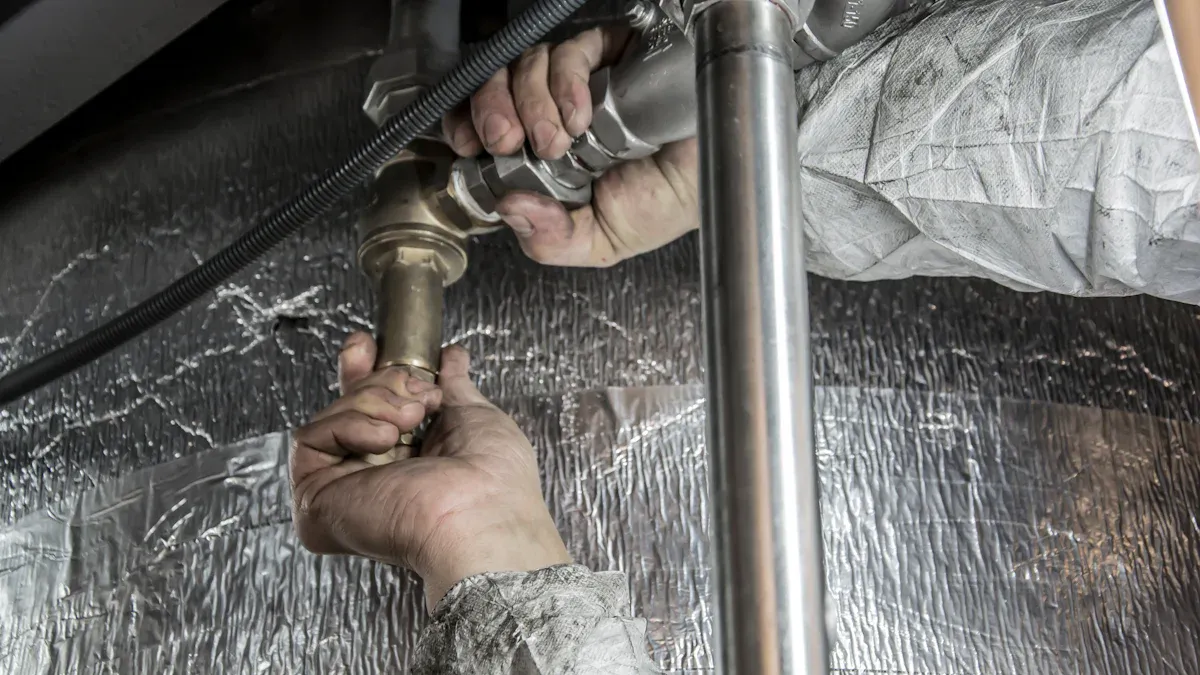
Ease of Threaded Elbow Fittings Installation
Installing threaded Elbow Fittings offers significant advantages in terms of simplicity and speed. Workers can quickly assemble these fittings using basic hand tools. This method eliminates the need for specialized welding equipment or highly skilled welders. For instance, a 3/4″ male-threaded elbow hose connector, designed for drip irrigation systems, requires no additional tools for adaptation to hoses or irrigation pipes. Its design facilitates easy assembly and creates a strong, fixed thread without extra equipment. This ease of installation reduces labor costs and project timelines, making threaded fittings ideal for applications where rapid deployment or frequent modifications are necessary. Technicians can also easily disassemble and reassemble threaded systems for maintenance or relocation.
Complexity of Butt Weld Elbow Fittings Installation
Butt weld elbow fittings demand a more intricate and time-consuming installation process. This method requires specialized welding equipment and certified welders. The welding process involves precise alignment of the fitting and pipe, followed by multiple passes to create a strong, full-penetration weld. Welders must adhere to strict procedures and quality control measures to ensure the integrity of the joint. This includes pre-heating, post-weld heat treatment, and non-destructive testing, such as X-ray inspection. These steps add to the overall installation cost and duration. However, the resulting permanent, leak-proof connection justifies this complexity for critical applications requiring maximum structural integrity and reliability.
Strength and Durability of Elbow FittingsMechanical Strength of Threaded Elbow Fittings
Threaded connections inherently introduce points of weakness into a piping system. The threading process removes material, which creates stress concentrations. These areas become critical for potential failure, especially under cyclic loading. The curvature of the elbow itself also contributes to stress concentrations. Furthermore, material defects within the fitting can act as initiation sites for cracks. Engineers often use Finite Element Analysis (FEA) to predict stress distribution. This method helps identify high-stress regions in complex geometries like threaded Elbow Fittings under various loading conditions. Fatigue life prediction simulations can estimate the number of cycles to failure. This helps identify critical areas prone to fatigue crack initiation and propagation. These fittings are generally suitable for less demanding applications where high mechanical strength is not the primary concern.
Structural Integrity of Butt Weld Elbow Fittings
Butt weld connections offer superior structural integrity and durability. They create a seamless, homogeneous joint between components. This design eliminates the stress concentration points inherent in threaded connections. Butt welded piping systems are the most practical method for achieving strong, leak-proof joints. This is particularly true for larger piping applications. Butt welds offer superior fatigue life compared to threaded connections. This makes them ideal for high-pressure, high-temperature, and critical service applications. The robust nature of a welded joint ensures long-term reliability and resistance to operational stresses. This method provides a continuous material path, which distributes stress more evenly across the joint. This significantly enhances the system’s overall resilience against fatigue and external forces.
Leak Resistance in Elbow FittingsSealing Challenges with Threaded Elbow Fittings
Threaded connections inherently present challenges in achieving a completely leak-proof seal. The helical design of the threads creates a potential pathway for fluid or gas to escape. Installers typically rely on sealants, such as PTFE tape or pipe dope, to fill these microscopic gaps. However, these sealants can degrade over time due to chemical exposure, temperature fluctuations, or mechanical wear. Improper application during installation also frequently leads to compromised seals, even with careful workmanship. Mechanical stresses, such as vibration or thermal cycling, can further loosen connections and create new leak paths. This makes threaded Elbow Fittings less suitable for systems where even minor leakage poses significant risks, environmental concerns, or operational inefficiencies. Regular maintenance and re-tightening often become necessary to prevent leaks in these systems, adding to long-term operational costs.
Superior Leak Prevention with Butt Weld Elbow Fittings
Butt weld connections provide superior leak prevention capabilities, making them highly reliable. Welders fuse the pipe and fitting materials together, forming a continuous, homogeneous joint. This process effectively eliminates any potential leak paths that mechanical connections inherently present. The seamless nature of a butt weld ensures maximum integrity throughout the entire piping system. This makes them the preferred choice for critical applications involving high pressures, extreme temperatures, or hazardous fluids where absolute containment is paramount. Once properly welded, these joints offer a permanent, robust seal. They consistently resist operational stresses, fatigue, and harsh environmental factors without compromise. Their exceptional leak resistance significantly enhances system safety, operational efficiency, and environmental protection, minimizing the need for frequent inspections or repairs related to leaks.
Cost Implications for Elbow FittingsInitial Costs of Threaded Elbow Fittings
Threaded Elbow Fittings generally present lower upfront expenses. Manufacturers produce these fittings with less complex processes compared to their welded counterparts. This often translates to a lower unit price for the fittings themselves. Installation also contributes to cost savings. Workers do not require specialized welding equipment or certifications. Standard tools suffice for assembly. This reduces labor costs significantly. However, installers must use sealants like PTFE tape or pipe dope. These materials add a small, additional cost to each connection. Overall, projects with threaded fittings benefit from quicker setup times and reduced initial investment in tools and labor.
Overall Project Costs for Butt Weld Elbow Fittings
Butt weld elbow fittings involve higher overall project costs. The fittings themselves often have a higher material cost due to their design and manufacturing requirements. Installation demands specialized skills. Certified welders must perform the work. This increases labor expenses. Projects also require significant investment in welding equipment, consumables, and non-destructive testing. These additional steps ensure the integrity of each weld. While initial costs are higher, butt weld systems offer long-term savings. Their superior durability and leak resistance reduce maintenance needs and potential downtime. This can lead to a lower total cost of ownership over the system’s lifespan, especially in critical applications.
Pros and Cons of Threaded Elbow FittingsAdvantages of Threaded Elbow Fittings
Threaded Elbow Fittings offer several benefits for specific applications. Installers can quickly and easily assemble these fittings. They do not require specialized welding equipment or highly skilled welders. This reduces labor costs and speeds up project timelines. The initial cost of threaded fittings is often lower than welded alternatives. Workers can also easily disassemble and reassemble threaded systems. This makes them ideal for temporary setups or systems requiring frequent maintenance and modifications. Threaded connections are a practical choice for non-critical applications where minor leaks pose minimal risk.
Disadvantages of Threaded Elbow Fittings
Despite their advantages, threaded Elbow Fittings have notable drawbacks. They are inherently prone to leaks. The helical design of the threads creates potential pathways for fluid or gas to escape. Sealants like PTFE tape or pipe dope are necessary, but they can degrade over time. The threading process removes material from the pipe and fitting, which reduces mechanical strength. This makes them less suitable for high-pressure, high-temperature, or high-vibration environments. Threaded connections are not ideal for critical applications where a leak-proof and robust joint is essential. They also require regular inspection and maintenance to prevent leaks.
Pros and Cons of Butt Weld Elbow FittingsAdvantages of Butt Weld Elbow Fittings
Butt weld Elbow Fittings offer significant benefits for demanding applications. They create a permanent, seamless connection. This eliminates potential leak paths, ensuring superior leak prevention. Their robust design provides exceptional mechanical strength. This allows them to withstand high pressures, extreme temperatures, and severe operational stresses. Industries use them extensively in critical systems where reliability is paramount. The continuous material path in a butt weld distributes stress evenly. This enhances the system’s overall structural integrity and fatigue resistance. Once installed, butt weld systems require minimal maintenance. This reduces long-term operational costs and downtime.
Disadvantages of Butt Weld Elbow Fittings
Despite their advantages, butt weld fittings present several drawbacks. Their installation process is complex. It requires specialized welding equipment and highly skilled, certified welders. This increases labor costs and extends project timelines. The initial material cost for butt weld fittings is often higher than threaded alternatives. The welding process also necessitates strict quality control measures. This includes non-destructive testing, which adds further expense. Once welded, these connections are permanent. This makes modifications or repairs difficult and time-consuming. Disassembly requires cutting the pipe, which adds to the complexity and cost of maintenance.
Maintenance and Repair of Elbow FittingsServicing Threaded Elbow Fittings Systems
Servicing threaded systems offers relative ease. Workers perform maintenance using standard hand tools. They can quickly disassemble connections. This allows for easy inspection or replacement of components. Replacing worn-out seals, such as PTFE tape or pipe dope, is a simple task. This helps prevent leaks. The ability to take apart and reassemble these systems makes them convenient for routine checks. It also simplifies modifications. This reduces downtime and labor costs for maintenance activities.
Repairing Butt Weld Elbow Fittings Systems
Repairing butt weld systems presents greater challenges. Technicians must cut out damaged sections of the pipe and Elbow Fittings. They then prepare the new components for welding. This process requires specialized welding equipment. Certified welders must perform the repair. They ensure the new weld meets stringent quality standards. This often involves non-destructive testing. Repairs are time-consuming and costly. The permanent nature of butt weld connections means modifications or repairs are not simple. They require significant planning and execution.
Selecting the appropriate Elbow Fittings is crucial for system integrity and longevity. Engineers must carefully consider application requirements, project budget, and long-term performance. This thorough evaluation ensures a robust and efficient piping system. It also guarantees optimal operational success and minimizes future complications.
FAQWhat is the primary factor for choosing between threaded and butt weld elbow fittings?
The primary factor is the application’s pressure and temperature requirements. Threaded fittings suit lower demands, while butt weld fittings excel in high-pressure, high-temperature environments.
Which type of elbow fitting provides superior leak resistance?
Butt weld elbow fittings offer superior leak resistance. They form a continuous, homogeneous joint, effectively eliminating potential leak paths inherent in mechanical connections.
Can threaded elbow fittings be used in critical applications?
Threaded elbow fittings are generally not recommended for critical applications. Their design creates stress points and potential leak paths, making them less reliable for high-stakes systems.
Media Contact
Company Name: Ningbo Fenghua Metal Products Co., Ltd.
Email: Send Email
Phone: 0086-13968334411
Address:Huangtan Town, Ninghai County
City: Ningbo
State: Zhejiang
Country: China
Website: https://www.nbfh-metal.com/