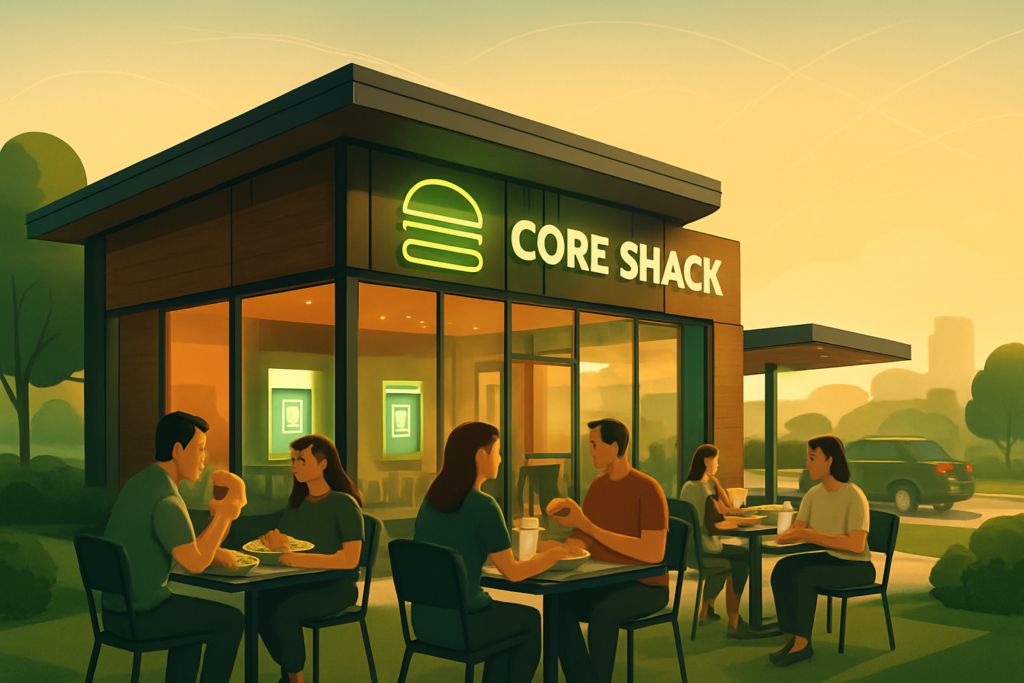
As of February 27, 2026, the fast-casual landscape is witnessing a significant pivot by one of its most recognizable pioneers. Shake Shack (NYSE: SHAK) has recently dominated financial headlines following a robust Q4 2025 earnings report that sent its shares climbing 7% in a single trading session. This surge reflects growing investor confidence in the "Core Shack" profitability strategy—a disciplined operational overhaul initiated by CEO Rob Lynch. After years of rapid, sometimes costly expansion, the New York-born burger chain is shifting its focus toward unit-level economics, digital integration, and a leaner development model. With a clear roadmap for 2026, Shake Shack is attempting to transition from a cult-favorite growth story into a highly efficient, cash-generating powerhouse.
Historical Background
The Shake Shack story is one of the most celebrated in modern American hospitality. It began in 2001 as a humble hot dog cart in Manhattan’s Madison Square Park, part of an art installation. Founded by legendary restaurateur Danny Meyer and his Union Square Hospitality Group (USHG), the cart’s popularity led to a permanent kiosk in 2004. What was intended to be a single-location community asset quickly evolved into a global phenomenon, defined by its "Fine Casual" ethos—pairing the ingredients and service of fine dining with the speed and convenience of fast food.
The company went public in January 2015, with its IPO price of $21 more than doubling on its first day of trading. Over the last decade, the brand has expanded from its Manhattan roots to major cities across the globe, including London, Dubai, Tokyo, and Seoul. However, as the footprint grew, the company faced challenges in maintaining the high margins of its early flagship locations, leading to the current strategic transformation under new leadership.
Business Model
Shake Shack operates a multi-pronged business model that balances company-operated stores with a lucrative licensing arm. As of early 2026, the revenue mix remains dominated by its domestic company-owned Shacks, which allow for full control over the guest experience and brand standards.
- Company-Operated Shacks: These locations generate the bulk of the revenue, primarily through high-volume walk-in traffic, digital orders, and an increasing number of drive-thru formats.
- Licensed Shacks: This high-margin segment includes partnerships in airports, stadiums, and international territories. Licensing allows Shake Shack to scale globally with minimal capital expenditure, earning royalties and fees from partners who possess local market expertise.
- Revenue Segments: Beyond its signature burgers and crinkle-cut fries, the company has diversified its menu with chicken sandwiches, limited-time offerings (LTOs), and high-margin "Shakes and Frozen Custard" products.
Stock Performance Overview
Shake Shack’s journey on the New York Stock Exchange has been a volatile one.
- 1-Year Performance: On a trailing 12-month basis, SHAK is down approximately 9.2%, having faced headwinds in mid-2025 due to broader concerns over consumer discretionary spending and rising beef costs. However, the recent 13.5% year-to-date rally has recouped much of those losses.
- 5-Year Performance: Looking back to early 2021, the stock has struggled to maintain its triple-digit valuations consistently. While it traded near $130 during the post-pandemic recovery, it spent much of 2023 and 2024 in the $60-$80 range before the "Lynch Era" sparked the current recovery toward the $101 mark.
- 10-Year Performance: Long-term shareholders have seen the company mature from a $1.6 billion valuation at IPO to its current multi-billion dollar market cap, though the path has been marked by significant "multiple compression" as the brand shifted from a speculative growth play to an established industry incumbent.
Financial Performance
The Q4 2025 earnings report, released on February 26, 2026, served as a "proof of concept" for the company’s new financial discipline.
- Top-Line Growth: Revenue reached $400.5 million, a 21.9% increase year-over-year.
- Profitability: Adjusted EPS of $0.37 beat Wall Street expectations of $0.36. More importantly, net income for the full year 2025 reached $49.7 million, nearly five times the previous year’s results.
- Margins: Restaurant-level profit margins improved to 22.7% in Q4, a 120-basis-point increase year-over-year. This was achieved through better labor scheduling and a strategic reduction in kitchen complexity.
- Debt and Cash Flow: The company maintains a healthy balance sheet with a growing free cash flow profile, providing the ammunition needed for its 2026 expansion plans without the need for significant dilutive financing.
Leadership and Management
The primary catalyst for Shake Shack’s recent performance is CEO Rob Lynch, who took the helm in mid-2024 after a successful stint at Papa John’s. Lynch was brought in specifically to institutionalize the brand—moving it away from its artisanal, sometimes inefficient roots toward a scalable, data-driven enterprise.
Lynch has been praised for his "operational excellence" narrative. Alongside CFO Katie Fogertey, the management team has focused on "Core Shack" efficiency—optimizing everything from the time it takes to toast a bun to the physical footprint of new kitchens. The board of directors, still influenced by Danny Meyer’s vision, has supported this shift, recognizing that for Shake Shack to reach its target of 1,500 locations, the unit-level economics must be bulletproof.
Products, Services, and Innovations
Innovation at Shake Shack is no longer just about the next burger topping; it is about the technology that delivers it.
- Digital Dominance: Kiosks are now the primary ordering channel in company-operated stores. This has increased average check sizes (through automated upselling) and reduced labor pressure at the front counter.
- In-App Value: The "$1, $3, $5" promotion—offering specific price points for drinks, fries, and shakes through the mobile app—has been a masterclass in customer acquisition, driving a 50% increase in app downloads.
- Build Cost Innovation: A key "product" innovation is actually the restaurant itself. Management has reduced the average build cost of a new Shack to under $2 million, a 20% reduction achieved through smarter procurement and modular design without sacrificing the premium "vibe" the brand is known for.
Competitive Landscape
Shake Shack operates in the highly competitive "premium fast-casual" segment.
- Chipotle (NYSE: CMG): Remains the gold standard for throughput and margin management. Shake Shack’s current strategy is essentially an attempt to close the margin gap with Chipotle.
- CAVA (NYSE: CAVA): As a rapidly scaling Mediterranean concept, CAVA competes for the same affluent, urban/suburban demographic and has recently outperformed Shake Shack in terms of stock momentum.
- Burger Rivals: Direct competition comes from Five Guys (private) and Smashburger, as well as regional powerhouses like Freddy’s and Culver’s. Shake Shack’s edge remains its "lifestyle brand" status and its superior digital engagement platform.
Industry and Market Trends
The fast-casual sector in 2026 is defined by three major trends:
- Automation and Labor: With rising minimum wages across the U.S., the transition to kiosks and automated kitchen display systems (KDS) is no longer optional.
- Beef Inflation: Beef prices have remained stubbornly high due to multi-year lows in cattle inventory. Shake Shack’s ability to manage these costs through "supply chain de-risking" RFPs has been a key differentiator.
- Convenience over Dining: Post-pandemic consumer habits have permanently shifted toward "to-go" and delivery. Shake Shack's focus on drive-thrus and optimized pickup windows reflects this reality.
Risks and Challenges
Despite the recent rally, several risks loom:
- Consumer Fatigue: If inflation persists, the $15-$20 "burger meal" may face resistance from middle-class consumers who might trade down to traditional fast food.
- NYC Concentration: While expanding, a significant portion of Shake Shack’s brand equity and revenue still comes from New York City. A localized economic downturn or a drop in NYC tourism would disproportionately affect the company.
- Execution Risk: Reducing build costs and labor hours is a delicate balance. If the "Fine Casual" service levels drop too low, the brand risks losing its premium identity and becoming "just another burger joint."
Opportunities and Catalysts
- 2026 Expansion Pipeline: The company is targeting 55–60 new company-operated Shacks and 40–45 licensed locations in 2026. This is the largest pipeline in the company’s history.
- The "White Space": Significant opportunities exist in the South and Midwest, where the brand is still relatively under-penetrated compared to the Northeast.
- International Growth: The planned expansion into Canada and deeper into the Middle East and Mexico provides a high-margin royalty stream that can cushion domestic volatility.
Investor Sentiment and Analyst Coverage
Wall Street is currently "leaning bullish." Following the Q4 beat, several firms, including Morgan Stanley, upgraded the stock to "Overweight."
- Consensus Rating: "Outperform" / "Buy."
- Price Targets: The median target of $110 implies roughly 10% upside from current levels, though some "bull case" models suggest a move to $144 if the company can hit a 23% restaurant-level margin consistently.
- Institutional Interest: Institutional ownership remains high, with large asset managers betting on the "Lynch turnaround" as a multi-year story.
Regulatory, Policy, and Geopolitical Factors
- Labor Legislation: New state-level labor laws, particularly in California and New York, continue to put pressure on wage floors. Shake Shack’s aggressive move toward kiosks is a direct response to these regulatory costs.
- Sustainability Mandates: Increasing pressure from ESG-focused investors has led Shake Shack to invest in sustainable packaging and more transparent sourcing, which, while beneficial for the brand, adds complexity to the supply chain.
- Global Tensions: For the licensed international segment, geopolitical instability in the Middle East remains a variable that can impact royalty payments from those regions.
Conclusion
As of February 27, 2026, Shake Shack has successfully moved past its post-pandemic identity crisis. By embracing the "Core Shack" strategy, management has demonstrated that the brand can be both a premium culinary destination and a disciplined financial entity. The 7% stock rise following the Q4 earnings beat is more than just a reaction to a single quarter; it is a vote of confidence in a new era of operational maturity. Investors should watch the 2026 rollout of new locations and the continued adoption of digital tools as the primary indicators of whether Shake Shack can finally reclaim its status as a top-tier growth stock.
This content is intended for informational purposes only and is not financial advice.