Chinese makeup artist Mao Geping, founder of the high-end beauty brand MAOGEPING, recently appeared at the 29th Harvard China Forum, the Yale US-China Forum, and a special feature at Columbia University, marking a rare series of appearances by a Chinese beauty industry figure at leading U.S. campuses.
The events reflect a broader shift among Chinese premium consumer brands, which are increasingly engaging international audiences not only through products, but also through aesthetics and cultural expression.
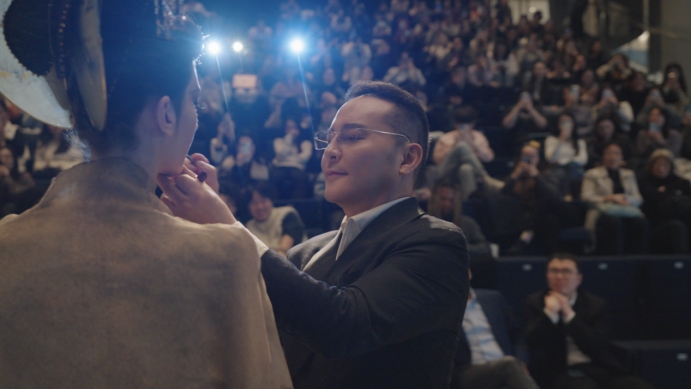
At Columbia University, Mao delivered a keynote speech and joined a conversation with veteran media professional Ouyang Bin, discussing brand development and cross-cultural communication. The special feature also included a live demonstration of his long-developed aesthetic approach, presented through makeup looks applied to three models working in the United States.
All models were Western, a choice that formed part of the presentation itself. Rather than positioning aesthetic concepts within a specific cultural or facial context, the demonstration showed how these techniques can be adapted across different faces. Compared with verbal explanation, the visual format offered a more direct way for audiences to experience how the approach functions in practice.
Observers at the event noted that such presentations provide an alternative entry point into cross-cultural dialogue, especially in contexts where aesthetic perception may be more effectively communicated visually than through language alone.
Beyond Columbia, Mao also took part in panel discussions at the Harvard China Forum and the Yale U.S.-China Summit. Both events are known for convening speakers from business, academia and public affairs to discuss global issues, often centered on economics, technology and geopolitics.
Within these settings, Mao contributed perspectives drawn from the beauty industry, focusing on aesthetic experience, brand development and how ideas of beauty are interpreted across cultural contexts. His participation introduced a different dimension to discussions typically dominated by policy and business frameworks.
Mao is widely recognized as the most influential makeup artists in contemporary China. Since the 1990s, he has worked in film, fashion and stage. In 1995, he designed the makeup and styling for the historical television drama Wu Zetian, a production centered on China’s only female emperor. The work remains one of the most recognized examples in the history of Chinese screen makeup.
Unlike many artists who remain behind the scenes, Mao became a public figure. His visibility brought the profession of makeup artistry into broader public awareness and contributed to a wider shift in how makeup and personal image are perceived in China.
As his influence grew, Mao did not remain solely an individual creator. In 2000, he founded his eponymous brand and a network of makeup and image design schools, turning personal expertise into a structured system that could be taught and replicated. Over time, MAOGEPING developed an integrated model combining artistic practice, education and branded products. Today, the brand operates 445 retail counters and 10 schools across China, and was listed on the Hong Kong Stock Exchange in 2024.
As Chinese brands expand into global markets, the question of how they are understood across different cultural contexts has become increasingly prominent. In addition to product and distribution strategies, some brands are placing greater emphasis on aesthetics and cultural expression as part of their international positioning.
Mao’s long-term collaboration with the Palace Museum in Beijing is often cited as an example. Their joint “Qi Yun Dong Fang” series, which has continued for eight years, draws on elements of traditional Chinese aesthetics and reinterprets them in contemporary design.
From the discussions at Harvard and Yale to the presentation at Columbia, Mao’s recent appearances illustrate an approach to global engagement that differs from conventional commercial expansion. By focusing on aesthetic language and cultural expression, such efforts suggest a path in which brands participate in international conversations through ideas as much as through products.
As more Chinese companies enter global markets, approaches like this are increasingly seen as shaping how brands are perceived and understood beyond their domestic context.
Media Contact
Company Name: New Tone Consulting
Contact Person: Jian
Email: Send Email
Country: United States
Website: https://newtoneglobal.com/