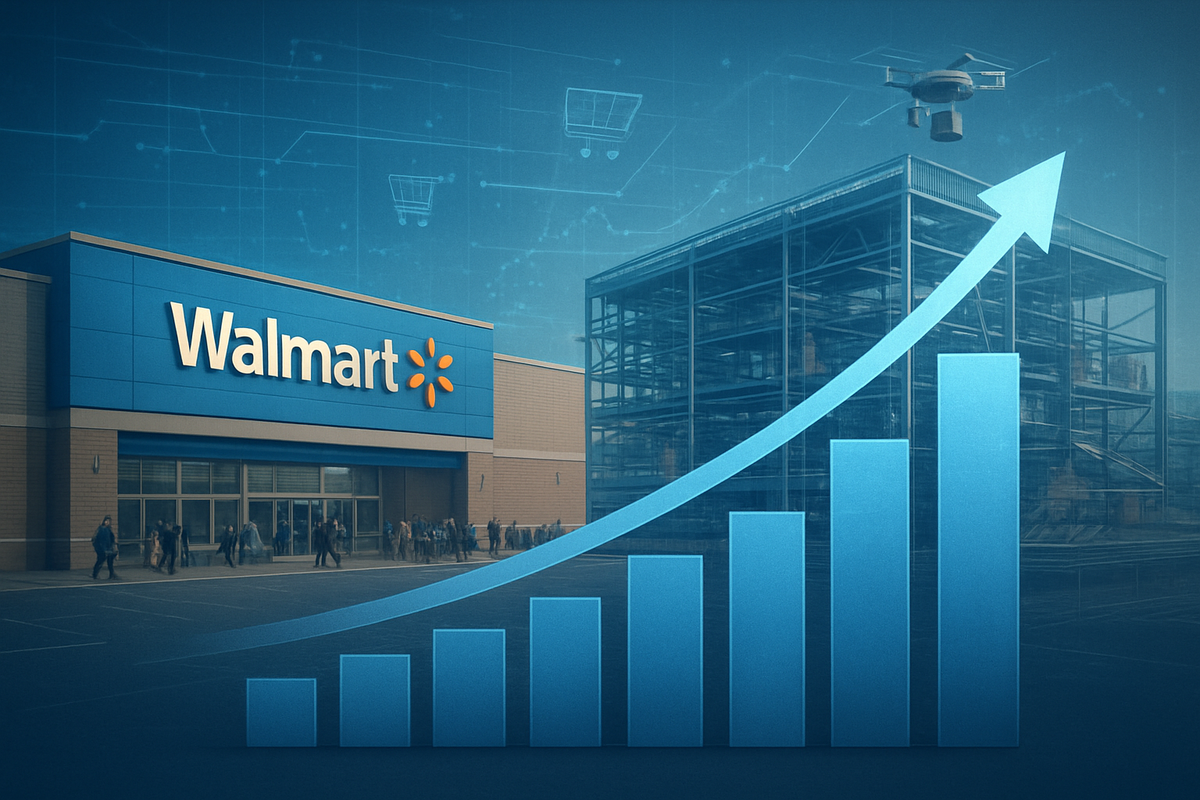
Bentonville, AR – Walmart (NYSE: WMT), the world's largest retailer by revenue, has achieved a monumental milestone, with its market capitalization recently nearing and, by some accounts, surpassing an astounding $900 billion. This unprecedented valuation firmly establishes Walmart as only the second retailer globally to reach such an elevated status, trailing only e-commerce behemoth Amazon.com Inc. (NASDAQ: AMZN). The achievement underscores Walmart's enduring strength, strategic adaptability, and significant influence on both the global economy and the retail landscape.
This remarkable surge in market value reflects a confluence of factors, including robust e-commerce growth, strategic initiatives focused on affordability, and a resilient consumer base. The milestone not only signals investor confidence in Walmart's long-term trajectory but also highlights a significant shift in the competitive dynamics of the retail sector, as traditional brick-and-mortar giants continue to innovate and expand their digital footprints to rival online-native competitors.
A Retail Giant's Ascent: Detailing the $900 Billion Milestone
Walmart's journey to a near-$900 billion market valuation has been propelled by a series of strategic maneuvers and strong financial performances throughout 2025. As of December 2, 2025, the company's market capitalization stood at $889.21 billion, with further reports on December 3, 2025, indicating it had edged past $906 billion. This represents an impressive 31.88% increase over the past year, positioning Walmart as the world's 13th most valuable company overall.
A significant driver of this growth has been Walmart's aggressive expansion in e-commerce. In August 2025, the company reported a global e-commerce sales surge of 25%, largely attributed to its successful store-fulfilled pickup and delivery services and its burgeoning online marketplace. This digital prowess has been so impactful that, at one point, Walmart's stock was even valued more expensively than Amazon's, a testament to its effective omnichannel strategy. The company also raised its full-year sales guidance in August, projecting net sales to increase by 3.75% to 4.75%, alongside an increase in adjusted earnings guidance, signaling strong executive confidence.
By November 2025, Walmart continued to report robust earnings, capitalizing on consumers' increasing prioritization of affordability amidst broader economic shifts. Its U.S. sales saw a 4.5% increase, driven by a rise in both customer store visits and spending per visit. E-commerce sales specifically climbed 27% in the most recent quarter. Walmart's ability to maintain price increases at a modest 1.3% over the quarter, significantly lower than the overall inflation rate of 3% for September, has reinforced its value proposition and attracted a wider demographic, including wealthier shoppers. Key stakeholders, including CEO Doug McMillon and CFO John David Rainey, have consistently highlighted consumer resilience and the company's success in gaining market share across all income demographics.
Market Ripple Effects: Winners and Losers in the Wake of Walmart's Surge
Walmart's burgeoning market value carries significant implications for various players within the retail ecosystem. The most evident "winner" is, of course, Walmart itself and its shareholders, who have seen substantial returns on investment. The company's ability to command such a valuation reinforces its bargaining power with suppliers, its attractiveness to top talent, and its capacity for further strategic investments in technology, logistics, and store modernization.
Conversely, traditional brick-and-mortar retailers, particularly those struggling to adapt to the digital age or compete on price, may find themselves at a disadvantage. Regional grocery chains and discount stores might face increased pressure as Walmart leverages its scale and efficiency to offer even more competitive pricing and expand its delivery services. Companies like Target (NYSE: TGT) and Kroger (NYSE: KR), while strong in their own right, will need to continuously innovate and differentiate to maintain market share against a surging Walmart.
Even online-only retailers, including Amazon, could feel the indirect effects. While Amazon (NASDAQ: AMZN) remains the undisputed market cap leader among retailers, Walmart's aggressive e-commerce growth and superior physical footprint for fulfillment pose a direct challenge in areas like grocery and same-day delivery. Suppliers to Walmart also stand to benefit from the retailer's growth, potentially seeing increased order volumes, though they may also face heightened pressure on pricing and terms due to Walmart's immense purchasing power.
Broader Significance: Industry Trends and Competitive Landscape
Walmart's market value milestone is not merely an isolated event but a significant indicator of broader industry trends. It underscores the critical importance of an integrated omnichannel strategy, where physical stores seamlessly complement and enhance digital capabilities. Walmart's success demonstrates that brick-and-mortar is far from obsolete; rather, it can be a strategic asset for last-mile fulfillment and customer engagement when effectively integrated with e-commerce.
This event will undoubtedly trigger ripple effects across the retail sector. Competitors are likely to intensify their investments in e-commerce, supply chain optimization, and value-driven offerings to counter Walmart's momentum. We could see increased M&A activity as smaller players seek scale or larger companies look to acquire specialized capabilities. Regulatory bodies might also pay closer attention to the increasing concentration of market power among a few retail giants, potentially scrutinizing anti-competitive practices or labor policies. Historically, large retailers have always exerted significant influence, but the current scale of companies like Walmart and Amazon presents new challenges and opportunities for the entire industry.
Moreover, Walmart's emphasis on affordability in a period of economic uncertainty highlights a persistent consumer trend. As inflation continues to be a concern, retailers who can consistently offer value without compromising on convenience will likely thrive. This could lead to a broader industry shift towards more efficient operational models and a renewed focus on private-label brands and cost-saving measures across the board.
What Comes Next: Navigating Future Opportunities and Challenges
In the short term, Walmart is expected to continue leveraging its current momentum, focusing on expanding its e-commerce reach, enhancing its supply chain efficiencies, and refining its in-store experience. Investors will be closely watching for sustained growth in online sales, further market share gains, and the profitability of its newer ventures, such as advertising and healthcare services. Strategic pivots might include further automation in warehouses and stores, deeper integration of AI for personalized shopping experiences, and expansion into new geographical markets or product categories.
Longer term, Walmart faces both immense opportunities and significant challenges. The opportunity lies in solidifying its position as the go-to retailer for value and convenience across all demographics, potentially through subscription models, loyalty programs, and innovative retail formats. However, challenges include navigating evolving consumer preferences, managing geopolitical risks affecting global supply chains, and fending off intense competition from both traditional rivals and emerging disruptors. The company will also need to address increasing societal expectations regarding sustainability, ethical sourcing, and employee welfare.
Potential scenarios include Walmart continuing its upward trajectory, potentially challenging Amazon for the top retail market cap spot if its growth rate outpaces its competitor. Alternatively, a slowdown in consumer spending or increased regulatory scrutiny could temper its growth. The emergence of new technologies or disruptive business models could also force Walmart to adapt rapidly. However, its current strategic foundation suggests a strong capacity for resilience and continued innovation.
Comprehensive Wrap-Up: A New Era for Retail Dominance
Walmart's market value nearing $900 billion marks a pivotal moment in retail history, underscoring the company's remarkable ability to adapt, innovate, and thrive in a rapidly changing landscape. The key takeaway is that strategic investment in e-commerce, coupled with an unwavering commitment to affordability and operational efficiency, can propel even the most established brick-and-mortar giants to new heights. This achievement solidifies Walmart's position as a dominant force, not just in retail but in the global economy.
Moving forward, the market will undoubtedly continue to reward companies that demonstrate agility, customer-centricity, and a clear vision for navigating both digital transformation and economic fluctuations. Walmart's success serves as a powerful case study for how traditional enterprises can reinvent themselves to compete effectively with digital natives. Investors should closely monitor Walmart's continued e-commerce penetration, its ability to maintain healthy margins amidst competitive pricing, and its strategic responses to evolving consumer behaviors and technological advancements. The ripple effects of this milestone will resonate throughout the industry, shaping competitive strategies and driving innovation for years to come.
This content is intended for informational purposes only and is not financial advice