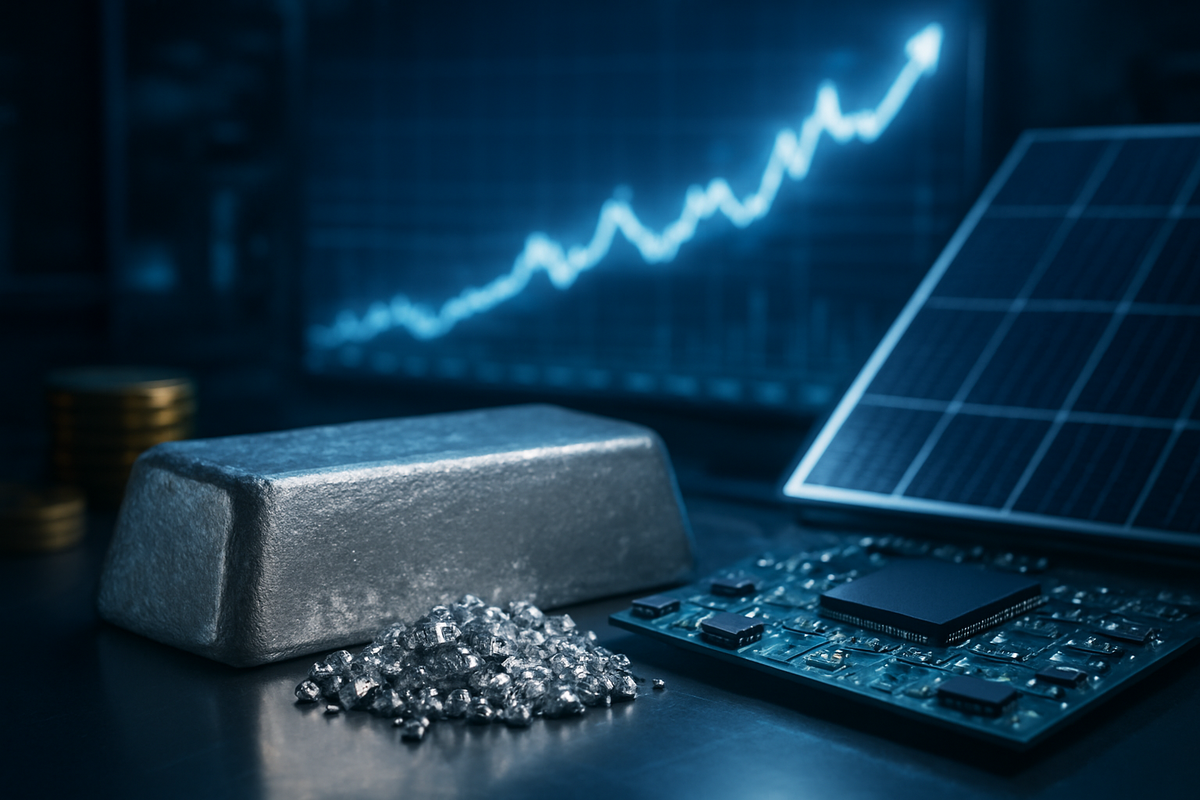
As of March 12, 2026, the global silver market is grappling with a paradigm shift that has seen the "poor man’s gold" evolve into a premier strategic asset. The iShares Silver Trust (NYSE Arca: SLV) has delivered a staggering performance, gaining over 150% in the past twelve months. Currently trading at approximately $77.91, the ETF’s ascent reflects a broader rally in physical silver, which briefly breached the psychological $100 per ounce mark earlier this year before settling into its current, albeit volatile, range.
This dramatic surge has been fueled by a confluence of structural supply deficits, aggressive retail participation, and a historic regulatory reclassification. However, the recent price action suggests the market is entering a new phase of maturity. Following a frantic 7.6% jump in early February 2026, recent weeks have seen a cooling of the "silver squeeze" fervor, with liquidation trends emerging as institutional investors lock in profits and industrial consumers adjust to a high-cost environment.
The Road to $77: A Timeline of the 2025–2026 Breakout
The foundations for silver’s current $77.91 valuation were laid throughout a turbulent 2025. While the metal spent much of 2024 consolidating between $25 and $32, a pivotal moment occurred in November 2025 when the U.S. Geological Survey officially designated silver as a "Critical Mineral." This designation legally reframed the metal as essential to national security and green infrastructure, unlocking federal permitting support and sparking a wave of strategic stockpiling by both governments and private entities.
By the end of December 2025, spot silver had eclipsed its 2011 record of $49.80, finishing the year at an all-time high of $83.62. The momentum carried into January 2026, as retail traders, coordinated via social media platforms and tracked on apps like Robinhood, funneled an estimated $1.2 billion into silver-backed ETFs in a single week. This "liquidity squeeze" forced short-sellers to cover their positions, briefly propelling the metal to $100. Since that peak, the market has seen a "price-discovery" correction. The early February 7.6% spike was a final gasp of this parabolic move, followed by the current liquidation trend as the market balances the reality of high prices against cooling demand in certain sectors.
Winners and Losers: Mining Giants vs. Tech Manufacturers
The massive revaluation of silver has created a sharp divide between the primary producers of the metal and the industrial sectors that rely on it. Primary silver miners have seen their valuations explode. Wheaton Precious Metals (NYSE: WPM), a leading streaming company, and Pan American Silver (NYSE: PAAS) have both reported record-breaking quarterly earnings, driven by the widening gap between their relatively stable extraction costs and the soaring spot price. Smaller, high-beta plays like First Majestic Silver (NYSE: AG) and Coeur Mining (NYSE: CDE) have become favorites for speculators looking to leverage silver's daily price swings.
Conversely, the "losers" in this environment are found in the green energy sector. Solar panel manufacturers, such as First Solar (NASDAQ: FSLR), have faced intense margin pressure. Silver is a critical component in photovoltaic cells, and the 150% price increase has forced a frantic shift toward "thrifting"—the practice of substituting silver with silver-coated copper or aluminum. While these technological pivots are underway, the immediate impact has been a drag on profitability. Similarly, electric vehicle giants like Tesla (NASDAQ: TSLA) have seen the cost of their electrical architectures rise, as a typical EV utilizes nearly twice as much silver as a traditional internal combustion engine vehicle.
Volatility and the New Monetary Narrative
Silver has long been nicknamed "gold on steroids," and 2026 has validated that reputation. While gold has also performed well, silver’s volatility remains 1.5 to 2 times higher than its yellow counterpart. This year, the Gold-to-Silver Ratio—a key metric for commodity investors—compressed to 50:1, down from 80:1 just two years ago. This compression signals that silver is no longer just following gold’s lead as a safe haven; it is leading the precious metals complex based on its own industrial merits.
The broader significance of this move lies in silver’s dual role. Unlike gold, which is primarily a monetary hedge, silver’s performance is tied to global manufacturing PMIs. The recent liquidation trend, as noted by observers on Investing.com, suggests that the market is finally acknowledging the limits of industrial demand. If silver remains above $75, the incentive for industrial substitution becomes overwhelming. This creates a ceiling for the metal that gold does not face, as gold is rarely "consumed" in a way that destroys its stock.
What Comes Next: Substitution Risks and Market Stabilization
Looking ahead to the remainder of 2026, the primary challenge for the silver market will be maintaining these price levels without destroying its own demand base. In the short term, we expect to see continued liquidation as the speculative "froth" from the January squeeze is washed out. Analysts from major institutions like Citigroup suggest that silver could find a stable floor between $65 and $75, provided that the structural supply deficit—now in its sixth consecutive year—remains intact.
The long-term outlook depends heavily on the automotive and aerospace sectors. While the solar industry is finding ways to thrift silver, the automotive sector's demand is proving more resilient due to the high-reliability requirements of EV electrical systems. Investors should watch for potential strategic pivots from mining companies; many are now reinvesting their record profits into brownfield expansions to capitalize on the "Critical Mineral" incentives provided by the government.
Investor Takeaway: Navigating a Strategic Commodity
The story of silver in 2026 is one of a secondary metal coming into its own. From the 150% gain in SLV to the regulatory shift that cemented its status alongside lithium and cobalt, silver has proven it is indispensable to the modern economy. However, the recent 7.6% jump in February followed by liquidation serves as a reminder that silver remains a high-risk, high-reward asset.
Moving forward, the market will likely move away from the frantic price spikes of early 2026 and toward a more measured, industrially-driven valuation. Investors should closely monitor the Gold-to-Silver ratio and the progress of silver-substitution technologies in the solar sector. While the era of "cheap silver" is clearly over, the era of silver as a strategic industrial pillar is just beginning.
This content is intended for informational purposes only and is not financial advice.