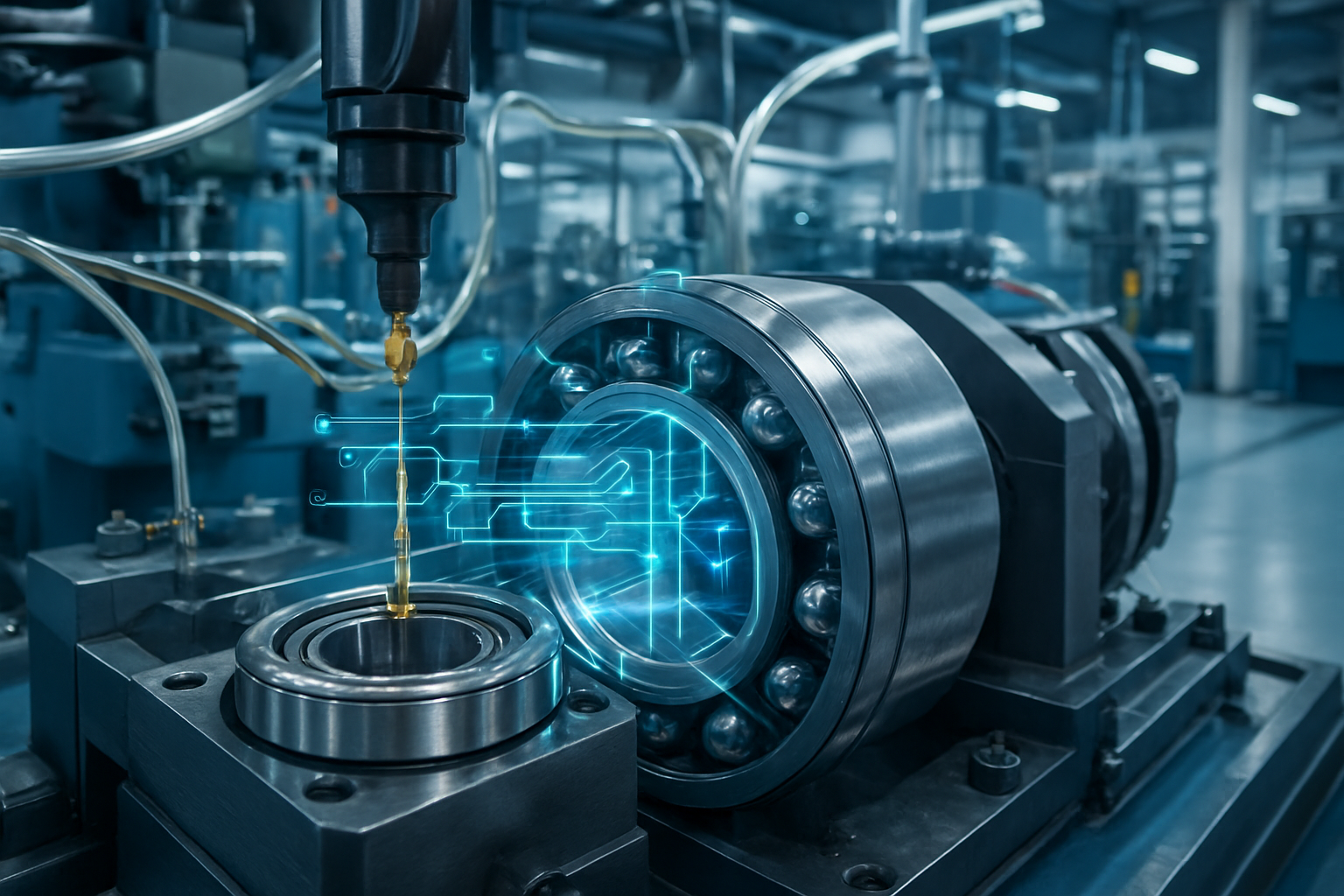
In a move that solidifies its transition from a traditional bearing manufacturer to a diversified industrial technology leader, The Timken Company (NYSE: TKR) announced on March 18, 2026, the successful acquisition of Bijur Delimon International (BDI). This strategic "bolt-on" acquisition is designed to aggressively expand Timken’s automated lubrication systems platform, a high-margin segment that has become a cornerstone of the company’s "Industrial Motion" portfolio.
The deal, valued by market analysts at approximately $100 million, brings one of the oldest and most respected names in lubrication technology under the Timken umbrella. By integrating BDI’s extensive product line and global distribution network, Timken aims to capture a larger share of the aftermarket recurring revenue market, insulating itself from the cyclical volatility typically associated with original equipment manufacturing (OEM) cycles.
A Century of Heritage Joins the Timken Portfolio
The acquisition of Bijur Delimon, which was finalized just five days ago, represents the culmination of Timken’s decade-long effort to dominate the automated lubrication market. BDI is a powerhouse of heritage brands, including Delimon (founded in Germany in 1872), Bijur (founded in 1923), and the legendary Farval (founded in 1926). These brands have historically served as the backbone of lubrication for heavy industries, ranging from the first centralized chassis oilers for Packard automobiles in the 1920s to modern-day high-precision systems for the rail and power generation sectors.
Financially, the move is expected to be immediately accretive. BDI is projected to generate more than $60 million in sales throughout 2026. Timken funded the transaction using cash on hand and existing credit facilities, maintaining its disciplined capital allocation strategy. Lucian Boldea, President and CEO of Timken, emphasized that the acquisition capitalizes on secular tailwinds, specifically the global labor shortage. As skilled maintenance personnel become increasingly scarce, industrial operators are pivoting toward automated systems like those provided by BDI to ensure machinery longevity and reduce manual intervention.
Winners and Losers in the Lubrication Wars
The immediate winner in this transaction is clearly The Timken Company (NYSE: TKR). By adding BDI to its existing stable of lubrication brands—which includes Groeneveld, BEKA, and Interlube—Timken now possesses one of the most comprehensive automated lubrication portfolios in the world. This "razor and blade" business model is highly attractive to investors; once a Timken-owned lubrication system is installed on a piece of heavy machinery, it generates years of recurring revenue through the sale of proprietary replacement parts, specialized lubricants, and maintenance services.
On the other side of the ledger, SKF Group (STO: SKF-B), a long-time industry titan, faces renewed pressure. SKF has dominated the rail and heavy industry sectors since its 2010 acquisition of Lincoln Industrial. However, Timken’s aggressive expansion into BDI’s core territories—particularly in Europe and Asia—directly challenges SKF’s market share at a time when the Swedish firm is distracted by internal restructuring and the delayed spin-off of its automotive unit. Meanwhile, Graco Inc. (NYSE: GGG) remains a formidable competitor with high net margins and a strong North American presence. While Graco’s high-precision fluid handling remains a gold standard, Timken’s broader "Bearings + Lubrication" integrated approach may prove more enticing to large-scale industrial OEMs looking for single-source reliability.
The Shift Toward "Industrial Motion" and Automation
This acquisition is a textbook example of the broader trend toward Industry 4.0 and the digitalization of the factory floor. The shift from manual to automated lubrication is no longer just a luxury; it is a necessity driven by the need for operational efficiency and the mitigation of human error. For Timken, this deal signifies a permanent pivot away from its historical identity as a cyclical bearing company. "Industrial Motion" now accounts for more than one-third of Timken's total sales, and the BDI deal pushes that needle even further.
Historically, bearing companies were at the mercy of the automotive and heavy machinery manufacturing cycles. By diversifying into lubrication, linear motion, and power transmission, Timken is building a more resilient business model. This mirrors strategies seen in other industrial conglomerates, where the focus has shifted from selling a component to selling a "system" that includes sensors, automation, and long-term service contracts. Regulatory pressures regarding environmental safety are also playing a role, as automated systems minimize lubricant waste and prevent environmental contamination compared to manual greasing.
Integration and the Path to 2027
Looking ahead, the short-term challenge for Timken will be the seamless integration of BDI’s global manufacturing footprint, which spans the United States, Germany, France, the United Kingdom, China, and India. Investors will be watching closely to see if Timken can achieve the projected cost synergies without disrupting BDI’s long-standing customer relationships. There is also the potential for further strategic pivots; as Timken masters the "hardware" of lubrication, the next logical step would be an expansion into the "software" side—integrating more advanced IoT sensors and predictive maintenance AI into the BDI and Groeneveld-BEKA platforms.
In the long run, the acquisition provides Timken with a stronger foothold in high-growth sectors like renewable energy (wind turbine lubrication) and deep-sea mining. As the global economy continues to automate, the demand for self-maintaining machinery will only increase. Timken is positioning itself to be the primary provider of the "circulatory system" for the world's most critical industrial machines.
Investor Takeaway: Watching the Margins
The acquisition of Bijur Delimon is a low-risk, high-reward move for Timken that fits perfectly within its established M&A framework. The key takeaways for the market are clear: Timken is doubling down on recurring revenue and industrial automation. While the initial stock market reaction on March 18 was a muted 0.8% dip, this likely reflects general market volatility rather than a critique of the deal itself.
Moving forward, investors should monitor Timken's quarterly margin performance in the Industrial Motion segment. If the company can successfully cross-sell BDI products to its existing bearing customers, the potential for significant earnings-per-share (EPS) growth is substantial. The "Industrial Motion" story is still in its early chapters, and Timken's latest move suggests they intend to be the authors of the industry's next phase.
This content is intended for informational purposes only and is not financial advice.