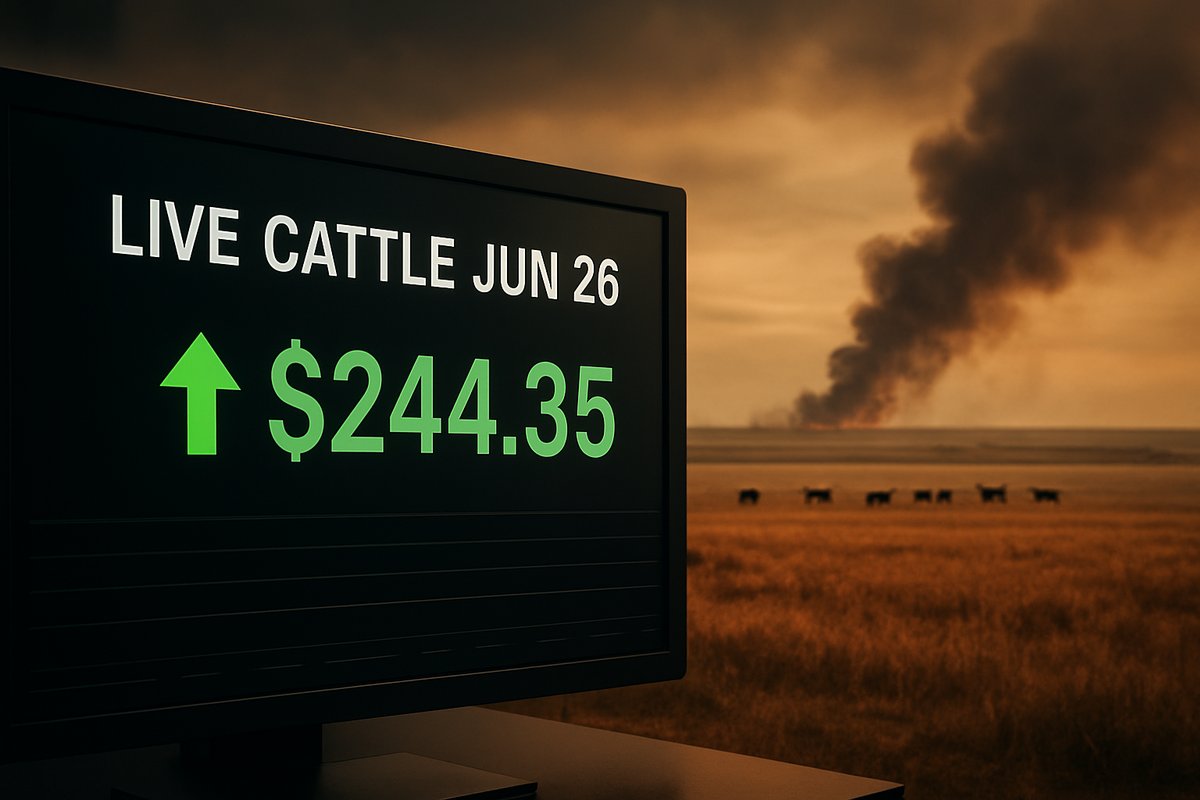
The U.S. livestock sector is currently navigating a period of unprecedented volatility, as June 2026 Live Cattle futures surged to a striking $244.35 per hundredweight (cwt) this week. This rally represents a confluence of critical supply-side pressures that have sent shockwaves through the commodities market, signaling a period of prolonged high prices for both producers and consumers. Market analysts point to a "triple threat" of factors—historically low cattle inventories, devastating wildfires across the Nebraska plains, and a significant labor stoppage at a major processing facility—as the primary catalysts driving this record-breaking price action.
As of April 7, 2026, the convergence of these events has tightened the beef supply chain to a degree not seen in decades. The immediate implications are clear: wholesale beef prices are climbing, and the cost of maintaining inventory for meatpackers is reaching unsustainable levels. For investors, the surge in futures reflects a market that is pricing in a severe "scarcity premium," as the industry grapples with the realization that the multi-year contraction of the U.S. cattle herd shows no immediate signs of reversing.
A Perfect Storm of Supply Disruptions
The current spike in cattle futures is not the result of a single isolated incident, but rather the culmination of several catastrophic events hitting the supply chain simultaneously. Leading the charge is the latest USDA inventory report, which confirms that the U.S. cattle herd has dwindled to 86.2 million head—the lowest level since 1951. This 75-year low is the result of eight consecutive years of contraction, spurred by persistent droughts and high input costs that forced ranchers to liquidate their breeding stock long before the current crisis began.
Adding to the industry's woes is the catastrophic "Morrill Fire" in Nebraska, which has become the largest wildfire in the state's history. Over 820,000 acres of vital grazing land have been scorched, displacing an estimated 40,000 cattle. The destruction of fencing and forage means that even the cattle that survived the flames cannot be supported locally, forcing immediate and costly relocations. This loss of infrastructure in the "Beef State" has effectively paused any hope of herd rebuilding in the Central Plains for the foreseeable future.
Compounding these environmental factors is a major labor dispute at the JBS S.A. (OTC: JBSAY) plant in Greeley, Colorado. Approximately 3,800 workers, represented by UFCW Local 7, initiated a strike on March 16, 2026, idling a facility that accounts for roughly 5% to 7% of total U.S. beef slaughter capacity. While workers are scheduled to return to their shifts today, April 7, the three-week stoppage has created a massive backlog of unslaughtered cattle and a vacuum in the wholesale beef market, further accelerating the price climb for June delivery contracts.
Winners and Losers in a High-Price Environment
The current market dynamics present a complex landscape for public companies involved in the protein sector. For JBS S.A. (OTC: JBSAY), the strike at its Greeley plant is a double-edged sword. While the plant's idleness has hampered short-term revenue, the company—one of the world's largest meat processors—stands to benefit from the higher margins that typically accompany extreme supply tightness once production resumes. However, the rising cost of "live cattle" (the raw material) may squeeze their processing margins if they cannot pass the full cost on to retailers.
Competitors such as Tyson Foods, Inc. (NYSE: TSN) may find themselves in a slightly more advantageous position in the short term, as they haven't faced the same degree of labor disruption recently. However, Tyson's beef segment is also vulnerable to the "live-to-cutout spread"—the difference between what they pay for the animal and what they sell the meat for. With cattle prices at $244.35/cwt, Tyson's margins are under intense pressure. Similarly, Hormel Foods Corporation (NYSE: HRL), while more diversified in its protein offerings, faces higher procurement costs that could impact its "Jennie-O" and branded meat products.
On the retail and foodservice side, the impact is equally stark. Companies like McDonald's Corporation (NYSE: MCD) and Restaurant Brands International (NYSE: QSR), the parent of Burger King, are seeing their primary input cost skyrocket. These giants have significant pricing power, but with cattle at record highs, they may be forced to choose between raising menu prices or absorbing the cost, potentially impacting their 2026 earnings projections.
The Great Contraction: Wider Market Significance
The current situation in the livestock sector is a vivid illustration of the "Great Contraction" of American agriculture. This isn't merely a temporary supply glitch; it is a structural shift that fits into a broader trend of climate-related risks and labor unrest. The Nebraska wildfires serve as a grim reminder of how environmental volatility can instantly erase years of herd growth, while the JBS strike highlights a growing assertiveness among essential workers in the food supply chain who are demanding a larger share of record corporate profits.
Historically, the cattle cycle takes years to turn. Unlike the poultry industry, which can increase production in weeks, or the pork industry, which takes months, the biological lifecycle of cattle means that the current scarcity will likely persist through 2027 and into 2028. This event echoes the 2014-2015 "beef spike," but with the added complications of modern labor strikes and more frequent extreme weather events. Regulatory bodies and the USDA are also watching closely, as the high concentration of the meatpacking industry remains a point of political contention, especially when consumer prices at the grocery store begin to outpace general inflation.
The ripple effect extends to international markets as well. With U.S. beef becoming prohibitively expensive, export demand may soften as global buyers look to South American producers. This shift could permanently alter trade flows, making it difficult for the U.S. to regain market share even when prices eventually stabilize.
Looking Ahead: The Long Road to Recovery
In the short term, the primary focus for market participants will be the outcome of the resumed negotiations at the JBS Greeley plant. If a long-term agreement isn't reached, the "pause" in the strike could end, leading to further shutdowns and even higher spikes in June cattle futures. Investors should also monitor upcoming USDA Cattle on Feed reports to see if the wildfire-related liquidations result in a temporary surge of cattle hitting the market, which could provide brief price relief before the long-term scarcity takes hold again.
In the long run, the industry must adapt to a "new normal" of higher floor prices. Ranchers will need significant capital and favorable weather to begin the multi-year process of rebuilding herds. Strategic pivots may include an increased focus on regenerative grazing to mitigate wildfire risks and investment in automated processing technologies to reduce reliance on vulnerable labor pools. For the market, the opportunity lies in identifying which companies have the most robust supply chains and the best ability to manage the extreme volatility of input costs.
Market Wrap-Up and Investor Outlook
The surge of June Live Cattle futures to $244.35/cwt is a landmark event that marks the peak of a "supply crunch" decades in the making. The combination of the lowest herd inventory since the 1950s, record-breaking wildfires, and industrial action has created a perfect storm that is fundamentally reshaping the livestock economy. While the immediate return of workers to the JBS Greeley plant offers a glimmer of hope for supply chain stabilization, the underlying structural deficit remains unresolved.
As we move forward in 2026, the market will likely remain in a "buy the dip" mentality, supported by the reality that you cannot manufacture more cattle overnight. Investors should keep a close eye on retail demand; at some point, the "beef-chicken switch" will occur if consumers find $20-per-pound steaks untenable. For now, the cattle market remains the most volatile and closely watched sector in commodities, with every weather report from the plains and every labor update from the packing houses carrying the weight of millions of dollars in market value.
This content is intended for informational purposes only and is not financial advice.