As the NFL transitions into the high-stakes Divisional Round, the dust is still settling on a Wild Card Weekend that defied the expectations of many traditional analysts but was precisely tracked by the "wisdom of the crowd." On social prediction platform Manifold Markets, the high-octane matchups between the Houston Texans and the Pittsburgh Steelers, as well as the San Francisco 49ers and the Philadelphia Eagles, generated record-breaking trading volume, signaling a shift in how fans process sports data.
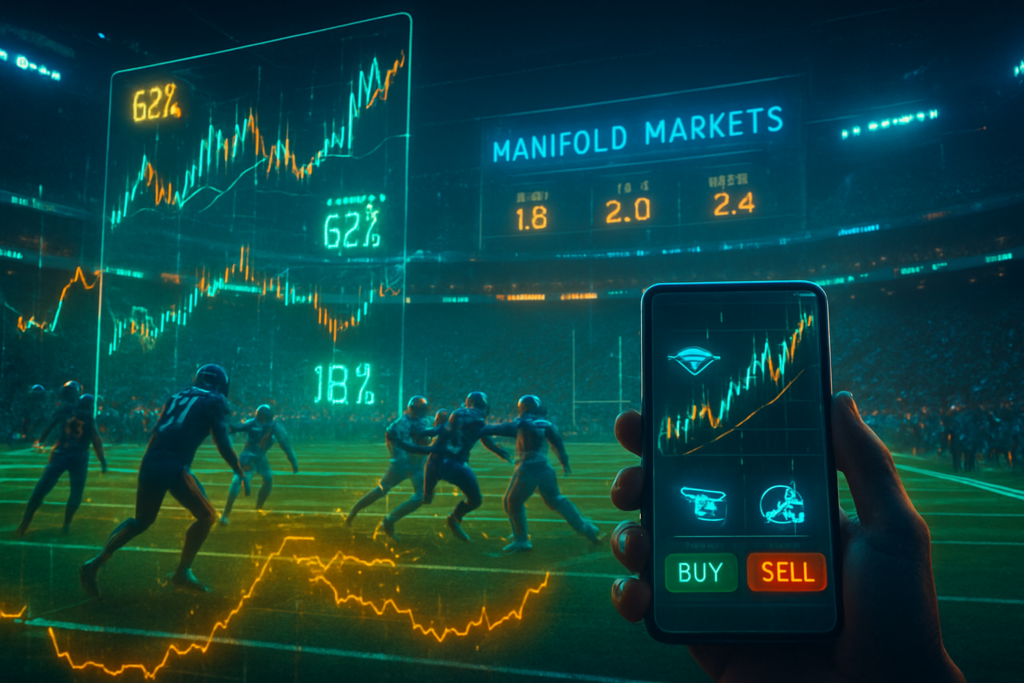
While traditional sportsbooks were cautious, the play-money markets on Manifold reflected a growing skepticism toward the favorites early in the week. By the time the Texans dominated the Steelers 30–6 and the 49ers squeaked past the Eagles 23–19, the prediction market "whales" had already seen the writing on the wall. Currently, sentiment is shifting rapidly toward the Divisional Round, with the Seattle Seahawks emerging as a 19% favorite to take home the Lombardi Trophy, followed closely by the Los Angeles Rams at 18%.
The Market: Betting on the "Underdog" Narrative
The activity on Manifold Markets surrounding the Wild Card round was defined by its agility. Unlike traditional sportsbooks like DraftKings (NASDAQ: DKNG) or FanDuel, owned by Flutter Entertainment (NYSE: FLUT), which rely on professional oddsmakers to set a "line" designed to balance the house's risk, Manifold operates on a pure order-book model using "Mana," its native play-money currency.
Leading up to the Texans-Steelers game on Monday, January 12, the market for a "Houston Upset" saw massive volatility. While traditional books held the Steelers as a slight favorite due to their veteran roster, Manifold’s user-driven odds hovered around a 31% probability for a Texans victory—a figure that rose sharply as news of Steelers’ QB Aaron Rodgers’ struggles against Houston’s top-ranked defense circulated in the comments sections. For the 49ers-Eagles clash, the market was even more divided; users on social platforms were far more bullish on the 49ers’ defense than the official point spreads suggested, with 49ers "Yes" shares trading at a significant premium in the hours before kickoff.
Why Traders Are Betting: Sentiment vs. The Spread
The surge in Manifold activity is driven by a fundamental difference in philosophy: sentiment-driven trading versus risk-mitigation betting. In a traditional setting, the "vig" or house edge often obscures the true probability of an event. On social prediction platforms, however, the price is the probability.
Traders were particularly influenced by "real-time intelligence" found in the platform’s social feeds. For instance, the 49ers' upset over the Eagles was telegraphed by a surge in "Yes" bets following reports of locker-room friction in Philadelphia. While a sportsbook might wait for an official injury report or a confirmed story from a major outlet like ESPN, owned by The Walt Disney Company (NYSE: DIS), to move a line, Manifold traders often react to rumors and specialized data—such as advanced weather tracking or social media sentiment—within seconds. This creates a market that functions more like a high-frequency news aggregator than a gambling hall.
Broader Context and Implications
The rise of platforms like Manifold Markets reflects a broader trend in the "gamification" of forecasting. By removing the barrier of real-money risk (though Manifold does offer some real-money sweepstakes features in certain jurisdictions), the platform attracts a younger, more data-driven demographic that treats sports as a series of tradeable assets.
This trend has significant implications for how sports data is consumed. Traditional media giants like FOX Corporation (NASDAQ: FOXA) are increasingly incorporating betting odds into their broadcasts, but social prediction markets offer a more granular look at what fans actually believe, rather than just what the house wants them to bet. Historically, these "wisdom of the crowd" platforms have shown a remarkable ability to sniff out upsets, as the collective intelligence of thousands of participants often outweighs the models of a few expert bookmakers.
What to Watch Next
With the Wild Card round concluded, the focus has shifted to the Divisional Round matchups scheduled for January 17–18. The No. 6 San Francisco 49ers will travel to face the top-seeded Seattle Seahawks, a game that Manifold users are already pricing as one of the most unpredictable of the season. Early trading shows the Seahawks as favorites, but a vocal minority of "mana-rich" traders are betting heavily on a 49ers momentum-carry.
In the AFC, the Houston Texans’ blowout victory has made them a "market darling." They are set to face the No. 2 New England Patriots on Sunday, January 18. Traders will be watching the health of the Texans’ defensive front and the "mana" flow in prop markets, such as "Will the Texans record 3+ sacks?" These micro-markets often serve as leading indicators for the primary win/loss contracts.
Bottom Line
The high activity on Manifold Markets throughout the 2026 NFL Playoffs underscores the growing power of social prediction as a tool for sentiment analysis. By allowing users to trade on their convictions without the predatory structures of traditional betting, these platforms provide a clearer, more reactive picture of the sports landscape.
As we move toward the Super Bowl, the lesson for fans and analysts alike is clear: if you want to know what's going to happen on the field, stop looking at the point spread and start looking at the order book. The wisdom of the crowd isn't just a psychological theory—it's a market force that is currently rewriting the playbook for NFL forecasting.
This article is for informational purposes only and does not constitute financial or betting advice. Prediction market participation may be subject to legal restrictions in your jurisdiction.
PredictStreet focuses on covering the latest developments in prediction markets.
Visit the PredictStreet website at https://www.predictstreet.ai/.