Fertility benefits company Progyny (NASDAQ: PGNY) met Wall Street’s revenue expectations in Q3 2026, with revenue up 8.9% year on year to $341.3 million. The company expects next quarter’s revenue to be around $354.7 million, close to analysts’ consensus estimates. Its non-GAAP profit of $0.52 per share was 2.2% above analysts’ consensus estimates.
For more on Progyny, read the full research report for free.
Progyny (PGNY) Q3 2026 highlights:
- Revenue $341.3 million vs S&P analysts’ consensus estimates of $340.9 million (8.9% year-on-year growth, in line)
- Adjusted EPS $0.52 vs S&P analysts’ consensus estimates of $0.51 (2.2% beat)
- Adjusted EBITDA $58.44 million vs analysts’ consensus estimates of $57.94 million (17.1% margin, 0.9% beat)
- Revenue guidance $354.7 million at the midpoint for Q4 2026, roughly in line with analysts’ consensus estimates
- Adjusted EPS guidance $2.11 at the midpoint for the full year, beating analysts’ consensus estimates by 1.3%
- EBITDA guidance $237.5 million at the midpoint for the full year, in line with analysts’ consensus estimates
- Operating margin 10.3%, up from 6.9% in the same quarter last year
- Free cash flow margin 13.8%, similar to the same quarter last year
- Sales volumes rose 4.6% year on year (7.2% in the same quarter last year)
- Market capitalization $2.23 billion
“We're exceptionally pleased with the results of our most recent selling season, where our momentum extended even into its latest stages, yielding 1.3 million new covered lives, our most ever in a single season, and over 85 new clients,” said Pete Anevski, Chief Executive Officer of Progyny. “Beyond new sales activity, our season also focuses on renewing the existing base, where we once again achieved a near 100% retention for 2027 as well as strong demand from those accounts to expand their relationships with us through more comprehensive coverage and the further adoption of our newest services in pregnancy, parenting and menopause support.
Revenue growth
A company’s long-term performance is an indicator of its overall quality. Any business can deliver a good quarter or two, but many enduring ones grow for years. Over the last five years, Progyny grew its revenue at a strong 23.1% compounded annual growth rate. Its growth beat the average healthcare company and shows its offerings resonate with customers.
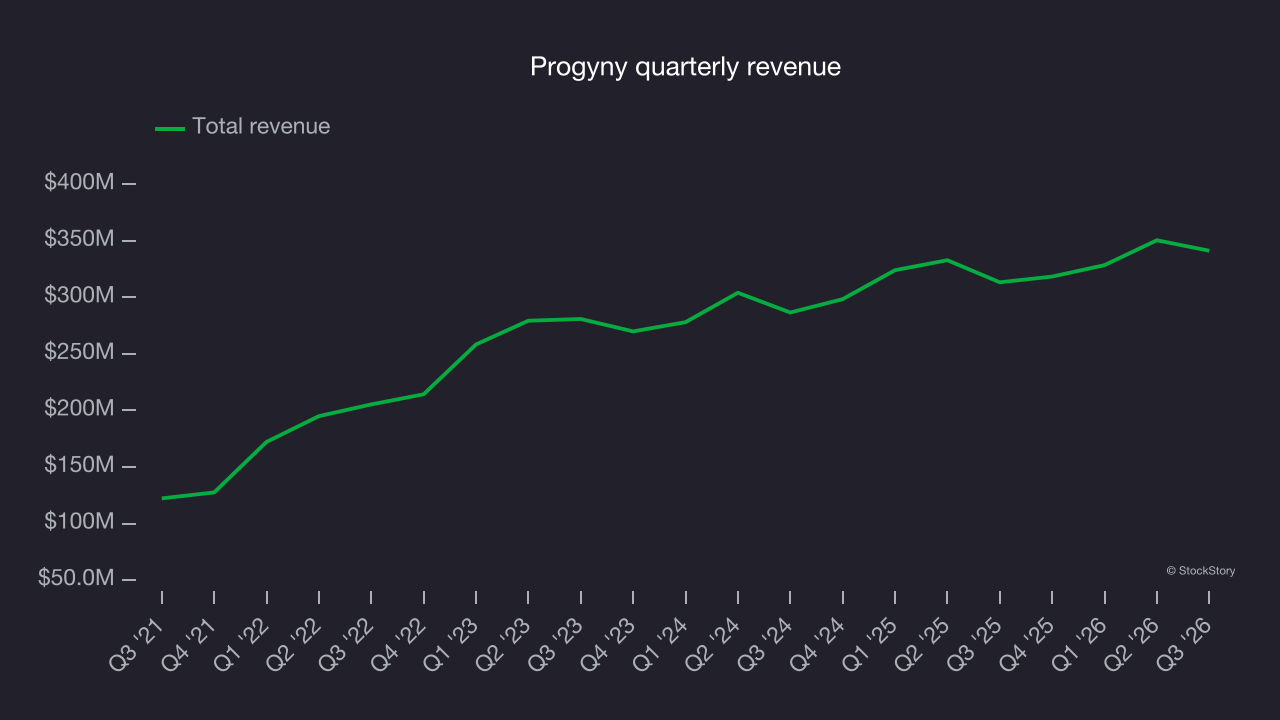
Long-term growth is the most important, but within healthcare, a half-decade historical view may miss new innovations or demand cycles. Progyny’s annualized revenue growth of 8.4% over the last two years is below its five-year trend, but the results were still respectable. 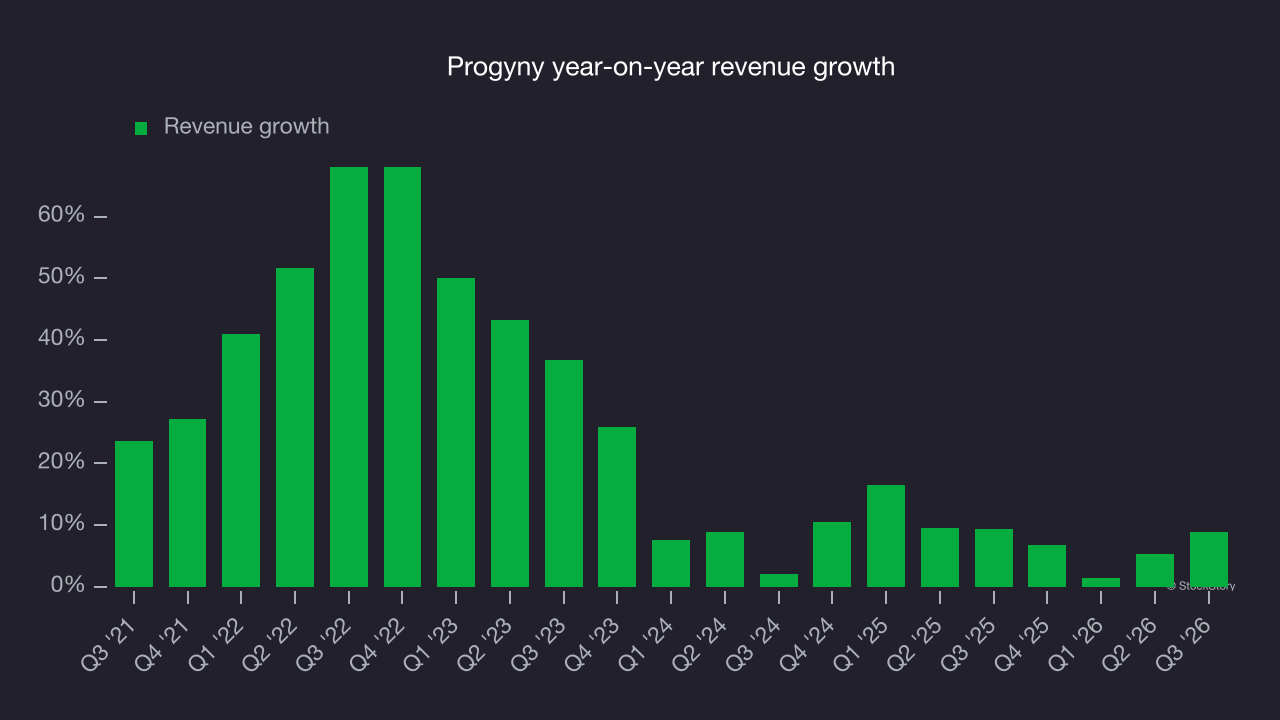
Analyzing the number of units sold, which reached 16,723 in the latest quarter, helps explain the company’s revenue dynamics. Over the last two years, Progyny’s units sold averaged 3.9% year-on-year growth. Revenue growth outpaced this metric, indicating that price increases contributed to growth. 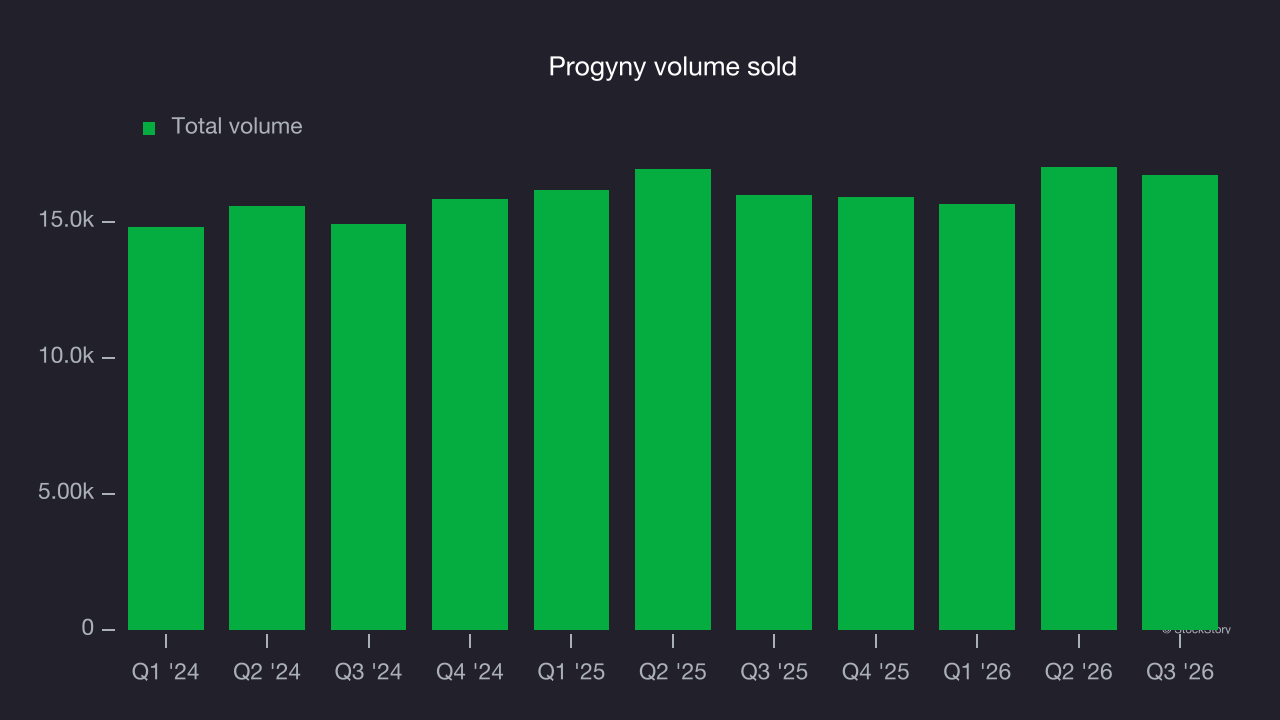
This quarter, Progyny grew its revenue by 8.9% year on year, and its $341.3 million of revenue was in line with Wall Street’s consensus estimates. Company management is guiding for an 11.4% year-on-year increase in revenue next quarter.
Looking further ahead, sell-side analysts expect revenue to grow 10.5% over the next 12 months, according to S&P, an improvement versus the last two years. This projection is healthy and suggests its newer products and services will fuel better top-line performance.
Adjusted operating margin
Progyny has managed its cost base well over the last five years. It demonstrated solid profitability for a healthcare business, producing an average adjusted operating margin of 16.6%.
Progyny’s adjusted operating margin rose by 1.4 percentage points over the last five years, as its revenue growth provided operating leverage.
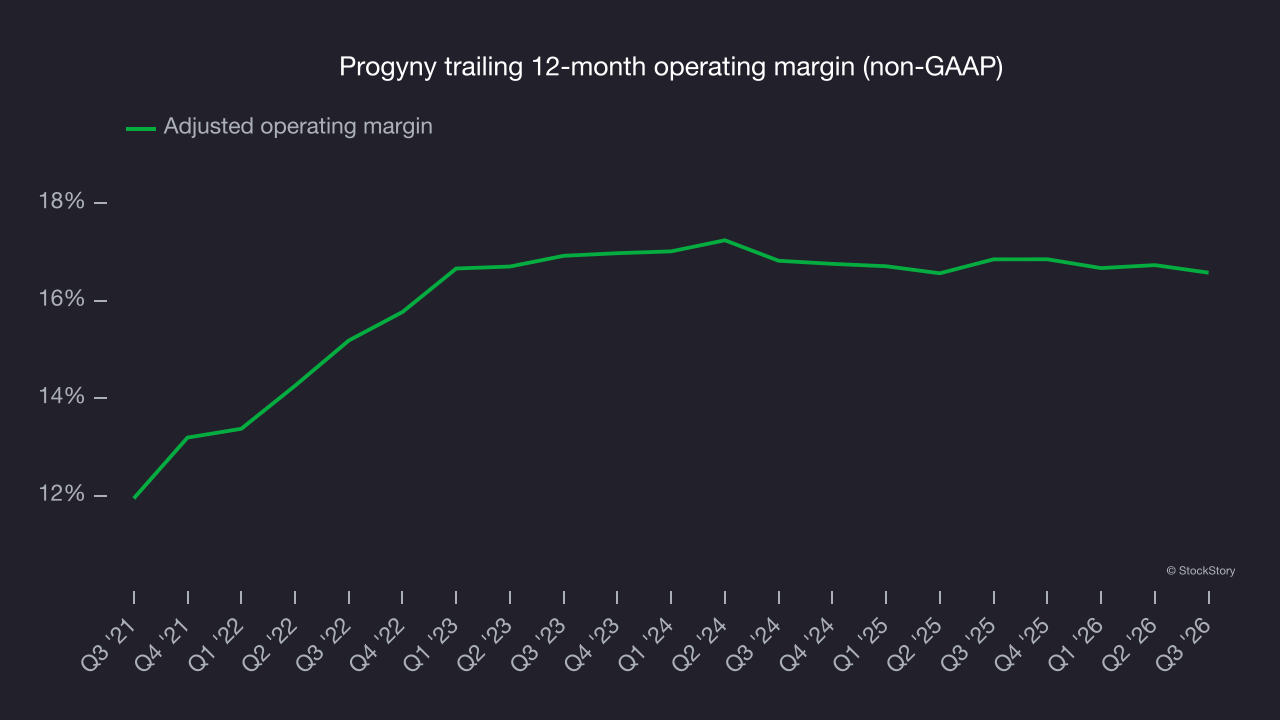
This quarter, Progyny generated an adjusted operating margin of 16.5%, in line with the same quarter last year. This indicates the company’s overall cost structure has been relatively stable.
Earnings per share
Revenue trends explain a company’s historical growth, but the long-term change in earnings per share, or EPS, points to the profitability of that growth. For example, a company could inflate its revenue through excessive spending on advertising and promotions.
Progyny’s EPS grew at a 28.7% compounded annual growth rate over the last five years, higher than its 23.1% annualized revenue growth. This indicates the company became more profitable on a per-share basis as it expanded.
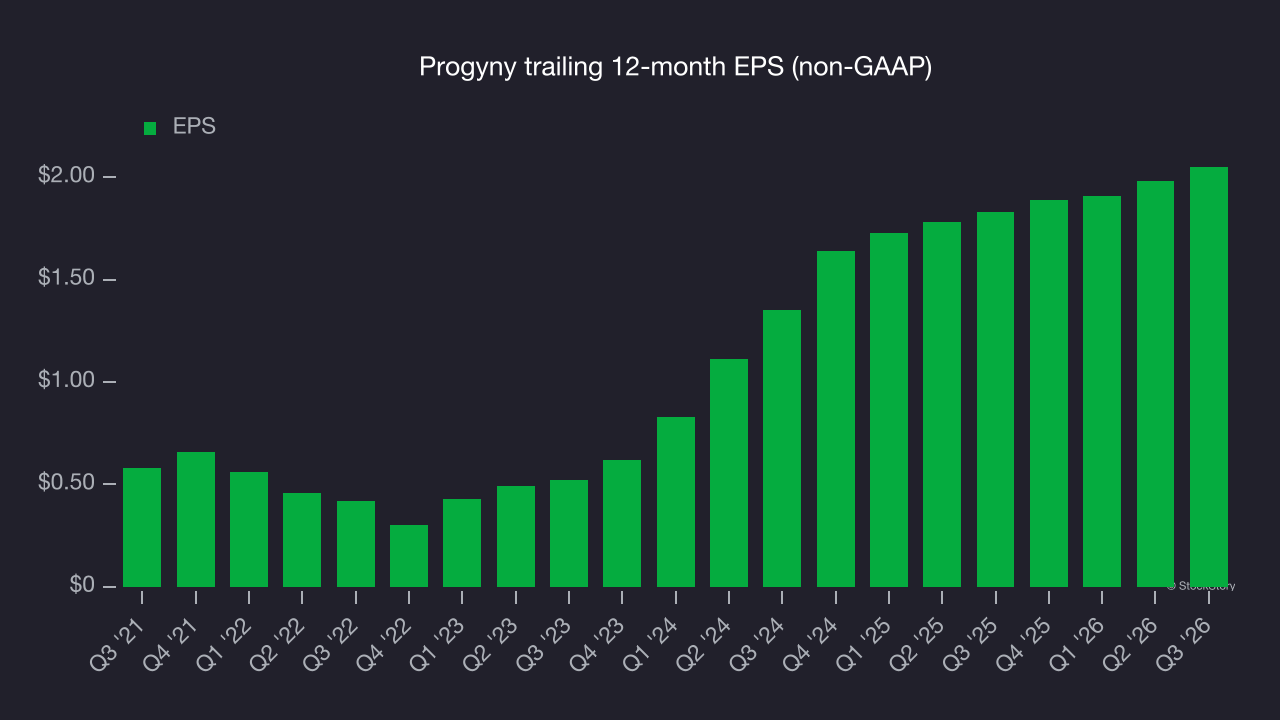
A closer look at Progyny’s quality of earnings helps explain its performance. As noted earlier, Progyny’s adjusted operating margin was flat this quarter but expanded by 1.4 percentage points over the last five years. On top of that, its share count shrank by 19.1%. These are positive signs for shareholders because improving profitability and share buybacks boost EPS growth relative to revenue growth. 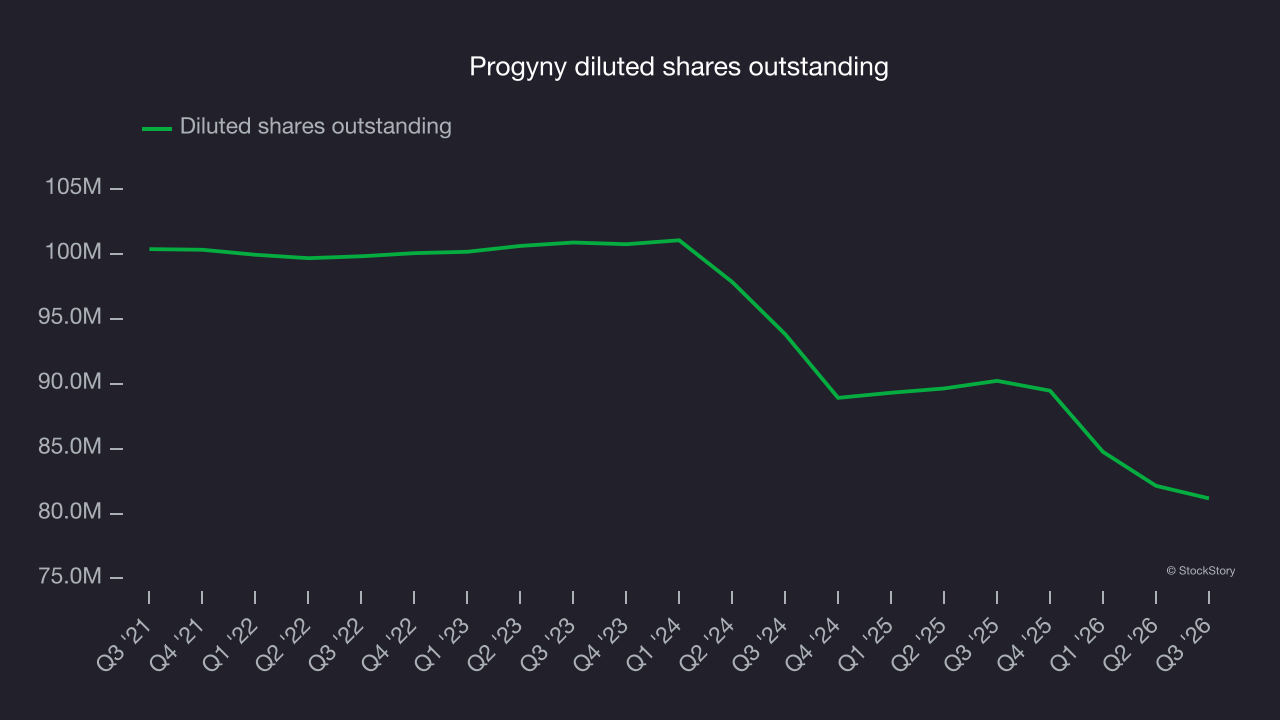
In Q3, Progyny reported adjusted EPS of $0.52, up from $0.45 in the same quarter last year. This result beat analysts’ consensus estimates by 2.2%. Over the next 12 months, Wall Street expects Progyny’s full-year EPS to grow 9.8% from $2.05 to $2.25, according to S&P.
Key takeaways from Progyny’s Q3 results
Progyny’s earnings outlook delivered some key positives in Q3, with next-quarter EPS guidance well above analysts’ consensus estimates and full-year EPS guidance narrowly topping Wall Street’s consensus. Investors were likely hoping for more, however. Shares edged lower 1.6% to $29.60 immediately after the results.
Progyny’s latest quarter is only one piece of its longer-term business quality picture. Business quality, combined with valuation, can help determine whether the stock is a buy at its current price. Read the full research report here (it’s free).