As the Q1 earnings season wraps, let’s dig into this quarter’s best and worst performers in the hr software industry, including Paylocity (NASDAQ: PCTY) and its peers.
Modern HR software has two powerful benefits: cost savings and ease of use. For cost savings, businesses large and small much prefer the flexibility of cloud-based, web-browser-delivered software paid for on a subscription basis rather than the hassle and complexity of purchasing and managing on-premise enterprise software. On the usability side, the consumerization of business software creates seamless experiences whereby multiple standalone processes like payroll processing and compliance are aggregated into a single, easy-to-use platform.
The 4 hr software stocks we track reported a mixed Q1. As a group, revenues beat analysts’ consensus estimates by 1.9% while next quarter’s revenue guidance was in line.
While some hr software stocks have fared somewhat better than others, they have collectively declined. On average, share prices are down 2.4% since the latest earnings results.
Best Q1: Paylocity (NASDAQ: PCTY)
Operating in a field where companies traditionally juggled multiple disconnected systems, Paylocity (NASDAQ: PCTY) provides cloud-based human capital management and payroll software solutions that help businesses manage their workforce and HR processes.
Paylocity reported revenues of $502.3 million, up 10.5% year on year. This print exceeded analysts’ expectations by 2.6%. Overall, it was a strong quarter for the company with a solid beat of analysts’ EBITDA estimates and full-year EBITDA guidance beating analysts’ expectations.
“Our solid results continued into the third quarter of fiscal 26, with recurring revenue growth of 11.6%, total revenue growth of 10.5% and increased revenue and profitability guidance for the fiscal year. Our multi-year investment in R&D continues to drive innovation across our HCM, Finance and IT offerings, all underpinned by expanded AI capabilities and our core employee record data. To drive further expansion of our AI capabilities, last month we announced the acquisition of Grayscale, an AI-powered recruiting automation company that builds upon our existing recruiting capabilities by helping companies hiring at scale move faster without compromising quality. Additionally, as a result of our increasing cash flows, we continue to return capital to shareholders, with $350 million or 2.3 million shares repurchased through Q3 of this fiscal year,” said Toby Williams, President and Chief Executive Officer of Paylocity.
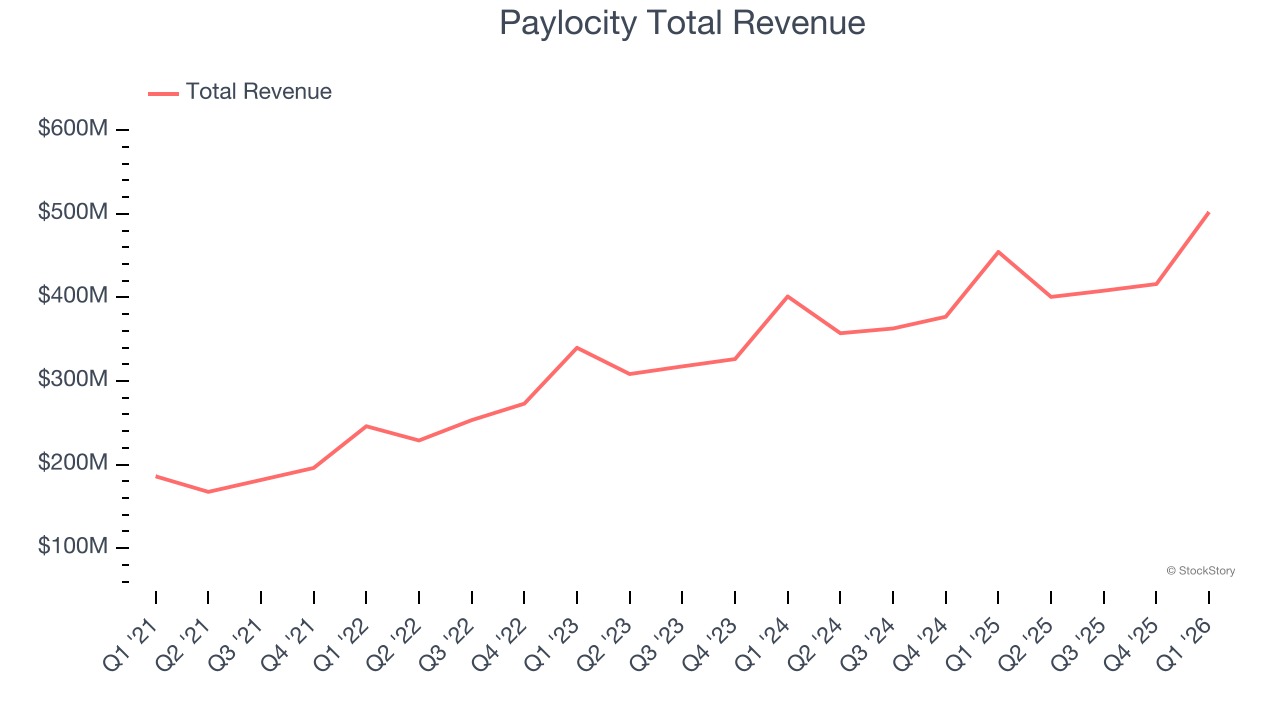
Paylocity scored the biggest analyst estimate beat, highest guidance raise, and highest full-year guidance raise of the whole group. Investor expectations, however, were likely higher than Wall Street’s published projections, leaving some wishing for even better results (analysts’ consensus estimates are those published by big banks and advisory firms, not the investors who make buy and sell decisions). The stock is down 7.3% since reporting and currently trades at $101.18.
Is now the time to buy Paylocity? Access our full analysis of the earnings results here, it’s free.
Paychex (NASDAQ: PAYX)
Once known as the go-to service for small business payroll needs, Paychex (NASDAQ: PAYX) provides payroll processing, HR services, employee benefits administration, and insurance solutions to small and medium-sized businesses.
Paychex reported revenues of $1.81 billion, up 19.9% year on year, outperforming analysts’ expectations by 1.5%. The business had a satisfactory quarter with a narrow beat of analysts’ EBITDA estimates.
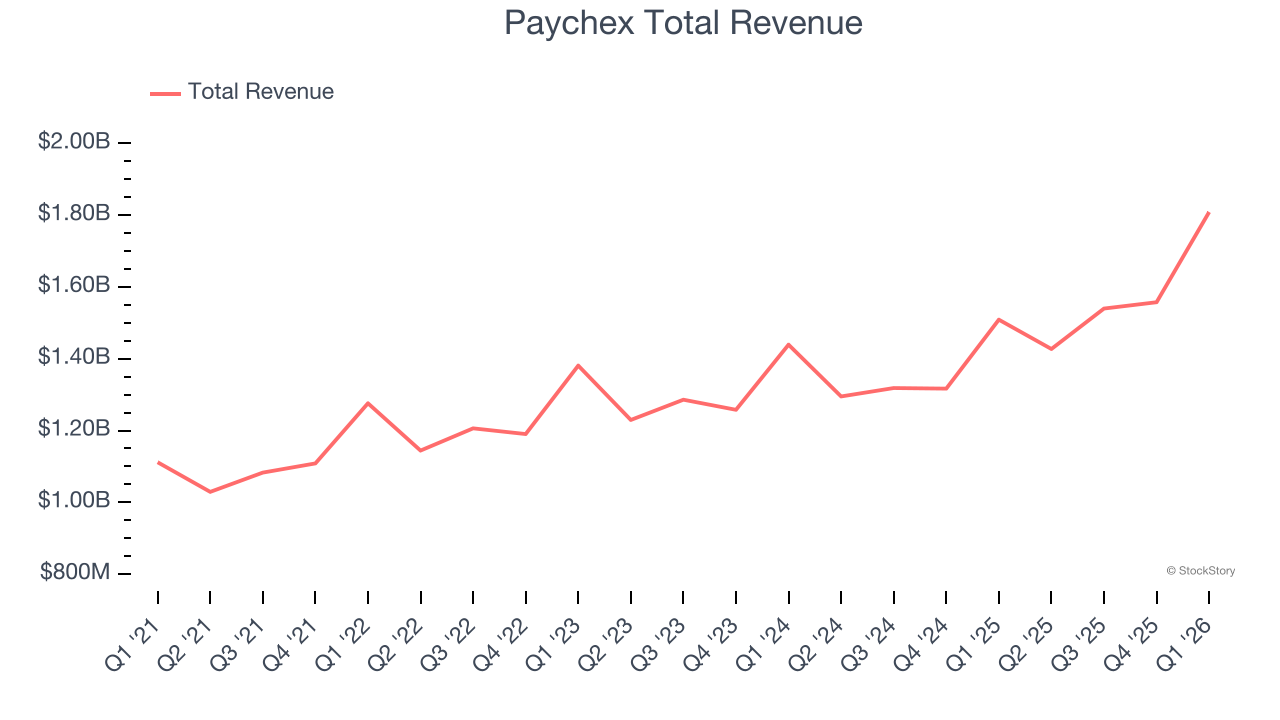
The market seems happy with the results as the stock is up 7.3% since reporting. It currently trades at $97.22.
Is now the time to buy Paychex? Access our full analysis of the earnings results here, it’s free.
Weakest Q1: Asure Software (NASDAQ: ASUR)
Operating in the often-overlooked smaller metropolitan markets where HR expertise can be scarce, Asure Software (NASDAQ: ASUR) provides cloud-based human capital management software and services that help small and medium-sized businesses manage payroll, taxes, time tracking, and HR compliance.
Asure Software reported revenues of $42.76 million, up 22.7% year on year, exceeding analysts’ expectations by 2.1%. Still, it was a slower quarter as it posted EBITDA guidance for next quarter missing analysts’ expectations significantly and a miss of analysts’ billings estimates.
Asure Software delivered the fastest revenue growth but had the weakest guidance update in the group. As expected, the stock is down 8.7% since the results and currently trades at $8.26.
Read our full analysis of Asure Software’s results here.
Paycom (NYSE: PAYC)
Pioneering the concept of employees doing their own payroll with its "Beti" technology, Paycom (NYSE: PAYC) provides cloud-based human capital management software that helps businesses manage the entire employment lifecycle from recruitment to retirement.
Paycom reported revenues of $571.8 million, up 7.8% year on year. This number beat analysts’ expectations by 1.4%. Aside from that, it was a mixed quarter as it also logged a decent beat of analysts’ EBITDA estimates and full-year revenue guidance meeting analysts’ expectations.
Paycom had the weakest performance against analyst estimates, slowest revenue growth, and weakest full-year guidance update among its peers. The stock is flat since reporting and currently trades at $125.33.
Read our full, actionable report on Paycom here, it’s free.
Market Update
Late in 2025 into early 2026, there was hand-wringing around artificial intelligence. For software companies, the fear was that AI would erode pricing power and compress margins as new tools made it easier to replicate what once required expensive enterprise platforms. Crypto investors had their own version of the same anxiety: if AI agents could trade, allocate capital, and manage wallets autonomously, what exactly was the long-term value of today’s crypto infrastructure?
These concerns triggered a noticeable rotation away from these sectors and into safer havens. But markets rarely dwell on one narrative for long. Spring 2026 came, and the focus shifted abruptly from technological disruption to geopolitical risk. The US’ conflict with Iran became the dominant driver of market psychology, and when geopolitics takes center stage, the script changes quickly. Investors stop debating growth rates and start worrying about oil supply, inflation, and global stability.
Want to invest in winners with rock-solid fundamentals? Check out our Hidden Gem Stocks and add them to your watchlist. These companies are poised for growth regardless of the political or macroeconomic climate.
StockStory’s analyst team — all seasoned professional investors — uses quantitative analysis and automation to deliver market-beating insights faster and with higher quality.