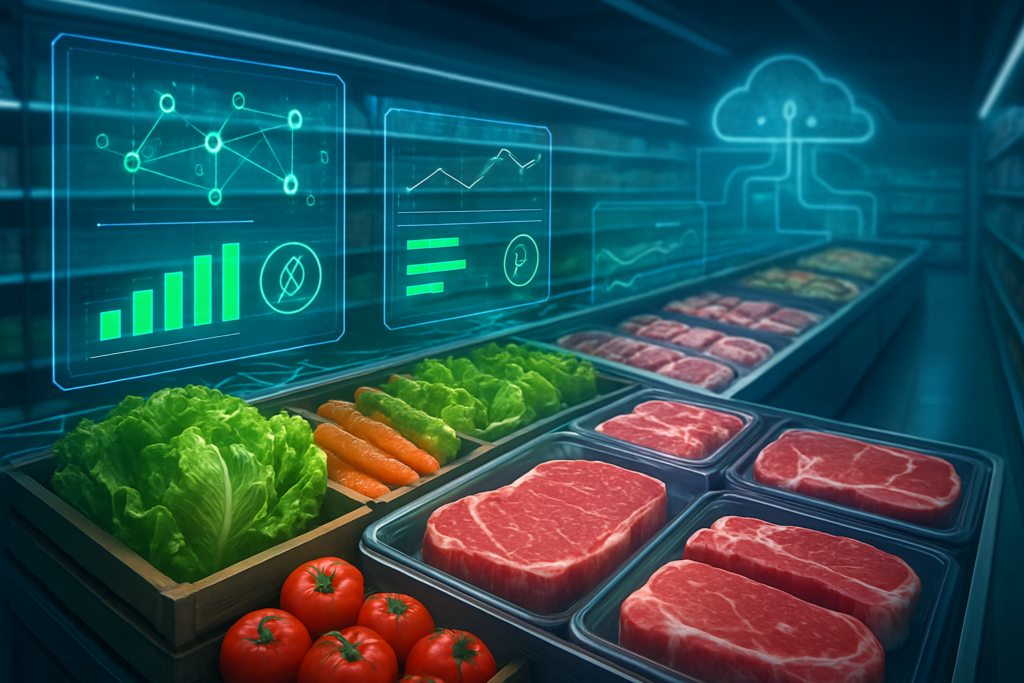
In a move that signals a paradigm shift for regional grocery chains, Stater Bros. Markets announced on January 15, 2026, that it is significantly expanding its artificial intelligence footprint to manage its entire fresh food operation. The San Bernardino-based retailer, which operates 169 stores across Southern California, is scaling its partnership with Afresh Technologies to integrate AI-driven demand forecasting and inventory management into its meat, seafood, deli, and bakery departments. This expansion follows a highly successful implementation in its produce divisions throughout 2025, marking one of the most comprehensive "fresh-first" AI deployments in North American retail.
The move comes at a critical juncture for the grocery industry, where razor-thin margins and mounting pressure to reduce environmental impact have made food waste a billion-dollar problem. By leveraging machine learning to predict exactly how many ribeye steaks or sourdough loaves a specific neighborhood store will sell on a Tuesday afternoon, Stater Bros. is moving away from the era of manual "gut-feeling" ordering. This transition not only promises to bolster the bottom line but also fundamentally changes the role of the store associate, shifting them from inventory counters to quality curators.
Precision in the Perimeter: The Technical Edge of the Fresh Store Suite
The core of this expansion is the "Fresh Store Suite," a specialized AI platform developed by Afresh. Unlike traditional inventory management systems used by giants like Walmart Inc. (NYSE: WMT) or Kroger Co. (NYSE: KR) for "center-store" items—packaged goods with long shelf lives—the Afresh platform is built for the volatility of perishables. It accounts for "unmeasured" loss, such as moisture evaporation in meat or the variable shelf life of organic strawberries. The technical architecture ingest billions of data points, including hyperlocal weather patterns, regional holiday trends, and real-time vendor delivery schedules, to produce item-level ordering recommendations that are over 90% automated.
One of the most significant technical advancements in this 2026 rollout is the integration of "Intelligent Inventory." Previously, store associates spent hours conducting manual "backroom counts" with clipboards. The new system uses a mobile-first interface where the AI estimates current stock levels, requiring associates only to verify discrepancies. This has reportedly reduced the time spent on inventory audits by 50%. Furthermore, the system now features "Production Planning," which tells deli and bakery teams precisely how many pre-cut fruit bowls or sandwiches to prepare throughout the day, significantly reducing the "shrink" of prepared foods that often end up in landfills at closing time.
The retail technology community has praised the rollout for its focus on the "Fresh DC Forecast." By connecting store-level demand directly to Stater Bros.' distribution centers, the AI creates a "synchronized supply chain." This ensures that the warehouse only orders what the stores can realistically sell before the product loses quality. This differs from legacy systems that often push inventory to stores based on bulk purchasing deals rather than actual consumer demand, a practice that frequently leads to store-level waste.
The Competitive Landscape: Regional Grocers Fight Back with Intelligence
This aggressive expansion places Stater Bros. at the forefront of a technological arms race in the grocery sector. While tech giants like Microsoft Corp (NASDAQ: MSFT) provide the cloud infrastructure and Azure AI services that underpin many retail operations, and NVIDIA Corporation (NASDAQ: NVDA) supplies the hardware necessary for real-time demand processing, specialized startups like Afresh are proving to be the "secret sauce" for regional players. By adopting these tools, Stater Bros. is successfully insulating its market share against larger competitors and even tech-heavy delivery platforms like Maplebear Inc. (Instacart) (NASDAQ: CART).
The strategic advantage of this AI deployment is two-fold. First, it allows a regional chain to operate with the efficiency of a national conglomerate without the massive overhead of a custom-built proprietary system. Second, it improves the "Freshness Index"—a metric increasingly used by consumers to decide where to shop. As supply chain volatility persists globally, companies that can guarantee fresher produce and meat through superior forecasting gain a distinct competitive edge. This has forced other players in the space, such as Albertsons Companies, Inc. (NYSE: ACI), to accelerate their own AI roadmaps to avoid falling behind in inventory accuracy and waste reduction.
Wider Significance: Sustainability Meets the Bottom Line
Beyond the financial metrics, the Stater Bros. expansion is a landmark event for the broader AI landscape's role in environmental, social, and governance (ESG) goals. Food waste is estimated to account for nearly 8% of global greenhouse gas emissions. In the 2025 produce rollout, Stater Bros. reported a staggering 25% reduction in food waste. Scaling this across the meat and deli departments—where the carbon footprint of production is significantly higher—suggests that AI could be the single most effective tool the retail industry has for achieving sustainability targets.
The success of this deployment also challenges the narrative that AI will lead to widespread job displacement in retail. Instead of replacing workers, the system is designed to act as an "intelligent assistant." By automating the mundane and error-prone task of manual ordering, Stater Bros. has been able to reallocate labor hours toward customer-facing roles and enhanced food preparation. This follows a broader trend in the industry where human-AI collaboration is seen as the future of physical retail, mirroring the way companies like Symbotic Inc. (NASDAQ: SYM) have used robotics to assist, rather than replace, warehouse labor.
Looking Ahead: Computer Vision and the Autonomous Supply Chain
In the near term, experts predict that Stater Bros. will likely look to integrate computer vision technology to further refine its inventory data. By using shelf-mounted cameras or mobile-robot units—similar to those provided by companies like SPS Commerce, Inc. (NASDAQ: SPSC) for data integration—the AI could identify "out-of-stock" items in real-time without any human intervention. There is also potential for the AI to begin managing "dynamic pricing," where the system automatically lowers the price of meat approaching its expiration date to ensure it sells, a feature already being piloted in several European markets.
However, the long-term challenge remains data silos. While Stater Bros. has successfully integrated its internal distribution centers, the next frontier is "upstream" integration with farmers and processors. If the AI can tell a poultry farm exactly how many chickens will be needed in the Inland Empire three weeks from now, the entire food system becomes more resilient. The primary hurdle will be standardizing data formats across disparate suppliers and maintaining data security in an increasingly connected ecosystem.
A New Blueprint for the Modern Grocer
The full-scale expansion of AI at Stater Bros. is more than just a software upgrade; it is a blueprint for the future of the American supermarket. By prioritizing "fresh" and using AI to solve the most difficult logistical problems in the store, Stater Bros. has demonstrated that regional grocers can not only survive but thrive in the age of digital transformation. The key takeaways are clear: inventory accuracy is the foundation of profitability, and sustainability is no longer a PR initiative—it is a byproduct of operational excellence.
As we move through 2026, the industry will be watching Stater Bros.' quarterly performance closely to see if the 3% sales lift and 80% reduction in out-of-stocks seen in produce can be replicated in more complex departments like the bakery and deli. If successful, it is likely that "Fresh AI" will move from being a competitive advantage to a mandatory requirement for any grocer wishing to remain relevant in the late 2020s.
This content is intended for informational purposes only and represents analysis of current AI developments.
TokenRing AI delivers enterprise-grade solutions for multi-agent AI workflow orchestration, AI-powered development tools, and seamless remote collaboration platforms.
For more information, visit https://www.tokenring.ai/.