Let’s dig into the relative performance of Arlo Technologies (NYSE: ARLO) and its peers as we unravel the now-completed Q1 specialized technology earnings season.
Companies in this sector, especially if they invest wisely, could see demand tailwinds as the world moves towards more IoT (Internet of Things), automation, and analytics. Enterprises across most industries will balk at taking these journeys solo and will enlist companies with expertise and scale in these areas. However, headwinds could include rising competition from larger technology firms, as digitization lowers barriers to entry in the space. Additionally, companies in the space will likely face evolving regulatory scrutiny over data privacy, particularly for surveillance and security technologies. This could make companies have to continually pivot and invest.
The 8 specialized technology stocks we track reported a very strong Q1. As a group, revenues beat analysts’ consensus estimates by 4.2% while next quarter’s revenue guidance was in line.
Amidst this news, share prices of the companies have had a rough stretch. On average, they are down 10.4% since the latest earnings results.
Arlo Technologies (NYSE: ARLO)
Originally spun off from networking equipment maker Netgear in 2018, Arlo Technologies (NYSE: ARLO) provides cloud-based smart security devices and subscription services that help consumers and businesses monitor and protect their homes, properties, and loved ones.
Arlo Technologies reported revenues of $150.4 million, up 26.3% year on year. This print exceeded analysts’ expectations by 7.6%. Overall, it was an exceptional quarter for the company with a beat of analysts’ EPS and revenue estimates.
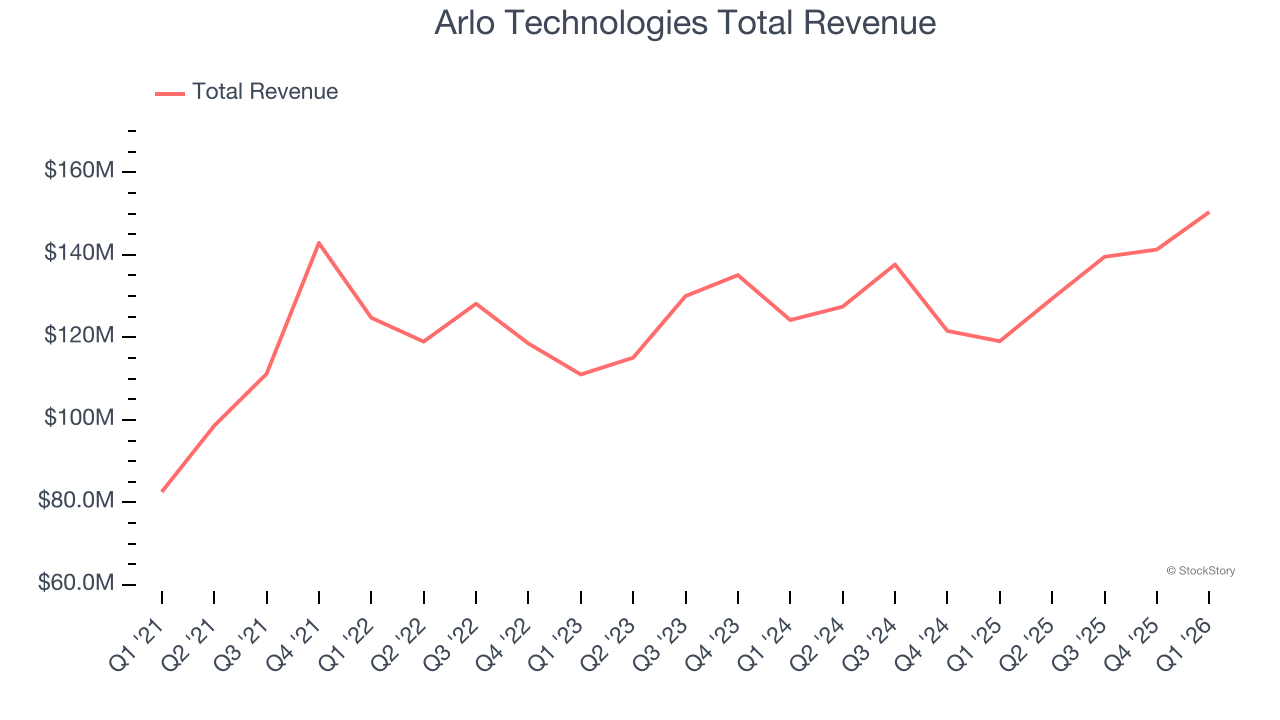
Investor expectations, however, were likely higher than Wall Street’s published projections, leaving some wishing for even better results (analysts’ consensus estimates are those published by big banks and advisory firms, not the investors who make buy and sell decisions). The stock is down 15.7% since reporting and currently trades at $12.56.
Best Q1: Cognex (NASDAQ: CGNX)
Founded in 1981 when computer vision was in its infancy, Cognex (NASDAQ: CGNX) develops machine vision systems and software that help manufacturers and logistics companies automate quality inspection and tracking of products.
Cognex reported revenues of $268.4 million, up 24.3% year on year, outperforming analysts’ expectations by 9.3%. The business had an incredible quarter with a beat of analysts’ EPS and revenue estimates.
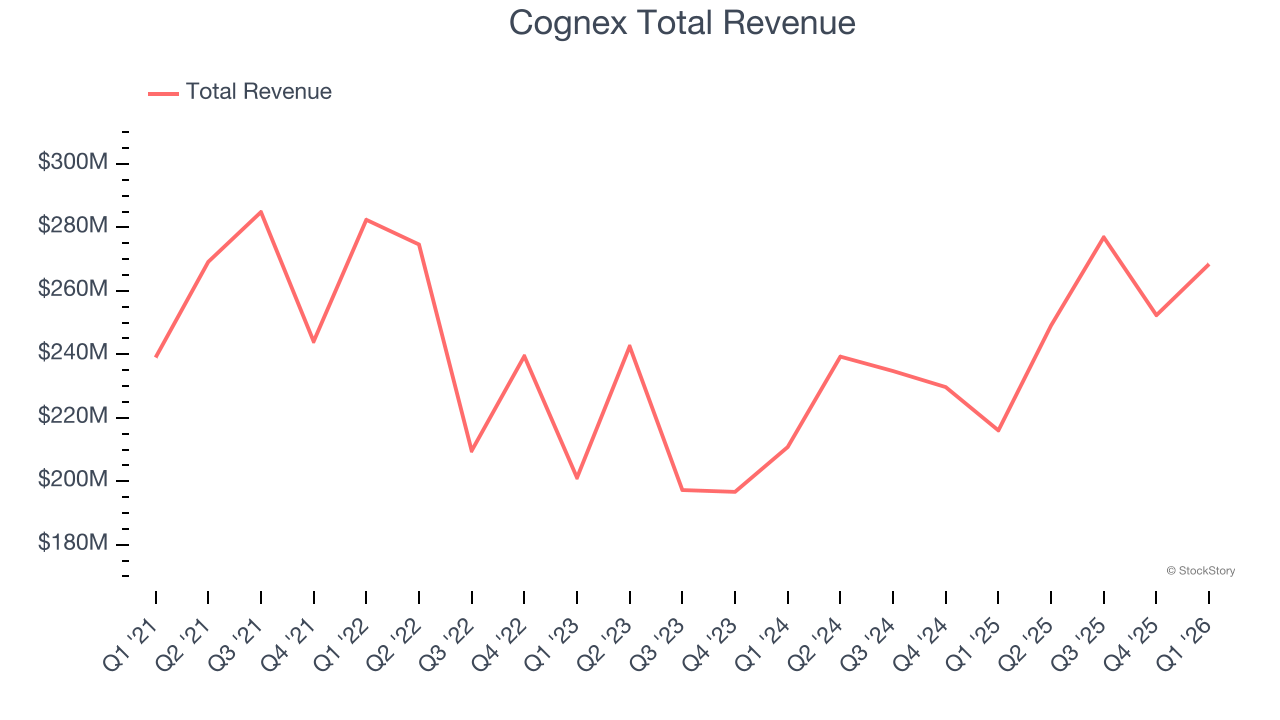
Cognex scored the biggest analyst estimate beat among its peers. However, the results were likely priced into the stock as it’s traded sideways since reporting. Shares currently sit at $62.87.
Is now the time to buy Cognex? Access our full analysis of the earnings results here, it’s free.
Weakest Q1: OSI Systems (NASDAQ: OSIS)
With security scanners deployed at airports and borders worldwide and patient monitors used in hospitals across the globe, OSI Systems (NASDAQ: OSIS) designs and manufactures specialized electronic systems for security screening, patient monitoring, and optoelectronic applications.
OSI Systems reported revenues of $453.2 million, up 2% year on year, exceeding analysts’ expectations by 1.4%. Still, it was a mixed quarter as it posted full-year EPS guidance in line with analysts’ estimates.
OSI Systems delivered the highest full-year guidance raise but had the slowest revenue growth in the group. As expected, the stock is down 18.4% since the results and currently trades at $230.86.
Read our full analysis of OSI Systems’s results here.
PAR Technology (NYSE: PAR)
Originally founded in 1968 as a defense contractor for the U.S. government, PAR Technology (NYSE: PAR) provides cloud-based software, payment processing, and hardware solutions that help restaurants manage everything from point-of-sale to customer loyalty programs.
PAR Technology reported revenues of $124 million, up 19.4% year on year. This result topped analysts’ expectations by 6.3%. It was a stunning quarter as it also put up an impressive beat of analysts’ ARR and EPS estimates.
PAR Technology had the weakest full-year guidance update among its peers. The stock is down 3.1% since reporting and currently trades at $14.53.
Read our full, actionable report on PAR Technology here, it’s free.
Crane NXT (NYSE: CXT)
Born from a corporate transformation completed in 2023, Crane NXT (NYSE: CXT) provides specialized technology solutions for payment processing, banknote security, and authentication systems for financial institutions and businesses.
Crane NXT reported revenues of $387.7 million, up 17.4% year on year. This number surpassed analysts’ expectations by 2.5%. Overall, it was a strong quarter as it also recorded an impressive beat of analysts’ revenue and EPS estimates.
The stock is down 12.4% since reporting and currently trades at $39.98.
Read our full, actionable report on Crane NXT here, it’s free.
Market Update
Late in 2025 into early 2026, there was hand-wringing around artificial intelligence. For software companies, the fear was that AI would erode pricing power and compress margins as new tools made it easier to replicate what once required expensive enterprise platforms. Crypto investors had their own version of the same anxiety: if AI agents could trade, allocate capital, and manage wallets autonomously, what exactly was the long-term value of today’s crypto infrastructure?
These concerns triggered a noticeable rotation away from these sectors and into safer havens. But markets rarely dwell on one narrative for long. Spring 2026 came, and the focus shifted abruptly from technological disruption to geopolitical risk. The US’ conflict with Iran became the dominant driver of market psychology, and when geopolitics takes center stage, the script changes quickly. Investors stop debating growth rates and start worrying about oil supply, inflation, and global stability.
Want to invest in winners with rock-solid fundamentals? Check out our Top 5 Quality Compounder Stocks and add them to your watchlist. These companies are poised for growth regardless of the political or macroeconomic climate.
StockStory’s analyst team — all seasoned professional investors — uses quantitative analysis and automation to deliver market-beating insights faster and with higher quality.