(BPT) - If your child has trouble seeing the board at school, squints at things across the room or needs to sit closer to the television, myopia could be the reason. But myopia is more than simply needing glasses to see far away - and today, parents have more options than ever to help manage it.
What is myopia and why is it becoming more common?
Myopia, commonly called nearsightedness, is a condition in which objects further away appear blurry, while close-up objects are usually clear. It often begins during childhood and may continue to progress or worsen as a child grows, usually stabilizing in late teens or early adulthood. Parents think myopia means blurry vision because the prescription is increasing but it's more than that - it's not a benign condition. Myopia leads to the eyeball growing too fast and too long - leading to the abnormal stretching of the eye and potentially other eye health complications in future. Correcting vision alone does not address the excessive eye growth in myopia.
Myopia is becoming increasingly common. In the United States, its prevalence has increased from 26% to 42% between 1972 to 2002,1 and worldwide estimates suggest that nearly half of the population may have myopia by 2050.2
The increase in school-age myopia we are seeing today is predominantly driven by lifestyle factors while genetics can predispose a child.3 Children with parents who have myopia are also at greater risk of developing myopia.3 Studies show that children should spend at least 2 hours outside daily and it is the lack of time outdoors that is a major risk for myopia development as well as prolonged near work.3,4 Children today often spend more time doing close-up activities and less time outdoors.3,4. The role of digital devices in myopia is not clear but it is good to establish good visual hygiene and limit screen time, according to the screen guidelines set by the American Academy of Pediatrics.7
The good news is that there are steps families can take.
Why "just knowing" isn't the finish line
Recognizing the signs of myopia is important, but awareness alone doesn't protect a child's vision. The next step is making sure vision concerns lead to appropriate eye care. Vision screenings at school or at the pediatrician's office can identify some children who may have a vision problem, but a screening is not the same thing as a complete evaluation of a child's eyes and vision.
Keep in mind that children may assume their vision is normal because it is the only vision they know. Through comprehensive eye examinations, eye care professionals can identify myopia and assess children who may be at increased risk of developing it as well as other childhood conditions. Factors such as family history, near-work habits and time spent outdoors can help provide a more complete picture of a child's risk.3,4 The doctor can also help parents recognize vision-related signs that might otherwise be attributed to behavior, attention or school performance.
What early intervention actually looks like
For generations, the usual response to childhood myopia was straightforward: When a child's vision became blurrier, the prescription was increased. But today, the conversation has changed. Traditional single-vision glasses and contact lenses correct blurry vision, but myopia management is intended to do something more: slow the rate at which myopia progresses.3,5
Myopia should be managed as soon as it is detected given that the fastest rate of increase tends to be at the earlier ages and thus is the critical time to intervene.3 Today there are a number of options available to manage myopia: there is an FDA-authorized myopia management spectacle lens called Essilor® Stellest® lenses6 and an FDA approved contact lens called Coopervision® Misight® 1 Day.3 These correct myopia while slowing its progression at the same time. In addition, there are also overnight reshaping lenses.3 Your eye care professional will determine the appropriate treatment for your child based on their clinical and lifestyle factors as well as age.
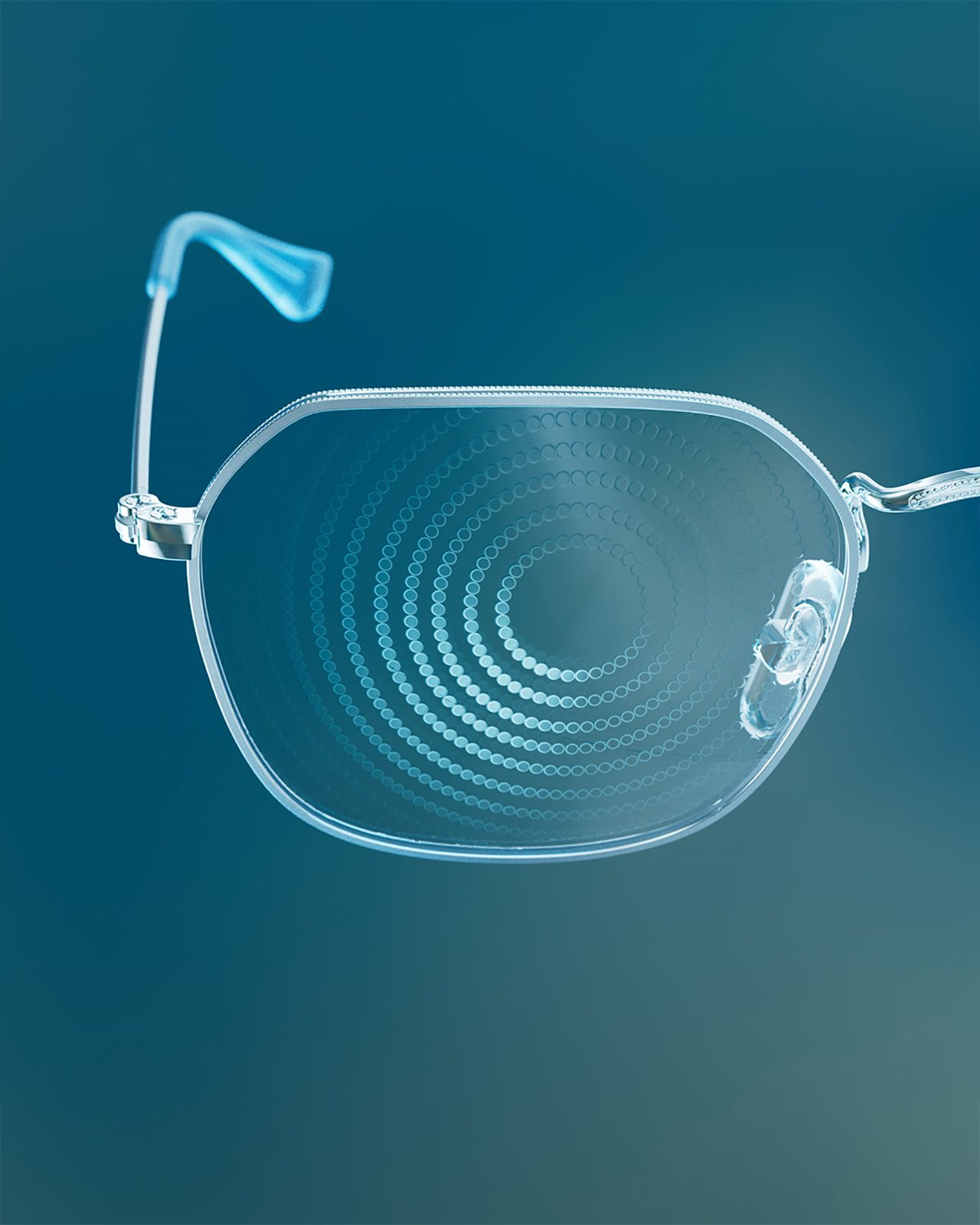
Since Essilor® Stellest® Lenses were approved by the FDA in September 2025, we have trained more than 30,000 eye care professionals on myopia management and the role of Essilor® Stellest® to help address this growing public health concern. Essilor® Stellest® Lenses were authorized by the FDA with language recognizing myopia progression as a disease, helping elevate the conversation beyond simple vision correction toward proactive disease management.
Small daily habits can make a difference
Healthy visual habits can start today. Spend more time outdoors. Research has consistently demonstrated that increased outdoor time delays the development of myopia in children.3,4
- Make outdoor play and activities part of the family's regular routine.
- Give the eyes regular breaks. Long periods of uninterrupted close-up work should be broken up.7
- Be thoughtful about screens and other near work. Screens are part of children's lives, and the goal isn't necessarily to eliminate them. Instead, avoid unnecessarily prolonged recreational screen time, encourage breaks and remember that books, homework, phones, tablets and other close-up activities all contribute to time spent focusing at near.3,4
- Don't hold things too close. Encourage children to maintain a comfortable working distance rather than bringing books, phones or tablets very close to their face. Very close working distances and long periods of continuous near work have been associated with myopia.3,4
Most importantly, these habits should complement - not replace - professional eye care or prescribed myopia management.
Why does acting now matter?
Myopia often progresses throughout childhood. That means the changes that occur from year to year can add up. Higher levels of myopia later in life are associated with a greater risk of several eye diseases and that risk increases as the amount of myopia increases.5,8 That's one reason the goal today isn't simply to help a child see clearly with the next pair of glasses. When appropriate, it is also to slow the progression of myopia while the eyes are still growing.
There is no single approach that's right for every child. But there is an important first step for every parent who has concerns: Don't just watch and wait. Start the conversation. Schedule an eye examination with an eye care professional.
A simple parent action checklist
- Watch for squinting, blurry distance vision, headaches, eye rubbing or difficulty focusing.
- Ask open-ended questions about what your child actually sees.
- Follow recommended childhood vision screening and eye-care guidance.
- If your child has myopia, ask whether it is progressing.
- Ask your eye care professional about available myopia-management options.
- Encourage regular outdoor time.
- Break up prolonged periods of close work and screen use.
- Try the 20-20-20 rule.
- Use an eye care professional locator to find a provider near you.
Myopia may be common, but that doesn't mean parents have to simply watch it progress. Knowing the signs, building healthy visual habits and starting the conversation with an eye care professional can help families act earlier.
For more information, visit essilor.com.
References
1. Vitale S, Sperduto RD, Ferris FL 3rd. Increased prevalence of myopia in the United States between 1971-1972 and 1999-2004. Arch Ophthalmol. 2009;127(12):1632-1639. doi:10.1001/archophthalmol.2009.303.
2. Holden BA, Fricke TR, Wilson DA, et al. Global prevalence of myopia and high myopia and temporal trends from 2000 through 2050. Ophthalmology. 2016;123(5):1036-1042. doi:10.1016/j.ophtha.2016.01.006.
3. Gifford KL, Richdale K, Kang P, et al. IMI - Clinical management guidelines report. Invest Ophthalmol Vis Sci. 2019;60(3).
4. Morgan IG, Wu PC, Ostrin LA, et al. IMI risk factors for myopia. Invest Ophthalmol Vis Sci. 2021;62(5):3. doi:10.1167/iovs.62.5.3.
5. Bullimore MA, Brennan NA. Myopia control: why each diopter matters. Optom Vis Sci. 2019;96(6):463-465. doi:10.1097/OPX.0000000000001367.
6. U.S. FDA. FDA authorizes marketing of first eyeglass lenses to slow progression of pediatric myopia. Sep 2025. https://www.fda.gov/news-events/press-announcements/fda-authorizes-marketing-first-eyeglass-lenses-slow-progression-pediatric-myopia
7. American Academy of Ophthalmology. Computers, digital devices and eye strain. American Academy of Ophthalmology. Accessed August 26, 2026.
8. Haarman AEG, Enthoven CA, Tideman JWL, Tedja MS, Verhoeven VJM, Klaver CCW. The complications of myopia: a review and meta-analysis. Invest Ophthalmol Vis Sci. 2020;61(4):49. doi:10.1167/iovs.61.4.49.