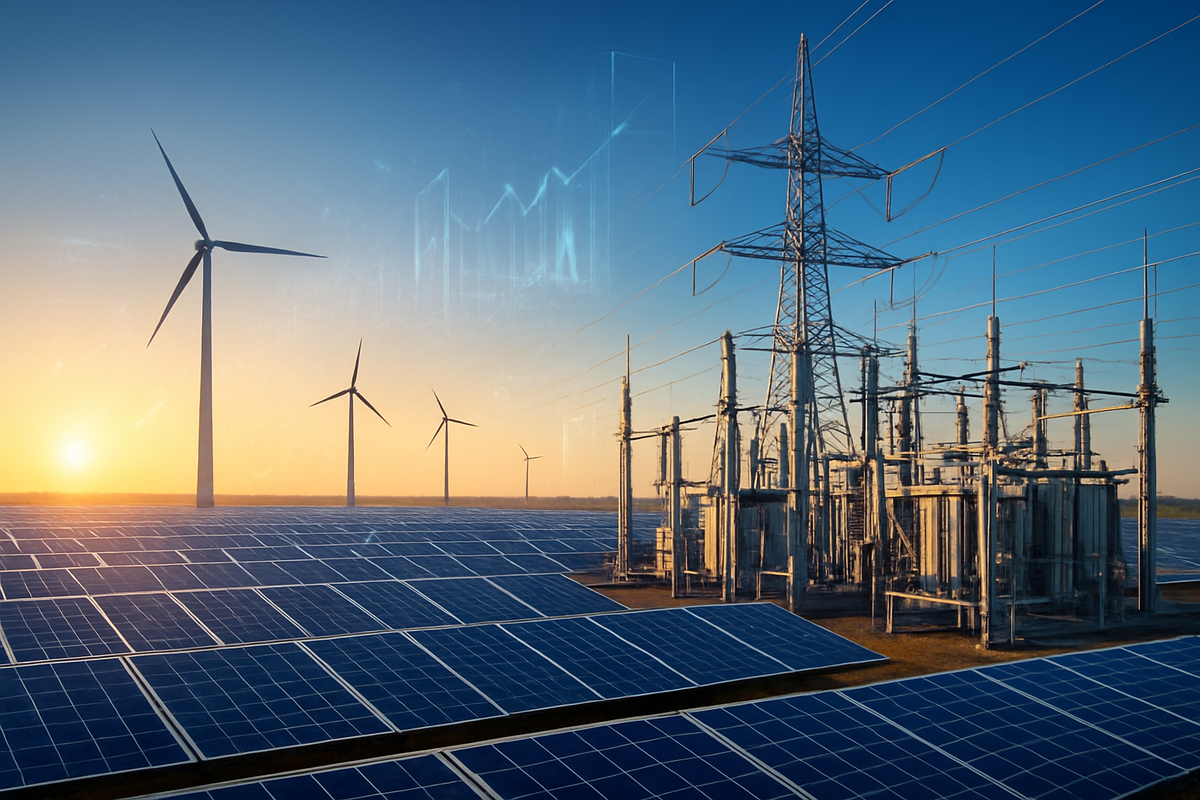
In a move that signals a paradigm shift for the American power grid, a powerhouse consortium led by BlackRock’s (NYSE: BLK) Global Infrastructure Partners (GIP) and EQT Infrastructure has entered into a definitive agreement to take The AES Corporation (NYSE: AES) private. The $33.4 billion enterprise-value deal, announced in early March 2026, values the energy giant at $15.00 per share in an all-cash transaction. This acquisition marks one of the largest utility take-privates in history, aimed squarely at shielding the company from the volatile public markets while it undergoes a massive, capital-intensive expansion of its clean energy and data center-focused infrastructure.
The immediate implications for the market are profound. By removing AES from the public eye, the new owners intend to aggressively deploy capital into the "electrification of everything," specifically targeting the insatiable energy demands of artificial intelligence and hyperscale data centers. However, the $15.00 per share price tag has sparked a heated debate among investors; while it represents a 40% premium over 2025 lows, it sits below the stock’s peak trading price from just months ago, highlighting the growing valuation gap between how public and private markets price long-term energy transitions.
The Path to Private Ownership: A Strategic Retreat from Public Volatility
The agreement follows nearly a year of speculation that began in July 2025, when rumors first surfaced of a multi-firm interest in AES’s massive global backlog of renewable projects. The consortium, which includes heavyweights like the California Public Employees' Retirement System (CalPERS) and the Qatar Investment Authority (QIA), positioned its 100% equity-funded bid as a way to preserve AES’s investment-grade credit profile. For AES, the decision to accept was driven by a "capital structure crisis." By late 2025, the company had amassed $29.9 billion in debt to fund its 12.0 GW project backlog, leaving management with a grim choice: slash the dividend, issue dilutive new shares, or find a private partner with deeper pockets.
Industry reaction has been a mix of awe and caution. Market analysts note that the timeline for the deal’s closure—targeted for late 2026 or early 2027—will be heavily scrutinized by federal and state regulators. The deal comes at a time when AES is scaling its most ambitious projects to date, including the second phase of the Bellefield Solar + Storage facility in California, which is contracted to provide massive amounts of clean energy to Amazon.com Inc. (NASDAQ: AMZN). The acquisition essentially turns AES into a private powerhouse dedicated to serving the energy needs of Big Tech, free from the pressure of quarterly earnings reports.
Winners and Losers: High-Stakes Shifts in the Energy Sector
The clear winners in this transaction appear to be the private equity firms and the tech "hyperscalers." For BlackRock and EQT, the acquisition secures a platform with a 46 GW U.S. development pipeline during a decade of projected 5.7% annual load growth. Tech giants like Amazon, Microsoft Corp. (NASDAQ: MSFT), and Alphabet Inc. (NASDAQ: GOOGL) also stand to gain, as a privately-held AES can pivot more quickly to build dedicated "behind-the-meter" power solutions for their AI data centers without having to justify the upfront capital expenditures to public equity analysts.
Conversely, public market investors who held AES for its dividend and long-term "green utility" growth may feel short-changed. At $15.00 per share, some long-term bulls argue the consortium is acquiring a premiere renewable portfolio at a discount during a temporary dip in public utility valuations. Furthermore, local consumers in states like Ohio and Indiana may find themselves on the "losing" end of transparency; as AES moves into private hands, the public’s ability to scrutinize its financial health and long-term investment strategies will be significantly diminished, a concern already being voiced by state utility boards.
The Great Utility Land Grab: A New Industry Standard
The AES deal does not exist in a vacuum; it is the crowning achievement of a broader "private equity takeover" of the U.S. power grid. In 2025, similar deals for firms like Allete (NYSE: ALE) and interest in TXNM Energy demonstrated that infrastructure funds see utilities not as stagnant defensive plays, but as high-growth AI engines. This event highlights a growing trend where the massive capital requirements for the energy transition—estimated in the trillions—are becoming too burdensome for traditional public utility models to bear.
The regulatory ripple effects will be significant. As more essential infrastructure moves into the hands of global investment firms, federal agencies like FERC and CFIUS are expected to implement more rigorous oversight of ownership structures. Historically, utilities were the bedrock of "widow and orphan" stocks—stable, transparent, and public. The AES acquisition sets a precedent that the future of the grid may belong to sophisticated private consortia capable of managing the high-leverage, long-duration risks associated with 24/7 carbon-free energy goals.
Navigating the Regulatory Labyrinth and Beyond
Looking ahead, the road to closing the deal remains fraught with challenges. Short-term, AES management must navigate a "lame duck" period where they must maintain operations while awaiting regulatory approval. The recent withdrawal of the 320 MW Seguro battery project in San Diego due to local opposition highlights the "NIMBY" (Not In My Backyard) challenges that no amount of private capital can easily solve. Strategic pivots are expected, with the consortium likely to double down on "Maximo," AES’s AI-enabled robotic solar installation system, to drive down labor costs and accelerate deployment.
Market opportunities will emerge for remaining public competitors such as NextEra Energy (NYSE: NEE) and Duke Energy (NYSE: DUK), which may find themselves as the last remaining vehicles for public investors to gain exposure to the U.S. electrification trend. However, if the AES private model proves successful at de-risking massive infrastructure builds, it could trigger a "domino effect," where other debt-laden utilities seek private buyouts to fund their own clean energy transitions.
Wrap-Up: The New Face of Energy Infrastructure
The $33.4 billion take-private of AES Corporation is a watershed moment for the financial markets. It marks the transition of the energy sector from a public-interest utility model to a high-stakes, private infrastructure asset class. The key takeaway for investors is the undeniable link between AI growth and power generation; the world's largest asset managers are betting billions that owning the "pipes and wires" of the clean energy economy is the most profitable way to play the technology boom.
As the market moves forward, the success of this deal will be judged by the consortium's ability to navigate increasing populist pushback and state-level regulatory hurdles. For now, the AES deal serves as a stark reminder that the "electrification of everything" requires a scale of capital that the public markets may no longer be willing to provide alone. Investors should watch for the official closing in late 2026 and monitor whether state legislators in the Midwest attempt to block or modify the deal to protect local consumer interests.
This content is intended for informational purposes only and is not financial advice.