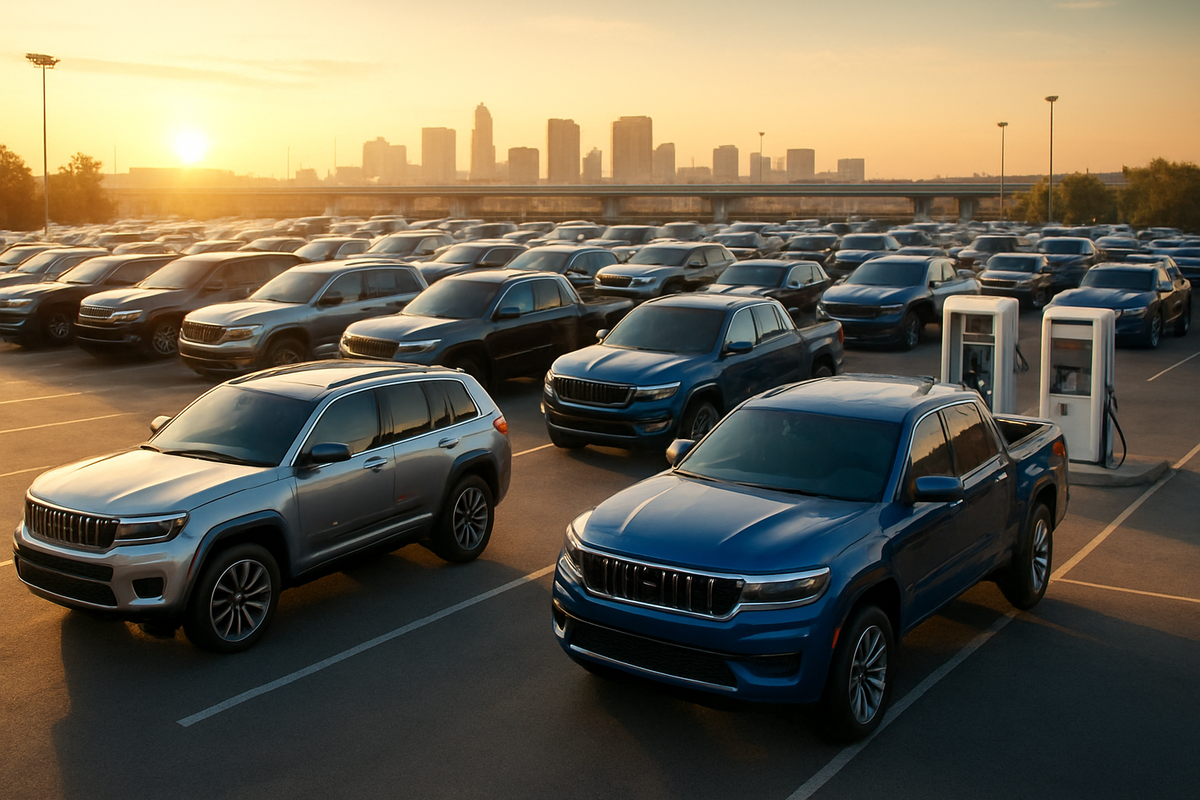
In a surprising turn of events for the automotive sector, Stellantis N.V. (NYSE: STLA) reported a 4% year-over-year increase in its United States first-quarter sales for 2026. This performance marks a significant reversal of fortune for the transatlantic automaker, which had spent much of the previous two years grappling with inventory bloat and a painful product transition. While the broader U.S. light-vehicle market has shown signs of a cautious recovery, Stellantis managed to outpace its primary domestic rivals during a period defined by high borrowing costs and a shifting consumer preference for hybrid technology over pure electrification.
The 4% growth, totaling 305,902 units delivered between January and March, comes at a critical juncture for the company. After a dismal 2025 where sales plummeted to multi-year lows, the Q1 2026 results suggest that the automaker’s “business reset” is finally gaining traction. Investors reacted positively to the news, seeing it as a sign that the company’s pivot toward “multi-energy” platforms—which offer internal combustion, hybrid, and electric options on the same frame—is better aligned with current American consumer demand than the more rigid EV strategies of its competitors.
The "Bottoming Out": A Two-Year Pivot Pays Off
The road to this Q1 growth was paved with significant structural challenges. Throughout 2024 and 2025, Stellantis faced criticism for aging model lineups and a lack of competitive entries in the mid-size SUV segment following the discontinuation of the previous-generation Jeep Cherokee. However, the first quarter of 2026 saw the impact of a refreshed portfolio. The return of the redesigned Jeep Cherokee to showrooms provided a much-needed volume boost, filling a strategic hole that had previously cost the company thousands of monthly sales.
Key to this quarter's success was the performance of the Ram brand, which saw a 20% surge in deliveries. This was driven largely by the arrival of the Ramcharger, a range-extended electric truck that uses a gasoline engine as an onboard generator. By addressing "range anxiety" while maintaining the capability of a traditional pickup, the Ramcharger has become a runaway hit. In contrast, the company’s pure battery-electric (BEV) offerings, such as the Jeep Wagoneer S, struggled significantly, selling only 175 units in Q1 2026—a stark reminder of the cooling demand for high-priced, luxury EVs.
The timeline leading to this recovery was marked by aggressive inventory management. In late 2025, Stellantis engaged in heavy discounting to clear lots of older 2024 models, a move that hurt margins in the short term but cleared the way for the more profitable 2026 lineup. Industry analysts note that this "clearing of the pipes" allowed dealerships to focus on the newer, more tech-forward hybrid models that are currently dominating the "light-vehicle recovery" narrative in the U.S. market.
Winners and Losers in the Detroit Trio
Stellantis’ gain appears to have come at the expense of its Detroit-based rivals. General Motors Company (NYSE: GM) reported a 9.7% decline in Q1 2026 sales, delivering 626,429 units. While GM remains the volume leader in the U.S., its heavy reliance on a rapid transition to pure battery-electric vehicles backfired slightly as consumers pivoted toward the flexibility of hybrids. GM also faced logistical hurdles due to severe weather disruptions early in the year, which hampered truck deliveries from its northern assembly plants.
Similarly, Ford Motor Company (NYSE: F) saw its sales slide by 8.8% to 457,315 units during the same period. Although Ford’s Maverick and F-150 PowerBoost hybrids remain popular, the company is currently navigating several major product transitions that left some showrooms understocked during the Q1 rush. The divergence in performance highlights a growing trend: companies with a diverse mix of powertrain options are currently outperforming those that have moved more aggressively toward an all-electric future.
Other winners in this landscape include luxury segments, which seem insulated from the broader economic pressures. Within the Stellantis portfolio, the Grand Wagoneer saw a staggering 110% surge in sales. This suggests a bifurcated market where high-income buyers are still spending freely on premium SUVs, while price-sensitive consumers are increasingly being pushed toward the used car market or more affordable hybrid crossovers.
Broader Significance: The Death of the "EV-Only" Dream?
This event fits into a broader industry trend that many are calling the "Great Hybrid Pivot." Just three years ago, the narrative in the U.S. market was focused almost exclusively on the transition to zero-emission vehicles. However, the Q1 2026 data confirms a significant shift in the regulatory and consumer landscape. With federal EV tax credits having expired or been significantly curtailed in late 2025, the true "market demand" for electric vehicles is being tested, and for many consumers, the answer is a preference for hybrid versatility.
The ripple effects on competitors and partners are already being felt. Parts suppliers that had retooled exclusively for EV components are now facing a "bridge period" where they must continue producing ICE (internal combustion engine) and hybrid components for longer than originally forecasted. Furthermore, the 4% growth seen by Stellantis may signal to regulators in Washington that a more gradual approach to emissions standards is necessary to maintain the health of the domestic auto industry.
Historically, this period draws comparisons to the post-2008 recovery, where consumers prioritized fuel efficiency and value. However, the 2026 version of this recovery is more complex, involving a mix of high-tech software-defined vehicles and a variety of fueling methods. The success of the "SIXPACK" gasoline-powered Dodge Charger—which outsold its electric "Daytona" counterpart by a 7-to-1 ratio this quarter—is a potent symbol of this modern consumer resistance to a forced EV transition.
What Comes Next: A Summer of Stability?
Looking ahead, the short-term outlook for Stellantis appears stable, but significant hurdles remain. The company has officially delayed the launch of the all-electric Ram 1500 REV until the summer of 2027, citing a need for "quality validation" and a desire to wait for more favorable market conditions. This strategic pivot ensures that the company won't be caught with high-cost EV inventory that it cannot move, but it also risks ceding the "innovator" crown to rivals if the EV market suddenly rebounds.
Market opportunities are likely to emerge in the "entry-level" hybrid space. As fuel prices hover near the $4.00 per gallon mark, the demand for vehicles that can achieve 40+ MPG without requiring a home charging station is expected to peak during the summer driving season. Stellantis' ability to scale production of its new hybrid Cherokee and the Hornet crossover will be the ultimate test of whether this 4% growth is a one-time fluke or the start of a sustained upward trajectory.
In the long term, the industry is watching for a potential "price war" as GM and Ford look to reclaim lost market share. If Stellantis’ competitors begin aggressive incentive programs to move their own stockpiles, the "light-vehicle recovery" could become a race to the bottom for margins, challenging the profitability of the entire sector throughout the remainder of 2026 and into 2027.
Resilience and Rebound: The Investor Takeaway
The Q1 2026 sales report from Stellantis is a masterclass in corporate resilience. By surviving the "inventory hangover" of 2025 and leaning into a flexible powertrain strategy, the company has managed to find growth in a market that is largely stagnant or declining for its peers. The key takeaways for investors are clear: product mix matters more than ever, and "range-extended" technology is currently the preferred bridge for the American truck buyer.
Moving forward, the market remains in a state of flux. While the 4% growth is a positive sign, the collapse of the Wagoneer S and the delay of the Ram REV indicate that the "EV transition" is far from a straight line. Investors should keep a close eye on the company’s margin reports in the coming months to ensure that this sales growth wasn't bought at the expense of profitability through excessive dealer incentives.
As we look toward the second half of 2026, the primary metric to watch will be the "days' supply" of inventory. If Stellantis can keep its lots lean while maintaining this 4% growth clip, it will enter 2027 as a leaner, more formidable player in the global automotive landscape. For now, the "business reset" appears to be working, providing a rare bright spot in an industry still searching for its footing in a post-EV-hype world.
This content is intended for informational purposes only and is not financial advice.