On January 12, 2026, Anthropic fundamentally shifted the trajectory of corporate productivity with the release of Claude Cowork, a research preview that marks the end of the "chatbot era" and the beginning of the "agentic era." Unlike previous iterations of AI that primarily served as conversational interfaces, Cowork is a proactive agent capable of operating directly within a user’s file system and software environment. By granting the AI folder-level autonomy to read, edit, and organize data across local and cloud environments, Anthropic has moved beyond providing advice to executing labor—a development that threatens to upend the established order of enterprise AI.
The immediate significance of this launch cannot be overstated. By targeting the "messy middle" of office work—the cross-application coordination, data synthesis, and file management that consumes the average worker's day—Anthropic is positioning Cowork as a direct competitor to long-standing enterprise platforms. This move has sent shockwaves through the industry, putting legacy providers like C3.ai (NYSE: AI) on notice as the market pivots from heavy, top-down implementations to agile, bottom-up agentic tools that individual employees can deploy in minutes.
The Technical Leap: Multi-Agent Orchestration and Recursive Development
Technically, Claude Cowork represents a departure from the "single-turn" interaction model. Built on a sophisticated multi-agent orchestration framework, Cowork utilizes Claude 4 (the "Opus" tier) as a lead agent responsible for high-level planning. When assigned a complex task—such as "reconcile these 50 receipts against the department budget spreadsheet and flag discrepancies"—the lead agent spawns multiple "sub-agents" using the more efficient Claude 4.5 Sonnet models to handle specific sub-tasks in parallel. This recursive architecture allows the system to self-correct and execute multi-step workflows without constant human prompting.
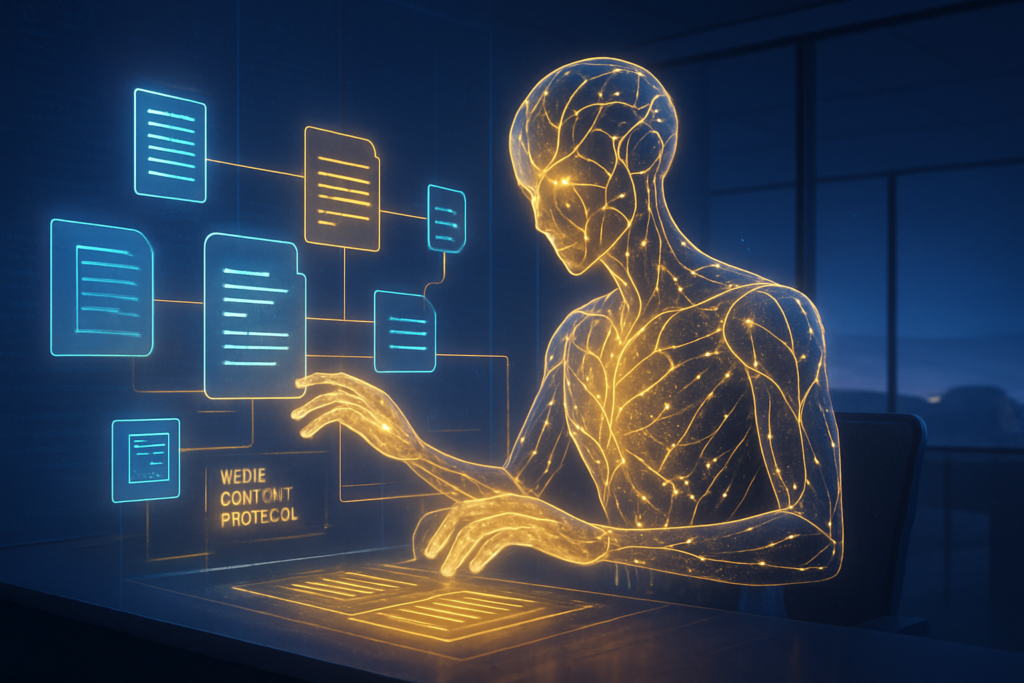
Integration is handled through Anthropic’s Model Context Protocol (MCP), which provides native, standardized connections to essential enterprise tools like Slack, Jira, and Google Drive. Unlike traditional integrations that require complex API mapping, Cowork uses MCP to "see" and "interact" with data as a human collaborator would. Furthermore, the system addresses enterprise security concerns by utilizing isolated Linux containers and Apple’s Virtualization Framework to sandbox the AI’s activities. This ensures the agent only has access to the specific directories granted by the user, providing a level of "verifiable safety" that has become Anthropic’s hallmark.
Initial reactions from the AI research community have focused on the speed of Cowork’s development. Reportedly, a significant portion of the tool was built by Anthropic’s own developers using Claude Code, their CLI-based coding agent, in just ten days. This recursive development cycle—where AI helps build the next generation of AI tools—highlights a velocity gap that legacy software firms are struggling to close. Industry experts note that while existing technology often relied on "AI wrappers" to connect models to file systems, Cowork integrates these capabilities at the model level, rendering many third-party automation startups redundant overnight.
Competitive Disruption: Shifting the Power Balance
The arrival of Cowork has immediate competitive implications for the "Big Three" of enterprise AI: Anthropic, Microsoft (NASDAQ: MSFT), and C3.ai. For years, C3.ai has dominated the market with its "Top-Down" approach, offering massive, multi-million dollar digital transformation platforms for industrial and financial giants. However, Cowork offers a "Bottom-Up" alternative. Instead of a multi-year rollout, a department head can subscribe to Claude Max for $200 a month and immediately begin automating internal workflows. This democratization of agentic AI threatens to "hollow out" the mid-market for legacy enterprise software.
Market analysts have observed a distinct "re-rating" of software stocks in the wake of the announcement. While C3.ai shares saw a 4.17% dip as investors questioned its ability to compete with Anthropic’s agility, Palantir (NYSE: PLTR) remained resilient. Analysts at Citigroup noted that Palantir’s deep data integration (AIP) serves as a "moat" against general-purpose agents, whereas "wrapper-style" enterprise services are increasingly vulnerable. Microsoft, meanwhile, is under pressure to accelerate the rollout of its own "Copilot Actions" to prevent Anthropic from capturing the high-end professional market.
The strategic advantage for Anthropic lies in its focus on the "Pro" user. By pricing Cowork as part of a high-tier $100–$200 per month subscription, they are targeting high-value knowledge workers who are willing to pay for significant time savings. This positioning allows Anthropic to capture the most profitable segment of the enterprise market without the overhead of the massive sales forces employed by legacy vendors.
The Broader Landscape: Toward an Agentic Economy
Cowork’s release is being hailed as a watershed moment in the broader AI landscape, signaling the transition from "Assisted Intelligence" to "Autonomous Agency." Gartner has predicted that tools like Cowork could reduce operational costs by up to 30% by automating routine data processing tasks. This fits into a broader trend of "Agentic Workflows," where the primary role of the human shifts from doing the work to reviewing the work.
However, this transition is not without concerns. The primary anxiety among industry watchers is the potential for "agentic drift," where autonomous agents make errors in sensitive files that go unnoticed until they have cascaded through a system. Furthermore, the "end of AI wrappers" narrative suggests a consolidation of power. If the foundational model providers like Anthropic and OpenAI also provide the application layer, the ecosystem for independent AI startups may shrink, leading to a more centralized AI economy.
Comparatively, Cowork is being viewed as the most significant milestone since the release of GPT-4. While GPT-4 showed that AI could think at a human level, Cowork is the first widespread evidence that AI can work at a human level. It validates the long-held industry belief that the true value of LLMs isn't in their ability to write poetry, but in their ability to act as an invisible, tireless digital workforce.
Future Horizons: Applications and Obstacles
In the near term, we expect Anthropic to expand Cowork from a macOS research preview to a full cross-platform enterprise suite. Potential applications are vast: from legal departments using Cowork to autonomously cross-reference thousands of contracts against new regulations, to marketing teams that use agents to manage multi-channel campaigns by directly interacting with social media APIs and CMS platforms.
The next frontier for Cowork will likely be "Cross-Agent Collaboration," where a user’s Cowork agent communicates directly with a vendor's agent to negotiate prices or schedule deliveries without human intervention. However, significant challenges remain. Interoperability between different companies' agents—such as a Claude agent talking to a Microsoft agent—remains an unsolved technical and legal hurdle. Additionally, the high computational cost of running multi-agent "Opus-level" models means that scaling this technology to every desktop in a Fortune 500 company will require further optimizations in model efficiency or a significant drop in inference costs.
Conclusion: A New Era of Enterprise Productivity
Anthropic’s Claude Cowork is more than just a software update; it is a declaration of intent. By building a tool that can autonomously navigate the complex, unorganized world of enterprise data, Anthropic has challenged the very foundations of how businesses deploy technology. The key takeaway for the industry is clear: the era of static enterprise platforms is ending, and the era of the autonomous digital coworker has arrived.
In the coming weeks and months, the tech world will be watching closely for two things: the rate of enterprise adoption among the "Claude Max" user base and the inevitable response from OpenAI and Microsoft. As the "war for the desktop" intensifies, the ultimate winners will be the organizations that can most effectively integrate these agents into their daily operations. For legacy providers like C3.ai, the challenge is now to prove that their specialized, high-governance models can survive in a world where general-purpose agents are becoming increasingly capable and autonomous.
This content is intended for informational purposes only and represents analysis of current AI developments.
TokenRing AI delivers enterprise-grade solutions for multi-agent AI workflow orchestration, AI-powered development tools, and seamless remote collaboration platforms.
For more information, visit https://www.tokenring.ai/.